
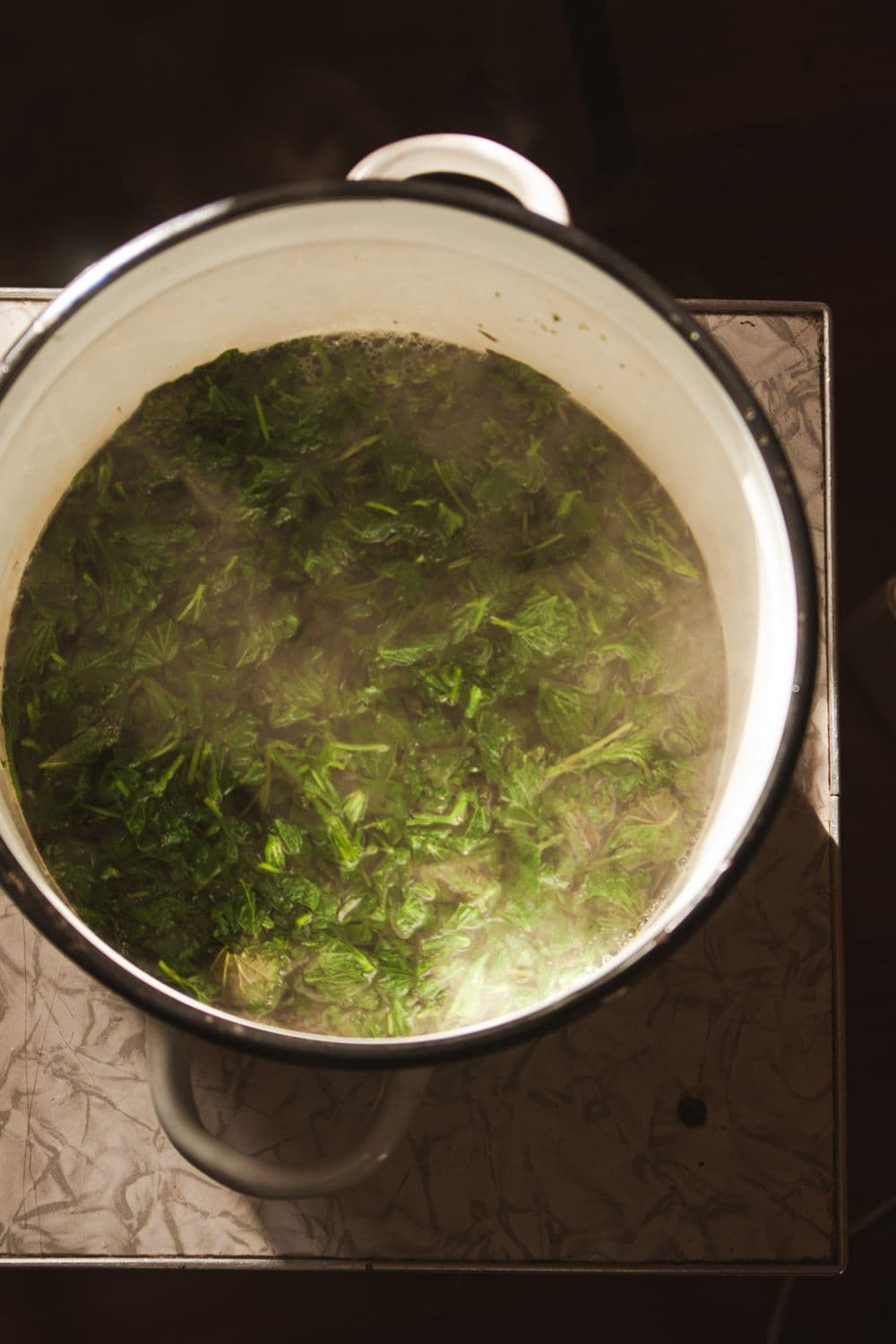
BVI Callaloo Soup
Velvety green soup made from dasheen leaves, okra, and coconut milk.
About This Recipe
Callaloo soup is one of the oldest and most culturally significant dishes in the Caribbean, a deeply green, velvety stew made from the broad leaves of the dasheen plant (Colocasia esculenta, a member of the taro family) blended smooth with okra and coconut milk. In the British Virgin Islands, callaloo is a Sunday-morning institution: the pot goes on before church and fills the house with a deep, earthy fragrance. It is served alongside fungi (okra polenta), rice, or simply with a thick slice of fresh bread to mop up every drop of the brilliant green liquid. The secret to callaloo's distinctive texture lies in the collaboration between dasheen leaves and okra. The leaves break down during simmering into a deep green, mineral-rich base, while the okra releases its mucilaginous thickening compounds into the liquid, giving the blended soup a silky, almost creamy body without the addition of cream or flour. Coconut milk, stirred in at the end, softens the earthiness and adds a subtle sweetness that rounds the flavour beautifully. Each cook adjusts the proportions to personal preference: some make it thin and brothy, others cook it down to a thick, spoonable purée. Those who cannot find dasheen leaves can substitute fresh spinach or a combination of spinach and Swiss chard — these lack dasheen's distinctive mineral edge but produce a very acceptable result. When using real dasheen, wearing gloves during preparation is advisable since the raw leaves contain calcium oxalate crystals that cause skin irritation. The crystals completely break down during cooking, making the cooked leaves perfectly safe and delicious.
Ingredients
Serves 4
- 400 gdasheen (taro) leaves(or spinach as substitute)
- 1 cupsliced okra
- 1 cancoconut milk(400 ml)
- 1onion(chopped)
- 2 clovesgarlic(minced)
- 1 litrevegetable broth
Instructions
- 1
Prepare the dasheen leaves
If using fresh dasheen leaves, wear gloves and strip the leaves from the thick central stalks — the stalks take much longer to cook and have a stringy texture. Rinse the leaves thoroughly in cold water and tear into large pieces. If substituting spinach, simply wash and drain; no special preparation is needed.
The oxalate crystals in raw dasheen leaves can cause tingling in the mouth if tasted raw — they are completely neutralised by cooking, so there is no concern once the soup is simmered.
- 2
Sauté the aromatics
Heat 2 tablespoons of neutral oil in a large, heavy-bottomed pot over medium heat. Add the chopped onion and cook, stirring frequently, for 5–6 minutes until translucent and soft but not browned. Add the minced garlic and cook another 1–2 minutes until fragrant and just beginning to turn golden. Season lightly with salt at this stage to help the onion soften.
- 3
Add greens and broth
Add the torn dasheen leaves (or spinach) and sliced okra to the pot. Stir to coat in the aromatics, then pour in the vegetable broth. Increase heat to bring to a rolling boil, then reduce to a steady simmer. Cook uncovered for 20–25 minutes until the dasheen leaves are completely tender and have broken down — they should look wilted and very soft, losing their raw fibrous quality entirely.
- 4
Blend until smooth
Remove the pot from the heat and blend using an immersion (stick) blender directly in the pot until completely smooth — this takes a full 2–3 minutes of blending to achieve a truly silky texture with no leaf fragments remaining. If using a countertop blender, work in batches filling it no more than halfway and hold the lid firmly with a kitchen towel to prevent steam-propelled spills.
For an extra-silky texture, pass the blended soup through a fine-mesh sieve, pressing with a spatula. This step is optional but produces a restaurant-quality smoothness.
- 5
Add coconut milk and finish
Return the blended soup to the heat over medium-low. Stir in the full can of coconut milk and bring gently back to a simmer, stirring constantly — boiling vigorously after adding coconut milk can cause the fat to separate and the soup to look grainy. Simmer 5 minutes, then taste carefully. Season with salt, black pepper, and a pinch of freshly grated nutmeg.
- 6
Serve hot
Ladle the callaloo into deep bowls. In the BVI it is traditionally served alongside fungi (okra polenta) as the accompaniment, with the callaloo poured partly over the fungi. A scatter of chilli flakes or a drizzle of hot sauce on top is optional.
Did you make this?
Rate it and help other cooks find the recipes that actually work.
One tap to sign in, and we'll save the rating you just picked.
Everything you need to plan your week — free
- Meal calendar
- Grocery list
- AI recipe ideas
Cook this hands-free
Get AI meal plans, step-by-step cooking mode, and your saved recipes in the free Bento app.
Pro Tips
- →
Always wear gloves when handling raw dasheen leaves — the calcium oxalate crystals in the raw leaf cause skin irritation for some people. They are completely harmless once cooked.
- →
A pinch of freshly grated nutmeg stirred in at the end is the traditional BVI finishing touch — it amplifies the earthiness of the dasheen and gives the soup a warm, complex fragrance that ground nutmeg cannot match.
- →
If your callaloo tastes flat or slightly bitter, add a small squeeze of lime juice — the acidity brightens the green flavour dramatically and balances the richness of the coconut milk.
- →
For a more substantial soup, add a 400 g can of butter beans or cannellini beans to the pot before blending — they add body, protein, and a creamy texture.
- →
Blend for longer than you think necessary — dasheen leaves have resilient fibres that take a full 2–3 minutes of continuous blending to break down completely into a smooth, professional-quality purée.
Variations
- •
Seafood callaloo: add 200 g of cleaned crab meat or peeled shrimp to the soup after blending and simmer for 5 minutes until cooked through — this is how callaloo is served at BVI special occasions and Sunday feasts.
- •
Smoky salted pork version: render 80 g of diced salted pork or smoked bacon before adding the onion — the smoky, salty fat fundamentally changes the character of the soup in the most delicious way.
- •
Trinidadian-style callaloo: add 1 teaspoon of ground cumin, 3 shadow beni (culantro) leaves, and a whole scotch bonnet during simmering for the Trinidadian version, which is slightly spicier and more herbaceous than the BVI variant.
- •
Lighter version: substitute half the coconut milk with additional vegetable broth to reduce calories while keeping the silky texture and tropical flavour.
Storage
Callaloo soup stores beautifully — refrigerate in an airtight container for up to 3 days. Reheat gently on the stovetop over medium-low heat, stirring frequently; do not boil rapidly after adding coconut milk as it can cause the fat to separate. The soup thickens considerably when cold; thin with a splash of broth or water as needed when reheating. Freeze in portioned containers for up to 2 months.
History & Origin
Callaloo is one of the oldest documented recipes of the African diaspora in the Caribbean, with roots that trace directly to West African leafy-green stews cooked by enslaved people using whatever ingredients were available on the plantation. The earliest Caribbean recipe records from the seventeenth and eighteenth centuries mention callaloo as a common dish across every island where enslaved Africans lived, demonstrating how quickly this food tradition took root in the New World. The name 'callaloo' itself may derive from a West African word for leafy greens, though linguists continue to debate its exact etymology. Today it is considered a symbol of Caribbean cultural survival and identity.
Frequently Asked Questions
Can I use spinach instead of dasheen leaves?
Yes — fresh baby spinach or mature spinach both work well and are the most widely available substitute. Spinach lacks dasheen's distinctive mineral earthiness but produces a beautifully green, similarly textured soup. For a closer flavour approximation, use a mix of spinach and Swiss chard (about 60/40). Avoid frozen spinach, which releases excess water and produces a watery, less flavourful result.
Why does callaloo make my mouth tingle if I taste it before it's fully cooked?
Raw and undercooked dasheen leaves contain calcium oxalate crystals that cause a temporary tingling or itching sensation in the mouth and throat — the same compound that makes raw taro root unpleasant. The crystals completely dissolve with sustained heat; after 20–25 minutes of simmering the soup is entirely safe and has no irritating effect. Simply avoid tasting it before the full simmer time.
Is BVI callaloo the same as Trinidadian callaloo?
They are related but distinct. Both use dasheen leaves and okra as the base, but Trinidadian callaloo typically includes coconut milk, shadow beni (culantro), and sometimes crab or salted pork, and is often less completely blended — it has more body and slightly more visible texture. BVI callaloo tends to be blended smoother and finished with coconut milk. Both versions vary considerably from cook to cook.
Can I make callaloo ahead of time?
Yes — callaloo is an excellent make-ahead dish and actually benefits from resting, as the flavours deepen overnight. Make it through step 4 (after blending), let cool, and refrigerate. When ready to serve, reheat gently and stir in the coconut milk fresh to prevent separation. The colour may darken slightly overnight, which is normal.
Nutrition Facts
Per serving · 4 servings total
Time Summary
Have Questions?
Ask our AI cooking assistant anything about this recipe — substitutions, techniques, scaling.
Chat with AI Chef →More Bvi Recipes
You Might Also Like
Similar dishes from other cuisines around the world.
Free Kitchen Tools
Calculators and converters that pair with this page — no signup needed.
Put This Into a Plan
Schedule it, shop for it, and track what you already have.
Read Next
Longer reads that go deeper on the ideas behind this dish.
Community
Join the conversation
Sign in to leave a comment and save your favourite recipes