
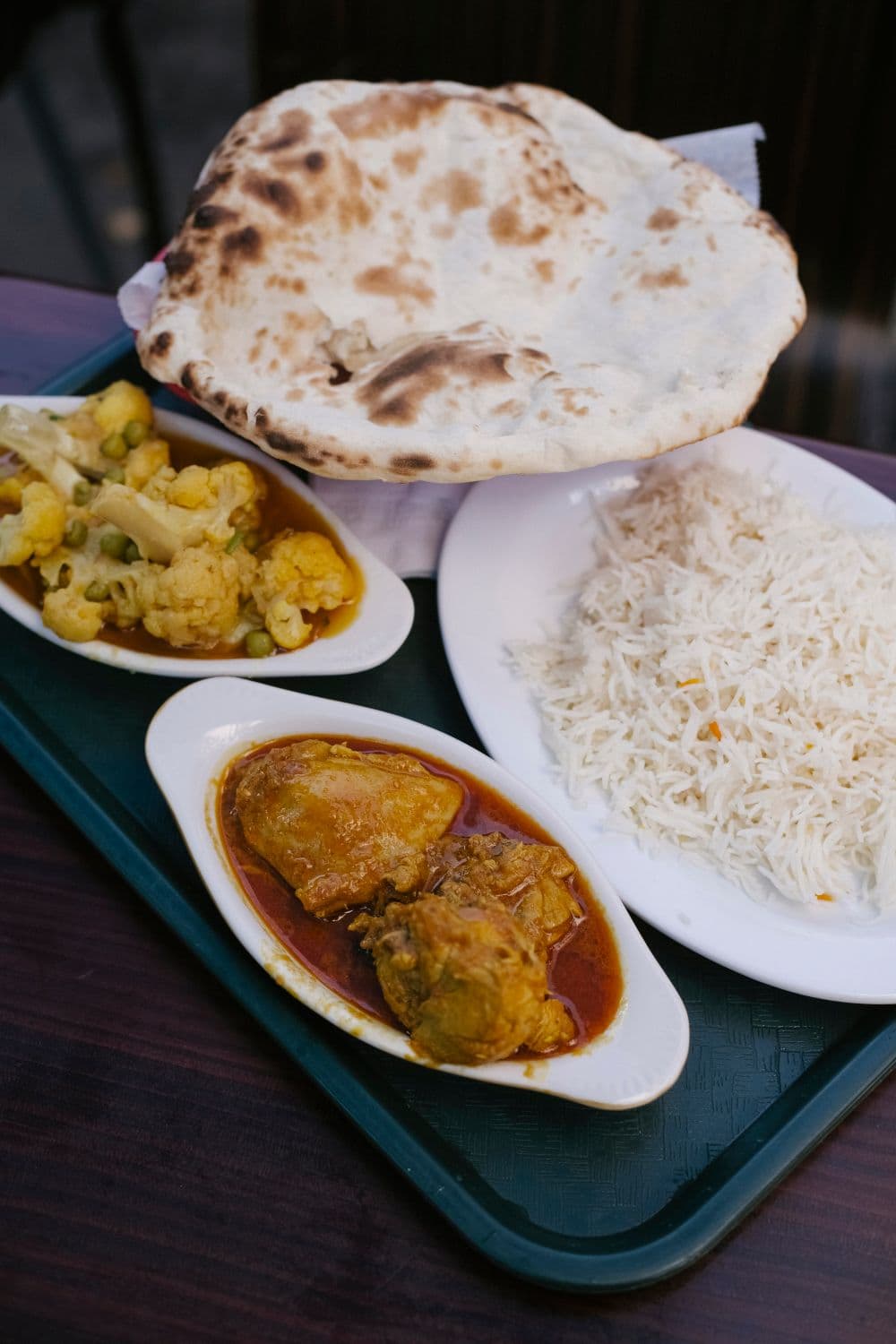
BVI Roti with Curry Chicken
Flaky Caribbean roti wrapped around tender, aromatic curried chicken.
About This Recipe
Roti with curry chicken is the definitive street food of the British Virgin Islands, a hand-held feast that encapsulates the Indo-Caribbean culinary heritage woven into the fabric of the eastern Caribbean. The dish arrived with indentured labourers from India who settled Trinidad and Tobago in the nineteenth century, and spread island by island across the eastern Caribbean over the following decades, reaching the BVI through Trinidadian and Guyanese migration. Today it is as much a part of BVI food culture as fish and fungi, sold from roadside stalls and enjoyed by everyone from schoolchildren to visiting sailors. The roti skin — a dhal puri or buss-up-shut style wrapper — is the structural soul of the dish. Thin, extensible, and slightly layered from fat worked into the dough, it must be soft enough to fold without cracking yet strong enough to contain a generous ladleful of curry without disintegrating. At roadside stands the skins are patted by hand on a cast-iron tawa griddle, acquiring just enough colour to be cooked through while remaining pliable. The curry filling is cooked low and slow — bone-in chicken pieces simmered until the meat is falling-tender in a sauce built on a foundation of Trinidadian-style curry powder, garlic, onion, shadow beni (culantro), and hot pepper. The art of eating a roti wrap is informal and messy, which is entirely the point: you fold it around the filling, letting the sauce soak into the bread, tearing off pieces as you go. The combination of the soft, slightly floury roti skin, the fragrant and complex curry sauce, and the tender chicken creates a harmony of texture and flavour that is completely unlike any other wrap-style food in the world.
Ingredients
Serves 4
- 600 gchicken thighs(boneless, cubed)
- 3 tbspcurry powder
- 1onion(chopped)
- 3 clovesgarlic(minced)
- 4roti skins(store-bought or homemade)
- 2 tbspvegetable oil
Instructions
- 1
Build the curry base
Heat the vegetable oil in a heavy-bottomed pot or Dutch oven over medium heat. Add the onion and cook, stirring frequently, for 5–6 minutes until soft and lightly golden at the edges. Add the garlic and cook another minute until fragrant. Add the curry powder and stir vigorously for 1–2 minutes — cooking the curry powder in fat 'blooms' the spices, releasing fat-soluble aromatics that water cannot dissolve and transforming raw spice into a rounded, deep flavour.
Use a Caribbean-blend curry powder such as Chief or Turban brand for the most authentic flavour; standard supermarket curry powder will work but tastes flatter.
- 2
Brown the chicken
Add the cubed chicken thighs to the pot and stir to coat every piece in the curry mixture. Cook over medium-high heat for 4–5 minutes, turning occasionally, until the chicken is sealed and lightly browned on all sides. This browning step (the Maillard reaction) adds complexity to the finished curry that you cannot achieve by simply boiling the chicken from raw.
- 3
Simmer the curry
Pour in ½ cup of water, scraping up any browned bits from the bottom of the pot. Bring to a boil, then reduce to a low simmer, cover, and cook for 25–30 minutes until the chicken is completely tender and the sauce has thickened to a glossy coating consistency. Uncover for the last 5 minutes if the sauce is too thin — it should cling to the chicken rather than being watery.
Add a whole scotch bonnet pepper (do not pierce it) during simmering for flavour without extreme heat; remove before serving. Pierce it only if you want real fire.
- 4
Adjust seasoning
Taste the curry and adjust with salt, a squeeze of lime juice for brightness, or a touch more curry powder if you want deeper spice. The finished curry should be rich, savoury, fragrant with spice, and glossy with sauce — not soupy. Let it rest uncovered for 5 minutes; the sauce will thicken slightly more as it cools.
- 5
Warm the roti skins
Heat a dry flat skillet or griddle over medium heat. Warm each roti skin for 30–45 seconds per side until pliable and slightly speckled with colour — too long and they become brittle and will crack when folded. Stack warmed skins on a clean towel and fold the towel over to keep them soft and pliable.
- 6
Assemble and serve
Lay a warm roti skin flat. Spoon a generous portion of curry chicken (with sauce) across the lower third of the skin. Fold the bottom up over the filling, then fold both sides inward and roll forward to form a wrap. Serve immediately, cut in half diagonally if desired.
Did you make this?
Rate it and help other cooks find the recipes that actually work.
One tap to sign in, and we'll save the rating you just picked.
Everything you need to plan your week — free
- Meal calendar
- Grocery list
- AI recipe ideas
Cook this hands-free
Get AI meal plans, step-by-step cooking mode, and your saved recipes in the free Bento app.
Pro Tips
- →
Bone-in chicken thighs give dramatically more flavour than boneless; the collagen released from the bones enriches the curry sauce and gives it body. Remove the bones when serving if preferred.
- →
Cook the curry powder in the oil for a full 2 minutes before adding liquid — this is the single most important step. Undercooked curry powder tastes harsh and raw; properly bloomed spice tastes complex and rounded.
- →
Adding diced potato (cut into 2 cm cubes, added with the water) is extremely popular in BVI roti — the starch thickens the curry naturally and adds a comforting heartiness.
- →
Roti skins are best made fresh, but high-quality frozen paratha-style roti from a Caribbean or South Asian grocery store is an excellent substitute. Thaw fully before heating.
- →
Rest the finished curry for at least 5–10 minutes before wrapping — a resting curry is thicker, more flavourful, and much easier to fold neatly into the roti without the filling sliding out.
Variations
- •
Vegetarian channa roti: replace chicken with two cans of drained chickpeas (channa) added with the water — a beloved Trinidadian and BVI vegetarian classic that is arguably even more popular than the chicken version at some roadside stalls.
- •
Curry goat roti: use bone-in goat pieces in place of chicken, increasing the simmer time to 1.5–2 hours for fall-off-the-bone tenderness — a weekend special version.
- •
Dhal puri wrapper: make a traditional split-pea stuffed roti wrapper instead of plain roti skin — the ground split pea filling adds an extra layer of earthy richness.
- •
Stew chicken variation: use browning sauce (Caribbean browning) instead of curry powder for a dark, caramelised stewed chicken filling that is equally popular as a roti filling across the Eastern Caribbean.
Storage
The curry filling keeps refrigerated in an airtight container for up to 3 days and actually improves in flavour overnight as the spices continue to meld. Reheat gently on the stovetop with a splash of water to loosen. Roti skins should always be freshly warmed before serving — they turn rubbery if stored already assembled with filling.
History & Origin
Curry roti arrived in the Caribbean via the more than 140,000 Indian indentured labourers brought to Trinidad and Tobago between 1845 and 1917 to work the sugar plantations following the abolition of slavery. These workers brought the flatbread tradition of northern India alongside their spice blends, which gradually adapted to local ingredients and tastes to become a distinctly Caribbean form. The dish spread through inter-island migration across the Eastern Caribbean through the twentieth century, and the BVI's close historical ties to Trinidad and the presence of Trinidadian and Guyanese communities on the island ensured roti became a permanent fixture of BVI food culture.
Frequently Asked Questions
Can I use store-bought roti skins?
Yes — frozen roti skins or paratha-style flatbreads from a Caribbean or South Asian grocery store work very well. Look for brands like Bajan, Royal, or Sybil's. Thaw completely at room temperature, then warm in a dry skillet for 30–45 seconds per side until pliable. Chapati from a South Asian store is a decent substitute if Caribbean roti is unavailable.
What curry powder should I use for the most authentic flavour?
Caribbean-specific curry powder blends such as Chief Brand (Trinidad) or Betapac (Jamaica) have a different spice balance from Indian madras-style curry powder — they typically contain less chilli heat and more turmeric, giving the curry its distinctive golden colour. Roasting the curry powder briefly before adding liquid deepens the flavour regardless of which brand you use.
Can I make the curry ahead of time?
The curry actually improves significantly made a day ahead — refrigerate it overnight and the spices bloom further into the sauce, making it richer and more complex. Reheat gently with a splash of water to restore consistency. Always warm the roti skins fresh to order, never ahead of time.
Is this dish very spicy?
The base recipe is mildly spiced — the curry powder provides warmth and depth without significant chilli heat. Add one whole scotch bonnet to the simmering pot for a noticeable but not overwhelming heat, or dice one and add it with the onion if you prefer a fiery curry. Those who want no heat at all can omit both the scotch bonnet and any additional chilli entirely.
Nutrition Facts
Per serving · 4 servings total
Time Summary
Have Questions?
Ask our AI cooking assistant anything about this recipe — substitutions, techniques, scaling.
Chat with AI Chef →More Bvi Recipes
You Might Also Like
Similar dishes from other cuisines around the world.
Free Kitchen Tools
Calculators and converters that pair with this page — no signup needed.
Put This Into a Plan
Schedule it, shop for it, and track what you already have.
Read Next
Longer reads that go deeper on the ideas behind this dish.
Community
Join the conversation
Sign in to leave a comment and save your favourite recipes