
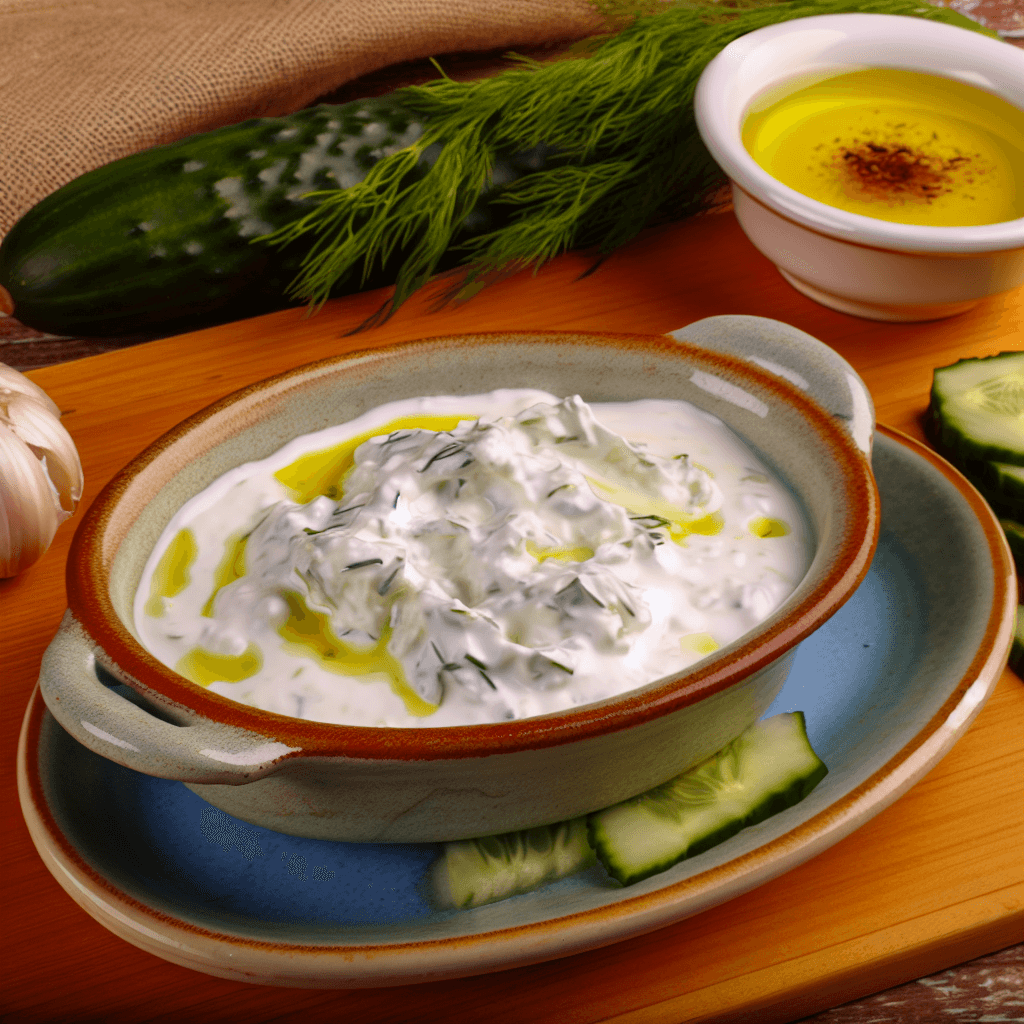
Cacık
Turkish cold yogurt dip with cucumber and herbs — refreshing and essential.
About This Recipe
Cacık is the cool counterpoint on the Turkish table — thick, garlicky yogurt folded with grated cucumber, fresh dill, and mint, finished with a green ribbon of olive oil. Pronounced 'jah-juhk,' it does triple duty: a mezze scooped up with bread, a side that tames spicy kebabs and rich pilafs, and — thinned with cold water and a few ice cubes — a refreshing summer soup. Success rests on two details. First, the cucumber must be squeezed almost dry after grating, or the dip turns watery within the hour. Second, the yogurt should be genuinely thick and tangy; strained Turkish-style or full-fat Greek yogurt is ideal. Ten minutes of work, no cooking, and the flavors only improve as it chills.
Ingredients
Serves 6
- 2 cupsfull-fat plain yogurt
- 1 largecucumber, grated
- 3 clovesgarlic, minced
- 2 tbspfresh dill, chopped
- 1 tbspfresh mint, chopped
- 1 tspsalt
- 1/2 tspblack pepper
- 2 tbspolive oil
- 1 pinchsumac (optional)
Instructions
- 1
Prepare the cucumber
Grate the cucumber on the coarse holes of a box grater, toss it with a small pinch of salt, and let it sit in a colander for 5 minutes. Then squeeze it firmly by the handful — or wring it in a clean kitchen towel — until almost no liquid remains.
The salt draws out moisture before mixing, which is the single best defense against watery cacık.
- 2
Mix the dip
In a bowl, whisk the yogurt until smooth and creamy, then fold in the squeezed cucumber, minced garlic, chopped dill, mint, salt, and black pepper. Taste and adjust — the garlic should be present but not punishing, and the salt should make the yogurt's tang pop.
Crush the garlic to a paste with a pinch of salt for smoother flavor that won't leave raw bites.
- 3
Chill
Cover and refrigerate for at least 30 minutes, ideally an hour or two. Chilling isn't optional — the garlic mellows, the herbs perfume the yogurt, and the texture firms to a proper scoopable consistency.
- 4
Finish and serve
Transfer to a serving bowl, swirl the surface with the back of a spoon, drizzle generously with olive oil, and dust with sumac or a pinch of dried mint. Serve cold with warm bread, grilled meats, or rice dishes.
Did you make this?
Rate it and help other cooks find the recipes that actually work.
One tap to sign in, and we'll save the rating you just picked.
Everything you need to plan your week — free
- Meal calendar
- Grocery list
- AI recipe ideas
Track what you eat
Snap your meal to log calories and macros, run fasting timers and track water in the free SnapCal app.
Pro Tips
- →
Squeeze the grated cucumber until it feels nearly dry — most failed cacık is simply under-squeezed cucumber.
- →
Use thick, full-fat yogurt; thin yogurt makes a sauce, not a dip. Strain regular yogurt through cheesecloth for an hour if needed.
- →
Make it a few hours ahead — the garlic and herbs deepen noticeably as it rests in the refrigerator.
- →
Mash the garlic to a paste with salt rather than mincing for even distribution and no harsh raw chunks.
- →
Always finish with good olive oil at serving time; it adds aroma and the signature glossy presentation.
Variations
- •
Thin with ice-cold water and serve with ice cubes as a chilled summer soup, the classic village style.
- •
Add chopped toasted walnuts for crunch, in the manner of Persian mast-o-khiar.
- •
Swap dill for fresh purslane leaves when in season for an earthier traditional version.
- •
Make it Greek-style tzatziki by adding a splash of red wine vinegar and using only dill.
Storage
Cacık keeps refrigerated in an airtight container for up to 3 days, though it's freshest within the first 24 hours. Some water will separate as it sits — simply pour it off or stir it back in. Don't freeze; the yogurt breaks on thawing.
History & Origin
Cacık belongs to an ancient family of yogurt-cucumber-garlic preparations found across the former Ottoman world, sharing close kinship with Greek tzatziki, Balkan tarator, and Persian mast-o-khiar. Yogurt itself is a Central Asian Turkic contribution to world cuisine — even the word 'yogurt' is Turkish. Today cacık appears on virtually every meze spread and kebab platter in Turkey, served as both a dip and a cooling side dish.
Frequently Asked Questions
Why is my cacık watery?
Cucumber is over 95 percent water, and grating ruptures its cells so that water keeps weeping into the yogurt. The fix is preventive: salt the grated cucumber, let it drain 5 minutes, then squeeze it relentlessly — by hand or wrung in a kitchen towel — until almost dry. Using thick strained yogurt rather than thin pouring yogurt also keeps the texture properly creamy.
What's the difference between cacık and tzatziki?
They're close cousins from the same Ottoman culinary family, but with real differences. Tzatziki is thicker, made with strained yogurt, heavier on garlic, and usually flavored with vinegar or lemon and only dill. Cacık is slightly looser, often includes both dill and mint, and is sometimes thinned with water into a drinkable consistency or chilled soup — something tzatziki never is.
Can I use Greek yogurt for cacık?
Yes — full-fat Greek yogurt is the best widely available substitute for Turkish süzme (strained) yogurt, with the right thickness and tang. If it's very stiff, loosen it with a tablespoon or two of cold water or milk to reach a soft, scoopable consistency. Avoid fat-free versions, which taste chalky and lack the richness that balances the garlic.
What do you eat cacık with?
Almost everything on a Turkish table. It's a standard companion to grilled meats — Adana kebab, köfte, lamb chops — where its coolness offsets char and spice. It sits on meze spreads with bread, accompanies rice and bulgur pilafs, and pairs beautifully with stuffed vegetables. In summer, thinned cacık is eaten as a chilled soup alongside flaky börek or simply on its own.
Nutrition Facts
Per serving (200g / 7.1 oz) · 6 servings total
Time Summary
Have Questions?
Ask our AI cooking assistant anything about this recipe — substitutions, techniques, scaling.
Chat with AI Chef →Featured in Guides
This recipe is featured in the following curated guides:
More Turkish Recipes
You Might Also Like
Similar dishes from other cuisines around the world.
Browse by Ingredient
More recipes built around the same core ingredients.
Free Kitchen Tools
Calculators and converters that pair with this page — no signup needed.
Put This Into a Plan
Schedule it, shop for it, and track what you already have.
Read Next
Longer reads that go deeper on the ideas behind this dish.
Community
Join the conversation
Sign in to leave a comment and save your favourite recipes