
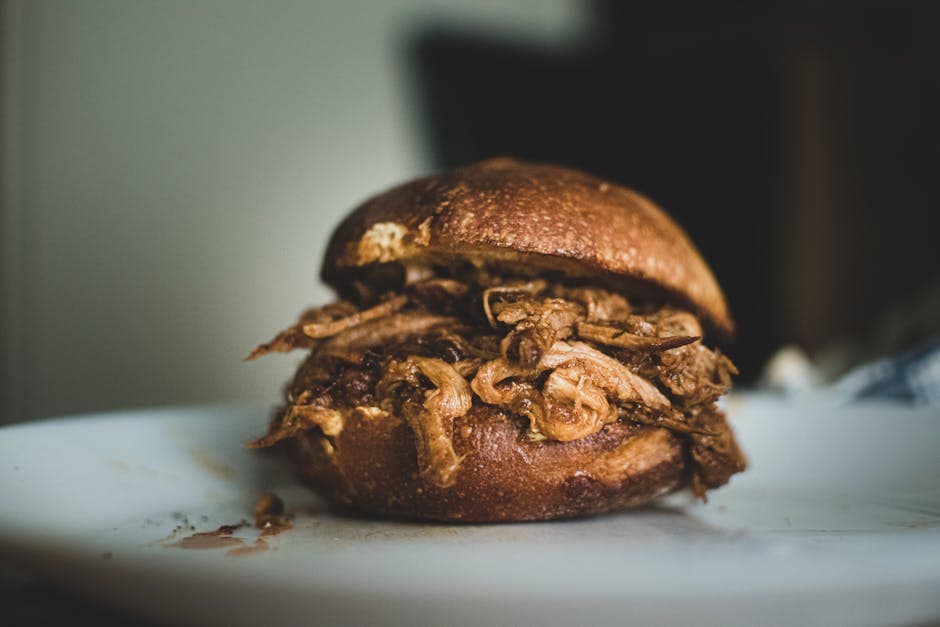
Eastern Carolina Pulled Pork (Vinegar-Style)
Whole pork shoulder smoked over hickory and oak until it falls apart, then chopped and dressed with a sharp eastern Carolina vinegar-pepper sauce.
About This Recipe
Eastern North Carolina barbecue is the oldest continuous barbecue tradition in America, and it is defined by two things: whole-hog (or shoulder) cooked low and slow over hardwood coals, and a sauce that is little more than apple cider vinegar shot through with red pepper flakes, salt and a touch of sugar. There is no tomato, no smoke flavoring, no ketchup glaze — eastern Carolina considers those adornments western corruption. The result is meat that tastes of the wood it was cooked over, brightened by the vinegar's sharpness, and finished with the crackle of crispy outside meat (the prized 'bark') chopped into the soft interior. A proper eastern Carolina pulled pork is served on a soft white bun with a tangle of mustardy yellow slaw on top — the slaw both a side dish and a sandwich-builder. Hush puppies, baked beans and sweet tea complete the plate. Cooked at home in an offset smoker or even a Weber kettle, a pork shoulder requires patience (8–12 hours) and very little active work — once seasoned and on the smoker, it largely takes care of itself until the bone wiggles free.
Ingredients
Serves 10
- 1 (4–5 kg)bone-in pork shoulder (Boston butt), fat cap intact
- 3 tbspcoarse kosher salt
- 2 tbspcoarse black pepper
- 1 tbspsmoked paprika
- 1 tbspbrown sugar
- 2 tspgranulated garlic
- 1 tspcayenne (optional)
- 480 mlapple cider vinegar (for sauce)
- 2 tbspred pepper flakes
- 2 tspkosher salt (for sauce)
- 1 tbspsugar (for sauce)
- 1 tsphot sauce (Texas Pete preferred)
- 4 kghickory or oak splits, seasoned
Instructions
- 1
Trim and season
Trim the fat cap to about 5 mm. Combine salt, pepper, paprika, sugar, garlic and cayenne and rub into every surface of the shoulder. Let sit at room temperature 45 minutes while the smoker comes up to heat. Pork shoulder is forgiving — don't worry about minor over- or under-seasoning.
- 2
Fire the smoker
Bring the smoker to a steady 110°C / 225°F using hickory and oak (eastern Carolina tradition uses oak primarily, with hickory for accent). Keep the smoke thin and blue — never billowing white.
- 3
Smoke fat-side up
Place shoulder fat-side up on the grate. Close the lid and let it smoke undisturbed for the first 5 hours. Add wood splits every 45 minutes to maintain temperature and smoke. The bark will go from pale to deep mahogany over this period.
- 4
Push through the stall
When the internal temperature plateaus around 70–75°C / 158–167°F (typically 5–6 hours in), wrap the shoulder tightly in pink butcher paper or foil. Return to the smoker and continue cooking. Wrapping shortens the cook by 1–2 hours and protects the bark.
Eastern Carolina purists often skip the wrap entirely for maximum bark — accept the longer cook and feed wood faithfully.
- 5
Make the vinegar sauce
While the shoulder cooks, combine vinegar, red pepper flakes, salt, sugar and hot sauce in a jar. Shake well and let sit at room temperature at least 2 hours so the pepper flakes infuse. The sauce should taste sharp, peppery and barely sweet — adjust salt to your preference.
- 6
Cook to probe-tender
Continue smoking until the internal temperature reaches 95–96°C / 203–205°F and a probe slides into the thickest part with no resistance. This typically takes 10–12 hours total. The bone should wiggle freely when twisted.
- 7
Rest, then pull
Wrap in towels and rest in an insulated cooler for 1 hour minimum. Unwrap on a cutting board, remove the bone (it should slide right out), and use two forks or insulated meat claws to pull the meat into shreds. Discard any large hunks of unrendered fat.
- 8
Dress and serve
Drizzle a generous half cup of vinegar sauce over the pulled meat and toss to combine. Pile onto soft white buns and top with yellow mustard slaw. Serve extra sauce at the table — eastern Carolinians always want more.
Did you make this?
Rate it and help other cooks find the recipes that actually work.
One tap to sign in, and we'll save the rating you just picked.
Everything you need to plan your week — free
- Meal calendar
- Grocery list
- AI recipe ideas
Track what you eat
Snap your meal to log calories and macros, run fasting timers and track water in the free SnapCal app.
Pro Tips
- →
Bone-in pork shoulder (Boston butt) is essential — boneless cuts cook unevenly and you lose the marrow flavor. The bone is also the doneness indicator.
- →
Don't sub white vinegar for cider vinegar — the apple notes round out the bite. Heinz or Bragg work well.
- →
Let the vinegar sauce sit overnight if possible; the pepper flakes need time to release heat and color.
- →
If you can't run a smoker for 10+ hours, finish in a 135°C / 275°F oven wrapped in foil after the first 4–5 hours of smoke — you'll get 90% of the flavor and finish overnight unattended.
Variations
- •
Lexington-style (western NC): use only pork shoulder (never whole hog) and add ketchup to the vinegar sauce — sweeter, redder, and a regional rival.
- •
South Carolina mustard sauce: replace tomato/ketchup with yellow mustard and brown sugar for the German-influenced Midlands style.
- •
Whole hog: traditionalists cook a 60 kg pig overnight in a cinder block pit — the eastern NC ideal.
- •
Crockpot version: cook seasoned shoulder at low for 10 hours with 250 ml of broth, then finish under the broiler for bark — no smoke flavor but very tender.
Storage
Refrigerate pulled pork undressed in a sealed container for up to 5 days. Freeze in 500 g portions in zip bags for up to 3 months. Reheat with a splash of broth or vinegar sauce in a covered pan over low heat — never microwave on high or it goes rubbery.
History & Origin
Eastern North Carolina barbecue traces directly to colonial Caribbean pit-cooking techniques brought via Virginia in the 17th century, refined over 300 years by African American and white pit cooks who together established the whole-hog vinegar tradition. The Skylight Inn in Ayden, NC, founded in 1947, is widely considered the keeper of the purest form.
Frequently Asked Questions
Can I use pork loin instead of shoulder?
No — pork loin is too lean and will be dry and stringy. Shoulder (also called Boston butt or picnic) has the fat and collagen needed for pulled pork. The cuts are completely different in behavior.
Is the vinegar sauce supposed to be that sharp?
Yes. Eastern Carolina sauce is meant to cut through the rich pork — straight from the bottle it tastes harsh, but on the meat it transforms. If you find it too sharp, increase sugar to 2 tablespoons.
Why did my pork shoulder get dry?
Either you pulled too early (under 95°C internal) or you cooked too hot (over 130°C). The fat needs full time to render at low temperature. Also, dress liberally with sauce after pulling — undressed pulled pork tastes dry even when it isn't.
How do I get smoke flavor without a smoker?
Add 1 tsp liquid smoke (Wright's Hickory) to the vinegar sauce, and finish a slow-cooker shoulder under the broiler for 10 minutes for some bark. Not authentic, but acceptable.
Nutrition Facts
Per serving (220g / 7.8 oz) · 10 servings total
Time Summary
Have Questions?
Ask our AI cooking assistant anything about this recipe — substitutions, techniques, scaling.
Chat with AI Chef →Featured in Guides
This recipe is featured in the following curated guides:
More American Recipes
You Might Also Like
Similar dishes from other cuisines around the world.
Browse by Ingredient
More recipes built around the same core ingredients.
Free Kitchen Tools
Calculators and converters that pair with this page — no signup needed.
Put This Into a Plan
Schedule it, shop for it, and track what you already have.
Read Next
Longer reads that go deeper on the ideas behind this dish.
Community
Join the conversation
Sign in to leave a comment and save your favourite recipes