
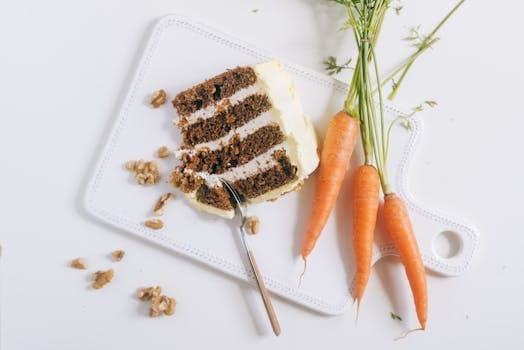
Carrot Cake
Spiced carrot layer cake studded with walnuts under tangy cream cheese frosting.
About This Recipe
Carrot cake is a moist, spice-laced layer cake packed with grated carrots, warm cinnamon, and crunchy walnuts, all crowned with a tangy cream cheese frosting. The carrots keep the crumb exceptionally tender and lightly sweet, while the oil-based batter stays moist for days. A blend of cinnamon, nutmeg, and ginger gives it cozy depth, and chopped walnuts (or pecans) add welcome texture. The contrast between the sweet, spiced cake and the slightly sour, creamy frosting is what makes carrot cake so beloved. Popular for Easter, springtime gatherings, and birthdays, it's a homey classic that's surprisingly easy to make from scratch.
Ingredients
Serves 12
- 2 cupsall-purpose flour
- 2 tspbaking soda
- 0.5 tspsalt
- 2 tspground cinnamon
- 0.5 tspground nutmeg
- 0.5 tspground ginger
- 4 largeeggs
- 1.25 cupsvegetable oil
- 2 cupsgranulated sugar
- 3 cupsgrated carrots
- 1 cupchopped walnuts
- 16 ozcream cheese frosting
Instructions
- 1
Prep the pans
Grease and line two 9-inch round pans and preheat the oven to 350F.
- 2
Whisk the dry ingredients
Combine the flour, baking soda, salt, cinnamon, nutmeg, and ginger in a bowl.
- 3
Mix the wet ingredients
In a large bowl, whisk the eggs, oil, and sugar until well combined and slightly thickened.
- 4
Combine
Stir the dry ingredients into the wet just until incorporated, then fold in the grated carrots and walnuts.
Don't overmix, stop as soon as the flour disappears for a tender crumb.
- 5
Bake
Divide between the pans and bake 35-40 minutes until a toothpick comes out clean and the cakes spring back.
- 6
Cool completely
Cool in the pans 10 minutes, then turn out onto a rack to cool fully before frosting.
Cream cheese frosting melts on a warm cake, so cool completely.
- 7
Frost
Spread cream cheese frosting between the layers and over the top and sides, then garnish with extra walnuts.
Did you make this?
Rate it and help other cooks find the recipes that actually work.
One tap to sign in, and we'll save the rating you just picked.
Everything you need to plan your week — free
- Meal calendar
- Grocery list
- AI recipe ideas
Track what you eat
Snap your meal to log calories and macros, run fasting timers and track water in the free SnapCal app.
Pro Tips
- →
Grate the carrots fresh; pre-shredded bags are too dry.
- →
Don't overmix the batter for a tender crumb.
- →
Toast the walnuts for deeper flavor.
- →
Cool the cakes fully before frosting.
- →
Use full-fat cream cheese for the best frosting.
Variations
- •
Add crushed pineapple or raisins to the batter.
- •
Swap walnuts for pecans.
- •
Add shredded coconut.
- •
Make it as cupcakes, reducing the bake time.
Storage
Refrigerate the frosted cake for up to 5 days; bring to room temperature before serving for the best texture.
History & Origin
Carrots have been used to sweeten desserts since medieval times, when sugar was scarce. Carrot cake surged in popularity in the United States during the 1960s and 70s, often paired with the now-classic cream cheese frosting that defines it today.
Frequently Asked Questions
Should I use pre-shredded carrots?
No, freshly grated carrots are essential. Bagged pre-shredded carrots are dry, thick, and tough, which makes the cake drier and the texture coarse. Grate whole carrots on the small or medium holes of a box grater for moist, tender results. The fresh carrots release moisture that keeps the cake soft.
Can I make carrot cake without nuts?
Yes, simply leave out the walnuts for a nut-free cake; the texture will be a bit softer but still delicious. You can replace them with raisins, shredded coconut, or crushed pineapple if you want added texture. Always check for nut allergies when serving, and avoid cross-contamination with nut-containing ingredients.
Why does carrot cake use oil instead of butter?
Oil keeps carrot cake exceptionally moist and tender, and it stays soft even after refrigeration, unlike butter, which firms up when cold. Oil also lets the spices and carrot flavor shine without competing with butter's richness. This is why most carrot cake recipes, and many other moist cakes, rely on a neutral vegetable oil.
Nutrition Facts
Per serving (160g / 5.6 oz) · 12 servings total
Time Summary
Have Questions?
Ask our AI cooking assistant anything about this recipe — substitutions, techniques, scaling.
Chat with AI Chef →Featured in Guides
This recipe is featured in the following curated guides:
More American Recipes
You Might Also Like
Similar dishes from other cuisines around the world.
Browse by Ingredient
More recipes built around the same core ingredients.
Free Kitchen Tools
Calculators and converters that pair with this page — no signup needed.
Put This Into a Plan
Schedule it, shop for it, and track what you already have.
Community
Join the conversation
Sign in to leave a comment and save your favourite recipes