
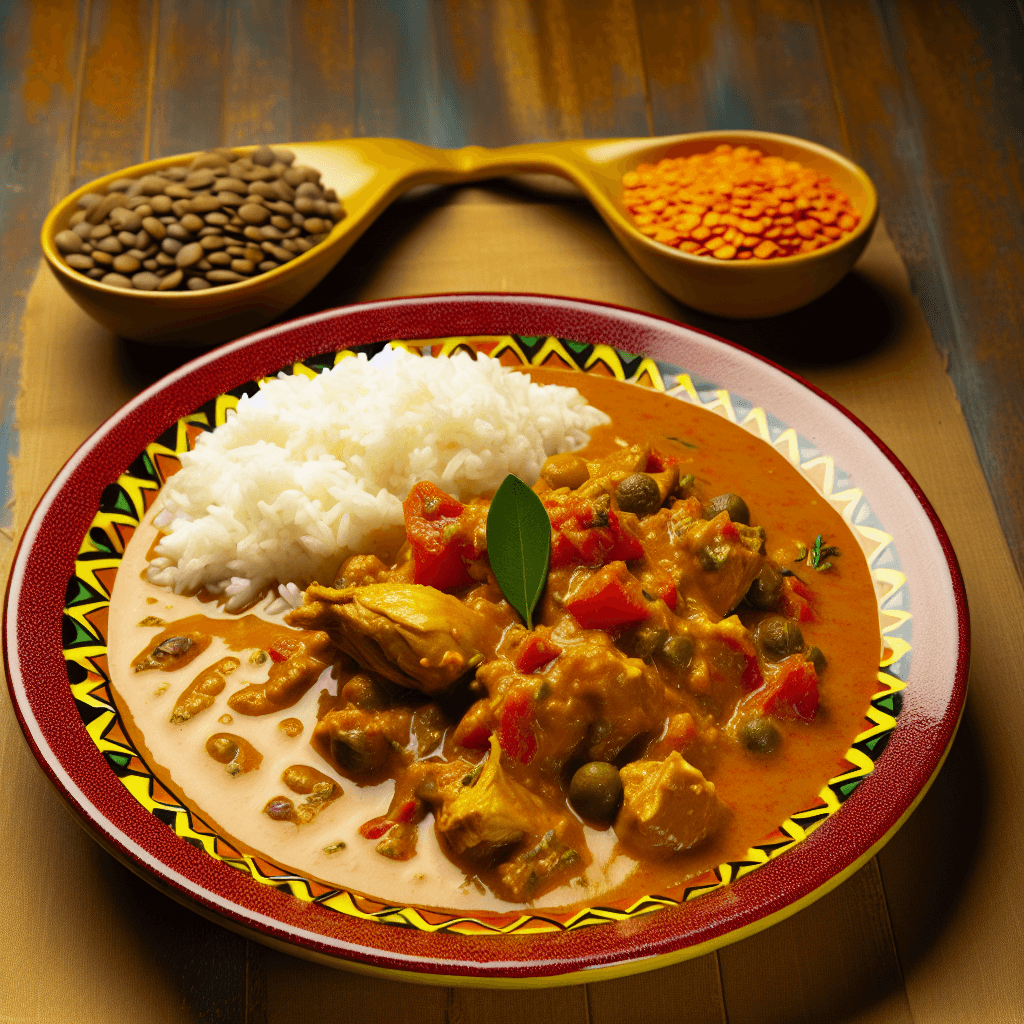
Carry Poulet
Réunion-style chicken curry fragrant with turmeric, ginger and thyme.
About This Recipe
Carry Poulet — Creole chicken curry — is the soul of Réunion's kitchen, eaten at family tables every week and at every communal gathering from baptisms to New Year feasts. The word 'carry' derives from the Tamil 'kari', arriving on the island with Indian indentured workers brought by the French after the abolition of slavery in 1848. Yet the Réunionais version diverged decisively from its South Asian ancestor: coconut milk is used sparingly if at all, tomatoes form the body of the sauce, and a bundle of fresh thyme — a nod to European colonial influence — adds an herbaceous note that marks it unmistakably Creole. Bone-in chicken pieces are essential; they contribute gelatin and depth to the sauce that boneless thighs simply cannot replicate. The technique is unhurried and deliberate. The chicken is first rubbed with turmeric and salt — a step that not only seasons deeply but gives the skin a burnished golden colour when it hits hot oil. After browning, the aromatics are built directly in the rendered fat, allowing garlic, ginger and thyme to bloom before the tomatoes are added. The tomatoes must cook down fully, losing their watery rawness and concentrating into a brick-red paste, before any liquid enters the pot. This caramelised tomato base is what separates a properly made carry from a thin, watery stew. A long, covered simmer at low heat finishes the chicken until it is falling-tender and the sauce has reduced to a glossy, clinging consistency. On a classic Réunionais plate, carry poulet sits beside steamed white rice, cari lentilles, and a vibrant rougail tomate — three components that balance richness, starch and bright acidity in perfect harmony.
Ingredients
Serves 4
- 1 kgchicken pieces(bone-in, skin-on thighs and drumsticks)
- 3ripe tomatoes(roughly chopped)
- 1 tspground turmeric
- 3 sprigsfresh thyme
- 1 tbspfresh ginger(finely grated)
- 3 clovesgarlic(minced)
- 1 mediumonion(finely diced)
- 2 tbspneutral oil
- 1 tspsalt(plus more to taste)
- 200 mlwater
Instructions
- 1
Marinate the chicken
Rub chicken pieces all over with turmeric and 1 tsp salt. Set aside for at least 15 minutes — or up to 2 hours covered in the fridge — to allow the seasoning to penetrate.
The turmeric stains but also tenderises; don't skip this rest.
- 2
Brown on all sides
Heat oil in a large, wide pot over medium-high heat. Add chicken in a single layer and brown undisturbed for 4–5 minutes per side until deep golden and the skin renders some fat. Work in batches if necessary; crowding causes steaming rather than browning.
A proper sear here adds Maillard depth that carries through to the finished sauce.
- 3
Soften onion and aromatics
Reduce heat to medium. In the same pot with the rendered fat, fry onion until translucent and lightly golden, about 5 minutes. Add garlic, ginger and thyme sprigs, stirring constantly for 1–2 minutes until fragrant but not scorched.
- 4
Build the tomato base
Add chopped tomatoes to the pot, increase heat to medium-high, and cook for 10–12 minutes, stirring often, until tomatoes have completely broken down into a thick, brick-red paste and the oil begins to separate around the edges. This caramelised tomato base is the flavour foundation of the carry.
Patience here is key — a watery tomato base produces a thin sauce.
- 5
Return chicken and simmer
Nestle the browned chicken pieces back into the sauce, turning to coat well. Pour in 200 ml water, bring to a gentle boil, then reduce to a low simmer. Cover the pot and cook for 30 minutes, turning chicken halfway through, until the meat is cooked through and beginning to pull from the bone.
- 6
Reduce and adjust
Remove the lid for the final 8 minutes to allow the sauce to reduce and concentrate. The finished sauce should cling to the chicken rather than pool. Taste and adjust salt. Discard thyme sprigs before serving.
If the sauce is too thick, add a splash of water; if too thin, simmer uncovered a few more minutes.
- 7
Serve the Réunionais way
Mound steamed white rice on each plate. Place chicken pieces and their sauce alongside, with cari lentilles and a bowl of rougail tomate on the table. The classic island serve is rice, carry, lentilles and rougail eaten together on a single plate.
Did you make this?
Rate it and help other cooks find the recipes that actually work.
One tap to sign in, and we'll save the rating you just picked.
Everything you need to plan your week — free
- Meal calendar
- Grocery list
- AI recipe ideas
Cook this hands-free
Get AI meal plans, step-by-step cooking mode, and your saved recipes in the free Bento app.
Pro Tips
- →
Marinate chicken in turmeric and salt for at least 30 minutes before cooking — overnight in the fridge gives even deeper flavour.
- →
Bone-in chicken is non-negotiable for authentic carry; the bones release gelatin that enriches and thickens the sauce naturally.
- →
Cook the tomatoes until the oil visibly separates from the paste — this 'bhuna' stage signals the raw flavour is fully cooked out.
- →
A whole dried chilli added with the tomatoes gives gentle background heat without overwhelming the delicate turmeric and ginger.
- →
Skim any excess fat from the surface after simmering, but leave a little — fat carries flavour and gives the sauce its characteristic sheen.
Variations
- •
Carry porc: substitute pork shoulder cut into chunks; increase simmer time to 45 minutes for tender results.
- •
Carry cabri: use bone-in goat pieces — this is considered the finest carry in Réunion and is served at weddings and celebrations.
- •
Carry zourite: replace chicken with cleaned octopus pieces; the sauce becomes deeply umami and the octopus needs 50–60 minutes to tenderise.
- •
Coconut version: replace water with 200 ml coconut milk for a richer, slightly sweeter sauce — less traditional but delicious.
Storage
Store covered in the refrigerator for up to 3 days. The flavour deepens and improves overnight as the spices continue to meld. Reheat gently in a covered pot over low heat with a splash of water to prevent the sauce from catching.
History & Origin
The carry tradition arrived in Réunion with Tamil and Telugu indentured workers recruited from southern India by the French colonial administration after 1848. Over the following generations, Réunionais Creole cooks absorbed the technique but transformed it: tomatoes replaced some of the spice complexity, thyme entered from French culinary influence, and coconut milk largely disappeared from the mainland version. By the early 20th century, carry poulet had become the island's defining comfort food, inseparable from the culture of the Sunday family meal.
Frequently Asked Questions
Can I use coconut milk in carry poulet?
You can, and some households do — replace the water with 200 ml of full-fat coconut milk for a richer, creamier sauce. However, the classic Réunionais carry uses tomatoes and water only, which gives a lighter, more acidic result than South Asian curries.
Why is my sauce too watery?
The most common cause is not cooking the tomatoes long enough before adding the chicken and water. The tomatoes must reduce to a thick paste with visible oil separation before any liquid is added. If your sauce is already in the pot and still thin, simply remove the lid and simmer on medium heat until it reduces to the desired consistency.
Can I make carry poulet in advance?
Yes — carry poulet is actually better the next day, as the spices meld and deepen overnight. Cook it fully, cool to room temperature, then refrigerate. Reheat gently over low heat with a splash of water. It keeps well for up to 3 days.
What if I can't find fresh thyme?
Dried thyme works as a substitute — use half the quantity (about 1/2 tsp dried). Fresh thyme gives a brighter, more aromatic result, but the dried version still contributes the characteristic Creole herbaceous note that distinguishes this carry from Indian versions.
What is the correct way to serve this dish?
The traditional Réunionais serve places steamed white rice at the centre of the plate, with curry, cari lentilles and rougail tomate arranged alongside. Everything is mixed together as you eat. A fresh rougail — chopped tomato with ginger, chilli and salt — is essential for the bright counterpoint it provides to the rich, savoury carry.
Nutrition Facts
Per serving · 4 servings total
Time Summary
Have Questions?
Ask our AI cooking assistant anything about this recipe — substitutions, techniques, scaling.
Chat with AI Chef →Featured in Guides
This recipe is featured in the following curated guides:
More Reunion Recipes
You Might Also Like
Similar dishes from other cuisines around the world.
Free Kitchen Tools
Calculators and converters that pair with this page — no signup needed.
Put This Into a Plan
Schedule it, shop for it, and track what you already have.
Read Next
Longer reads that go deeper on the ideas behind this dish.
Community
Join the conversation
Sign in to leave a comment and save your favourite recipes