
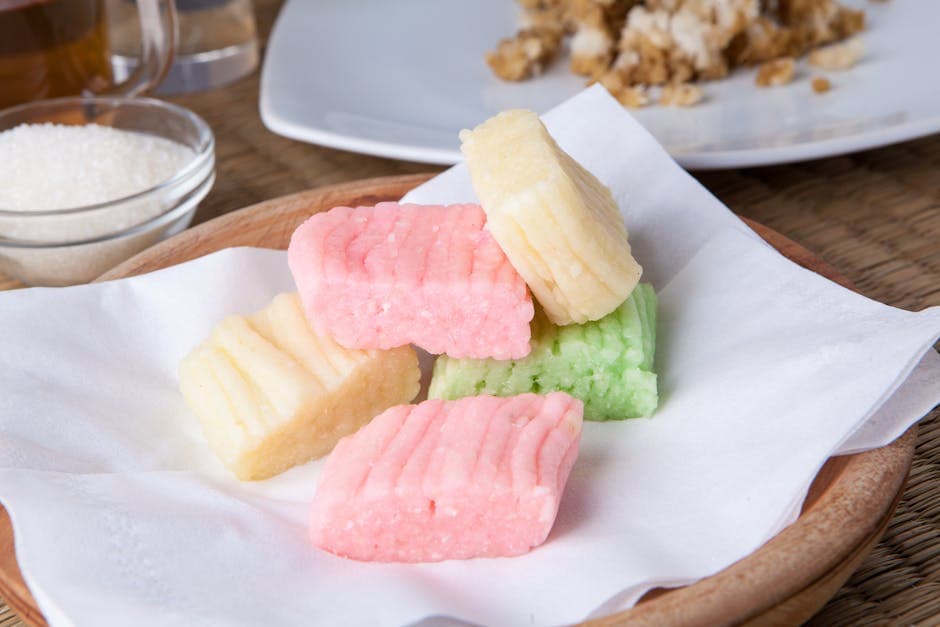
Cassava Cake Palauan Style
Dense, sweet cassava cake baked with coconut milk and brown sugar — a popular Palauan party dessert.
About This Recipe
Cassava cake appears across the Pacific and Southeast Asia in countless variations. Palau's version is denser and less sweet than its Filipino cousin, using more coconut milk and brown sugar for a deeper, caramel-like flavour. Served at birthday parties, holidays and church gatherings, it is baked in a large tray and cut into squares — humble yet utterly irresistible when still warm from the oven.
Ingredients
Serves 12
- 500 ggrated cassava (fresh or frozen, thawed)
- 400 mlcoconut milk
- 150 gbrown sugar
- 2 largeeggs
- 1 tspvanilla extract
Instructions
- 1
Preheat
Preheat oven to 180°C. Grease a 23×33 cm baking tray.
- 2
Mix batter
Combine grated cassava, coconut milk, brown sugar, eggs and vanilla in a large bowl. Mix well until sugar dissolves.
- 3
Bake
Pour batter into the prepared tray. Bake 40–45 minutes until a skewer comes out clean and the top is golden brown.
- 4
Cool and cut
Allow to cool 20 minutes before cutting into squares. Serve warm or at room temperature.
Did you make this?
Rate it and help other cooks find the recipes that actually work.
One tap to sign in, and we'll save the rating you just picked.
Everything you need to plan your week — free
- Meal calendar
- Grocery list
- AI recipe ideas
Track what you eat
Snap your meal to log calories and macros, run fasting timers and track water in the free SnapCal app.
Pro Tips
- →
Squeeze excess moisture from fresh grated cassava before using.
- →
The cake firms up as it cools — don't be alarmed if it seems soft when hot.
- →
Weigh dry ingredients on a scale instead of using cups — grams are the difference between a tender and a tough crumb.
- →
Bring eggs and dairy to room temperature before mixing; cold ingredients seize fats and produce a dense, uneven texture.
Variations
- •
Top with a layer of coconut cream custard before baking.
- •
Add grated pandan leaves for colour and fragrance.
- •
Vegetarian: swap the protein for roasted king oyster mushrooms, smoked tofu or cooked chickpeas — adjust seasoning slightly upward to compensate.
- •
Spicier: add a finely chopped fresh chile or a teaspoon of crushed Aleppo/Urfa pepper to the aromatics for warm, layered heat instead of a single sharp hit.
Storage
Store at room temperature up to 2 days, or refrigerate up to 5 days.
History & Origin
Cassava was introduced to the Pacific by Spanish traders in the 16th century and was quickly embraced as a drought-resistant carbohydrate. Cassava cake became a festive staple across Micronesia and Polynesia.
Frequently Asked Questions
Can I use cassava flour instead of grated cassava?
No — grated cassava gives the characteristic dense, chewy texture. Flour produces a different result.
Can I make this ahead of time?
Yes — most of the components can be prepared up to a day in advance and refrigerated separately. Reheat gently and assemble just before serving so textures stay distinct.
What can I substitute if I don't have all the ingredients?
Stay close to the role each ingredient plays: swap aromatics for similar ones (shallot for onion, lime for lemon), and keep the fat-acid-salt balance intact. Spice blends can usually be approximated with what's in the cupboard.
How do I know it's authentic?
Authenticity sits on a spectrum — what matters more is honoring the technique and balance of flavors. If the dish tastes harmonious and respects how cooks in its home region would build it, you're on solid ground.
Nutrition Facts
Per serving (90g / 3.2 oz) · 12 servings total
Time Summary
Have Questions?
Ask our AI cooking assistant anything about this recipe — substitutions, techniques, scaling.
Chat with AI Chef →Featured in Guides
This recipe is featured in the following curated guides:
More Palauan Recipes
You Might Also Like
Similar dishes from other cuisines around the world.
Free Kitchen Tools
Calculators and converters that pair with this page — no signup needed.
Put This Into a Plan
Schedule it, shop for it, and track what you already have.
Read Next
Longer reads that go deeper on the ideas behind this dish.
Community
Join the conversation
Sign in to leave a comment and save your favourite recipes