
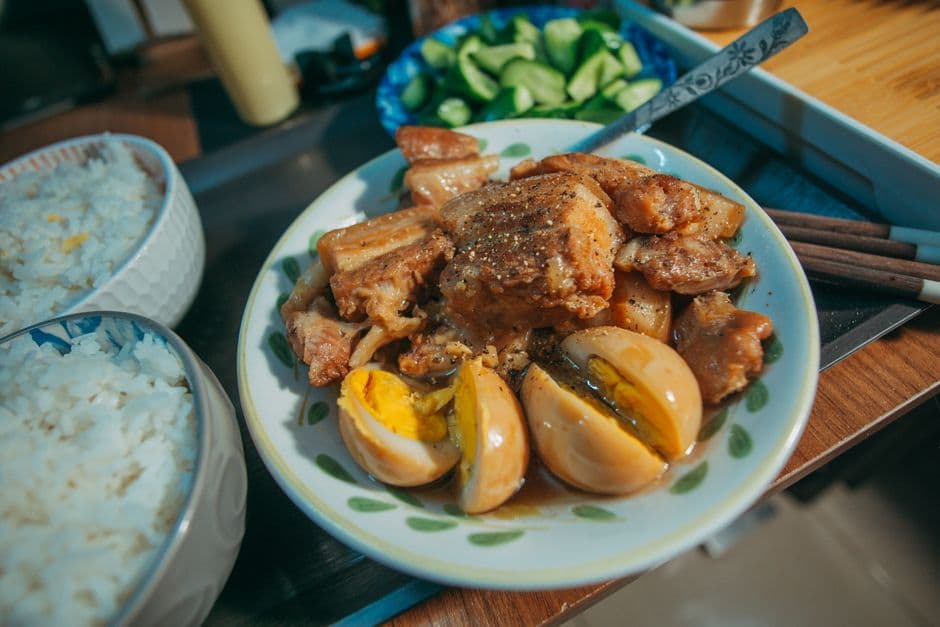
Filipino Chicken Adobo
Tender chicken braised in a tangy, garlicky soy-vinegar sauce until the meat falls from the bone and the sauce reduces to a rich, glossy glaze — the unofficial national dish of the Philippines.
About This Recipe
Chicken Adobo is the most recognised Filipino dish in the world, and for good reason: it is simple, adaptable, deeply satisfying, and practically impossible to make badly. The technique — braising protein in vinegar, soy sauce, garlic and bay leaves — was already common in the Philippines long before Spanish colonisation, used as a preservation method in the tropical heat. The word 'adobo' was applied by the Spanish to describe any food cooked this way. Every Filipino family has a version: some add coconut milk for creaminess, some fry the chicken after braising for crispy skin, some use cane vinegar, others white or palm vinegar. What they all share is that glorious balance of sour, salty, savoury and aromatic that makes Adobo endlessly craveable.
Ingredients
Serves 4
- 1.2 kgchicken pieces(thighs and drumsticks preferred)
- 120 mlwhite cane vinegar or white wine vinegar
- 80 mlsoy sauce
- 1 wholegarlic head(cloves lightly crushed, unpeeled)
- 1 teaspoonwhole black peppercorns(lightly crushed)
- 4bay leaves
- 1 tablespoonvegetable oil
- 250 mlwater
- 1 teaspoonsugar(optional, to balance)
Instructions
- 1
Marinate the chicken
Combine the vinegar, soy sauce, garlic, peppercorns and bay leaves in a bowl. Add the chicken pieces, toss to coat, and marinate for at least 30 minutes (or overnight in the fridge for deeper flavour).
- 2
Sear the chicken
Remove the chicken from the marinade (reserve the marinade). Heat oil in a wide, heavy pan over medium-high heat. Brown the chicken pieces skin-side down for 4–5 minutes until golden. Flip and brown the other side for 3 minutes. Remove and set aside.
Don't skip the sear — the golden skin adds colour and flavour to the finished dish.
- 3
Braise
Pour the reserved marinade and 250ml water into the pan. Return the chicken, bring to a boil, then reduce to a simmer. Cover and cook for 30 minutes, turning the chicken halfway.
- 4
Reduce the sauce
Uncover and increase heat to medium. Cook for 10–15 minutes, turning the chicken occasionally, until the sauce reduces to a thick, syrupy glaze and the chicken is coated and glossy. Taste and add sugar if needed.
- 5
Serve
Serve the chicken over steamed white rice, spooning the sticky sauce generously over the top. Garnish with sliced spring onions if desired.
Did you make this?
Rate it and help other cooks find the recipes that actually work.
One tap to sign in, and we'll save the rating you just picked.
Everything you need to plan your week — free
- Meal calendar
- Grocery list
- AI recipe ideas
Cook this hands-free
Get AI meal plans, step-by-step cooking mode, and your saved recipes in the free Bento app.
Pro Tips
- →
Do not cover the pot during the reduction phase — the sauce needs to evaporate to concentrate.
- →
Adobo is even better the next day as the flavours deepen overnight.
- →
Use bone-in, skin-on pieces for the best flavour and texture.
- →
Taste and adjust salt at the very end — flavors concentrate as liquids reduce, and a final pinch of flaky salt sharpens the whole dish.
Variations
- •
Add 200ml coconut milk in the last 10 minutes for Adobo sa Gata (creamy coconut adobo).
- •
Use pork belly instead of chicken for a richer, fattier version.
- •
Dry Adobo: after braising, fry the chicken in oil until the skin crisps and the sauce caramelises.
- •
Vegetarian: swap the protein for roasted king oyster mushrooms, smoked tofu or cooked chickpeas — adjust seasoning slightly upward to compensate.
Storage
Adobo keeps refrigerated for up to 5 days and freezes well for 3 months. Reheat gently in the pan, adding a splash of water if the sauce has thickened too much.
History & Origin
The technique of cooking meat in vinegar and salt predates Spanish colonisation in the Philippines by many centuries, used by indigenous peoples to preserve food in the tropical climate. Spanish colonisers recognised the similarity to their own adobar (to marinate) and applied the term. Soy sauce was later incorporated through Chinese trade influence, becoming the version most familiar today. Adobo was named the unofficial national dish of the Philippines in 2021.
Frequently Asked Questions
Which vinegar should I use?
Filipino cane vinegar (Datu Puti is a common brand) is traditional and gives the most authentic flavour. White wine vinegar or rice vinegar are the best substitutes. Avoid balsamic or malt vinegar.
Is Chicken Adobo spicy?
Classic Adobo is not spicy — the heat comes only from black peppercorns. Add fresh chillies or red pepper flakes if you want heat.
Can I make this ahead of time?
Yes — most of the components can be prepared up to a day in advance and refrigerated separately. Reheat gently and assemble just before serving so textures stay distinct.
What can I substitute if I don't have all the ingredients?
Stay close to the role each ingredient plays: swap aromatics for similar ones (shallot for onion, lime for lemon), and keep the fat-acid-salt balance intact. Spice blends can usually be approximated with what's in the cupboard.
Nutrition Facts
Per serving (330g / 11.6 oz) · 4 servings total
Time Summary
Have Questions?
Ask our AI cooking assistant anything about this recipe — substitutions, techniques, scaling.
Chat with AI Chef →Featured in Guides
This recipe is featured in the following curated guides:
More Filipino Recipes
You Might Also Like
Similar dishes from other cuisines around the world.
Browse by Ingredient
More recipes built around the same core ingredients.
Free Kitchen Tools
Calculators and converters that pair with this page — no signup needed.
Put This Into a Plan
Schedule it, shop for it, and track what you already have.
Read Next
Longer reads that go deeper on the ideas behind this dish.
Community
Join the conversation
Sign in to leave a comment and save your favourite recipes