hungariandinner✨ New
Chicken Paprikash
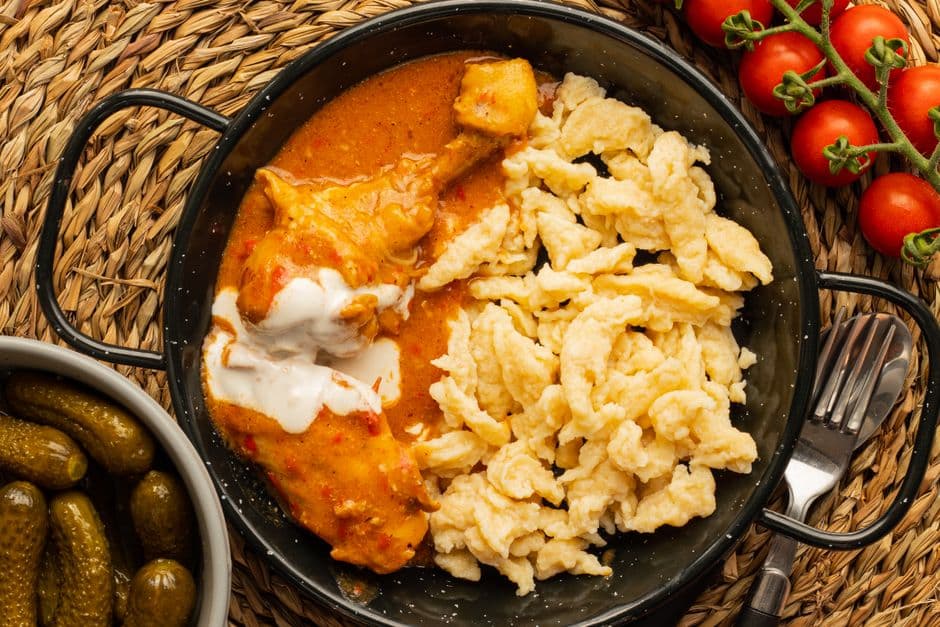
Csirkepaprikás — tender chicken thighs braised in a velvety, paprika-scented sauce finished with sour cream, served with egg noodles.
Prep
15 min
Cook
50 min
Servings
4
Difficulty
Easy
★★★★★
4.7(1,634 ratings)#hungarian#chicken#paprika#sour-cream#comfort-food
About This Recipe
Csirkepaprikás is one of Hungary's most beloved home-cooked dishes and a showcase for the country's most celebrated spice. Chicken pieces are gently braised in a rich base of onions, sweet paprika and tomatoes until fall-off-the-bone tender, then the sauce is finished with a generous swirl of sour cream that transforms it into a luxuriously silky, coral-coloured gravy. The classic accompaniment is nokedli — tiny Hungarian egg noodles scraped directly into boiling water — which soak up the paprikash sauce perfectly. This is Hungarian grandmother food at its finest: uncomplicated, deeply satisfying and made with love.
Ingredients
Serves 4
- 1.2 kgbone-in chicken thighs and drumsticks
- 2 largeonions(finely diced)
- 3 tablespoonssweet Hungarian paprika
- 1 teaspoonhot smoked paprika
- 2 mediumtomatoes(diced)
- 1green pepper(diced)
- 200 mlchicken stock
- 250 mlsour cream(full-fat)
- 1 tablespoonplain flour
- 2 tablespoonslard or vegetable oil
- salt and pepperto taste
Instructions
- 1
Brown the chicken
Season the chicken pieces generously with salt and pepper. Heat the lard in a wide, deep pan over medium-high heat and brown the chicken well on all sides, about 5 minutes per side. Work in batches if needed. Remove and set aside.
- 2
Fry the onions
In the same pan, fry the diced onions over medium heat until soft and golden, about 10 minutes. Remove from the heat, add both paprikas and stir immediately to prevent burning. Return to low heat for 30 seconds.
- 3
Build the sauce
Add the diced tomatoes and green pepper to the pan, stir together and cook for 3 minutes. Pour in the chicken stock and return the browned chicken to the pan, skin-side up. The liquid should come halfway up the chicken.
- 4
Braise
Bring to a simmer, cover and cook over low heat for 35 minutes, until the chicken is cooked through and very tender and beginning to fall from the bone.
- 5
Finish with sour cream
Remove the chicken to a plate. Whisk the flour into the sour cream until smooth, then stir this mixture into the hot sauce. Return the pan to low heat and stir gently for 3–4 minutes until the sauce thickens to a silky, coating consistency. Do not boil after adding the sour cream or it may split.
Tempering the sour cream with a ladle of hot sauce before adding it to the pan helps prevent curdling.
- 6
Return chicken and serve
Return the chicken to the sauce, coat well and heat through for 2 minutes. Serve over nokedli (Hungarian egg noodles) or wide egg pasta, with a final dusting of sweet paprika.
Pro Tips
- →
Use bone-in, skin-on chicken — it gives the sauce much more flavour than boneless breast.
- →
Full-fat sour cream is essential; low-fat versions split when heated.
- →
Stir the flour into the sour cream before adding to the sauce to prevent lumps.
- →
Taste and adjust salt at the very end — flavors concentrate as liquids reduce, and a final pinch of flaky salt sharpens the whole dish.
Variations
- •
Veal paprikash (borjúpaprikás) is equally traditional and considered even more elegant.
- •
Add a handful of sliced mushrooms with the tomatoes for extra depth.
- •
Vegetarian: swap the protein for roasted king oyster mushrooms, smoked tofu or cooked chickpeas — adjust seasoning slightly upward to compensate.
- •
Spicier: add a finely chopped fresh chile or a teaspoon of crushed Aleppo/Urfa pepper to the aromatics for warm, layered heat instead of a single sharp hit.
Storage
Keeps in the fridge for 3 days. Reheat gently over low heat; do not boil or the sauce may break.
History & Origin
Paprikash recipes began appearing in Hungarian cookbooks in the early 19th century, following the widespread adoption of paprika — originally brought to Hungary by the Ottomans — as the country's defining spice.
Frequently Asked Questions
Can I use boneless chicken breast?
You can, but reduce the cooking time to 20 minutes as breast dries out quickly. Bone-in thighs give far superior flavour and texture.
Can I make this ahead of time?
Yes — most of the components can be prepared up to a day in advance and refrigerated separately. Reheat gently and assemble just before serving so textures stay distinct.
What can I substitute if I don't have all the ingredients?
Stay close to the role each ingredient plays: swap aromatics for similar ones (shallot for onion, lime for lemon), and keep the fat-acid-salt balance intact. Spice blends can usually be approximated with what's in the cupboard.
How do I know it's authentic?
Authenticity sits on a spectrum — what matters more is honoring the technique and balance of flavors. If the dish tastes harmonious and respects how cooks in its home region would build it, you're on solid ground.
Nutrition Facts
Per serving · 4 servings total
Calories510kcal
Protein38g
Carbohydrates16g
Fat32g
Fiber1g
Protein38g
Carbs16g
Fat32g
Time Summary
Prep time15 min
Cook time50 min
Total time65 min
Have Questions?
Ask our AI cooking assistant anything about this recipe — substitutions, techniques, scaling.
Chat with AI Chef →More Hungarian Recipes
Community
Join the conversation
Sign in to leave a comment and save your favourite recipes