
Brazilian Churrasco Picanha
Brazilian-style grilled picanha with chimichurri-inspired seasoning — the king of the Brazilian BBQ.
About This Recipe
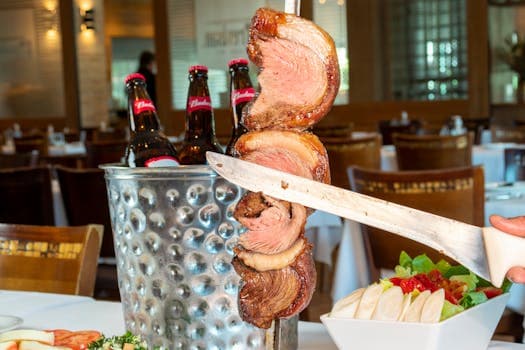
Brazilian churrasco is not merely a cooking method — it is a culture, a ritual and a social institution. At the heart of every churrascaria (Brazilian BBQ restaurant) and weekend churrasqueira (backyard BBQ) is picanha: a cut of beef that barely exists outside Brazil and South America, the top sirloin cap muscle with its thick layer of white fat that renders over live coals and bastes the meat in its own richness as it cooks. Seasoned with nothing but coarse sea salt — no marinades, no rubs, no complexity — this is beef at its most pure and magnificent. The picanha is folded over a large metal skewer in a horseshoe shape, fat side out, so the fire renders the fat cap while the interior cooks gently from the indirect heat. The technique is deceptively simple: high heat to char and render the fat, patient rotation, and a final direct sear over the hottest part of the fire for the last few minutes. The result is a crust of salt-kissed caramelized fat encasing juicy, medium-rare beef that needs nothing but a squeeze of lime. At a proper churrasco, gauchos (servers carrying large skewers) slice meat directly at the table with long, curved knives. At home, rest the skewered meat, slice off the outer cooked edges, return the skewer to the fire for another round. This is the infinite cycle of Brazilian BBQ — and the reason no one ever goes home hungry.
Ingredients
Serves 6
- 2.5 lbspicanha (top sirloin cap)(fat cap intact)
- 2 tbspcoarse sea salt (sal grosso)
- 1 tbspfreshly cracked black pepper(optional — some purists use only salt)
- lime wedges(to serve)
- farofa (toasted cassava flour), vinaigrette salsa(traditional accompaniments)
Instructions
- 1
Score and season
Score the fat cap in a crosshatch pattern, cutting through to (but not into) the meat. Season aggressively with coarse salt on all sides, pressing it in. Let rest at room temperature 30 minutes.
Coarse salt is essential — fine salt over-seasons. The Brazilian 'sal grosso' (rock salt) is ideal.
- 2
Skewer
Cut picanha into 3–4 sections. Fold each piece in a C-shape, fat side out, and thread onto a large flat-blade metal skewer. Alternatively, leave whole and grill flat (fatter side down first).
- 3
Grill over charcoal
Build a two-zone charcoal fire — very hot on one side, medium on the other. Start picanha over the hot zone, fat side down. Grill 5–6 minutes until fat renders and caramelizes. Rotate to cook all sides. Move to medium zone and cook to desired doneness (135°F for medium-rare).
Brazilian churrasco is traditionally cooked over charcoal — the smoke flavor is integral.
- 4
Rest and slice
Rest 8 minutes. Slice thinly across the grain. For the rodízio experience: slice the outer cooked edges, return the skewer to the fire, repeat.
Did you make this?
Rate it and help other cooks find the recipes that actually work.
One tap to sign in, and we'll save the rating you just picked.
Everything you need to plan your week — free
- Meal calendar
- Grocery list
- AI recipe ideas
Track what you eat
Snap your meal to log calories and macros, run fasting timers and track water in the free SnapCal app.
Pro Tips
- →
Picanha is the key cut — if unavailable, top sirloin cap or coulotte is the same cut. Ask a butcher.
- →
Brazilian churrasco uses only coarse salt — nothing else. Trust the simplicity.
- →
The fat cap must be kept on during cooking — it bastes the meat from the outside.
- →
Medium-rare (135°F) is traditional. Over-cooking picanha makes it chewy.
Variations
- •
Fraldinha (Flank Steak Churrasco): thin flank steak marinated briefly in garlic, lime and olive oil.
- •
Costela (Beef Ribs): whole beef ribs cooked for hours over low indirect heat.
- •
Alcatra (Top Round Skewers): a more everyday cut, marinated in garlic and beer.
Storage
Grill to order — churrasco is not a dish that benefits from being made ahead. Leftovers refrigerate up to 3 days; slice thin and serve cold or reheat briefly in a hot skillet.
History & Origin
Brazilian churrasco traces to the gaucho (cowboy) culture of Rio Grande do Sul in southern Brazil, where 18th-century cattle herders cooked meat over open fires as a practical necessity. The rodízio (all-you-can-eat churrasqueira) format was invented in the 1940s in Porto Alegre and spread globally, with Brazilian steakhouse chains like Fogo de Chão and Outback's Churrascaria format reaching every continent.
Frequently Asked Questions
Where can I find picanha?
Brazilian grocery stores and butcher shops are the most reliable source. Some Costco and Whole Foods locations carry it. Online meat purveyors (Snake River Farms, Crowd Cow) sell it. Ask your butcher for 'top sirloin cap' or 'coulotte.'
Can I use a gas grill instead of charcoal?
Yes — use the highest heat setting and cook with the lid open to mimic direct charcoal heat. You'll lack the smoke flavor, but the technique and result are otherwise very similar.
How do I keep the fat cap on?
Ask the butcher for picanha with the full fat cap (at least ¾ inch thick) intact. Don't trim it — it renders during cooking and is what makes picanha unique.
Nutrition Facts
Per serving (400g / 14.1 oz) · 6 servings total
Time Summary
Have Questions?
Ask our AI cooking assistant anything about this recipe — substitutions, techniques, scaling.
Chat with AI Chef →Featured in Guides
This recipe is featured in the following curated guides:
More Brazilian Recipes
You Might Also Like
Similar dishes from other cuisines around the world.
Free Kitchen Tools
Calculators and converters that pair with this page — no signup needed.
Put This Into a Plan
Schedule it, shop for it, and track what you already have.
Read Next
Longer reads that go deeper on the ideas behind this dish.
Community
Join the conversation
Sign in to leave a comment and save your favourite recipes