
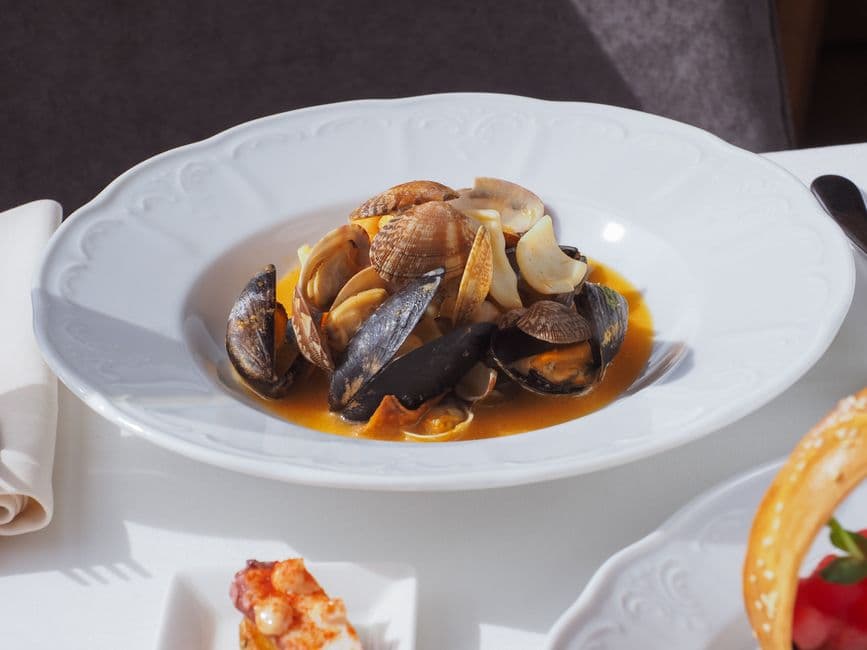
Manhattan Clam Chowder
Tomato-based clam chowder studded with vegetables and tender clams.
About This Recipe
Manhattan clam chowder is the tomato-based, brothy cousin of the creamy New England version. Built on a base of bacon, onion, celery, carrot, and bell pepper, it simmers diced potatoes and crushed tomatoes into a bright, herbaceous broth before fresh chopped clams are folded in at the very end. Unlike its dairy-rich rival, this chowder stays light and tangy, with thyme and a hint of red pepper lifting the brine of the clams. It is hearty enough for a main course yet clean-tasting, the kind of soup that tastes even better the next day once the flavors marry. Serve it with oyster crackers or crusty bread.
Ingredients
Serves 6
- 4 slicesbacon(diced)
- 1 largeyellow onion(diced)
- 2 ribscelery(diced)
- 1 mediumcarrot(diced)
- 1 mediumgreen bell pepper(diced)
- 3 clovesgarlic(minced)
- 1 28 oz cancrushed tomatoes
- 3 cupsbottled clam juice
- 1 lbYukon Gold potatoes(diced)
- 2 tspfresh thyme leaves
- 1 pinchred pepper flakes
- 24 ozchopped clams(with their liquor)
- 2 tbspfresh parsley(chopped)
Instructions
- 1
Render the bacon
In a heavy pot over medium heat, cook the diced bacon 6-8 minutes until crisp and the fat is rendered. Leave the bacon and about 2 tablespoons of fat in the pot for flavor.
Smoked bacon adds depth that mirrors traditional salt pork.
- 2
Sweat the vegetables
Add onion, celery, carrot, and bell pepper. Cook 8 minutes over medium heat until softened and the onion turns translucent, stirring often so nothing browns too hard.
- 3
Build the base
Stir in garlic and cook 1 minute until fragrant. Add crushed tomatoes, clam juice, potatoes, thyme, and red pepper flakes, scraping up any browned bits from the bottom of the pot.
- 4
Simmer
Bring to a gentle boil, then reduce to a simmer. Cook uncovered 20-25 minutes until the potatoes are fork-tender and the broth has thickened slightly and concentrated in flavor.
A simmer, not a boil, keeps the potatoes intact rather than mushy.
- 5
Add the clams
Stir in the chopped clams and their liquor. Cook just 3-4 minutes until the clams are heated through; longer cooking turns them rubbery and tough.
- 6
Season and finish
Taste and adjust with salt and black pepper, remembering clam juice is already salty. Stir in fresh parsley off the heat and serve hot with oyster crackers.
Did you make this?
Rate it and help other cooks find the recipes that actually work.
One tap to sign in, and we'll save the rating you just picked.
Everything you need to plan your week — free
- Meal calendar
- Grocery list
- AI recipe ideas
Track what you eat
Snap your meal to log calories and macros, run fasting timers and track water in the free SnapCal app.
Pro Tips
- →
Use fresh shucked clams when available, reserving every drop of the liquor for the broth.
- →
Let the chowder rest 30 minutes before serving so the tomato and clam flavors meld.
- →
Bottled clam juice is the secret to a deep seafood base without raw clams.
- →
Dice potatoes small and uniform so they cook evenly and bind the soup.
Variations
- •
Add a splash of white wine when building the base for extra brightness.
- •
Stir in a cup of corn kernels for a sweeter, fuller-bodied soup.
- •
Use linguica or chorizo in place of bacon for a smoky, spicy edge.
Storage
Refrigerate in an airtight container up to 3 days; the flavor deepens overnight. Reheat gently so the clams do not toughen, and avoid freezing as the potatoes turn grainy.
History & Origin
Manhattan clam chowder emerged in the late 19th century, reportedly influenced by Italian and Portuguese immigrant cooks who added tomatoes to the New England chowder tradition. Maine even passed a tongue-in-cheek bill in the 1930s seeking to outlaw tomatoes in chowder, underscoring the regional rivalry between the creamy and tomato styles.
Frequently Asked Questions
What is the difference between Manhattan and New England clam chowder?
New England chowder is cream-based, thick, and ivory colored, while Manhattan chowder is tomato-based, brothy, and red. Manhattan style is lighter and tangier, using tomatoes and a medley of vegetables instead of dairy, which makes it brighter but less rich than its famous Northern cousin.
Can I use canned clams instead of fresh?
Yes, canned chopped clams work very well and are the standard for home cooks. Use them along with their packing liquid for flavor, and add them only in the last few minutes of cooking. Fresh shucked clams give a sweeter taste, but canned is convenient and reliable year-round.
Why are my clams tough and rubbery?
Clams overcook quickly. They need only 3-4 minutes to heat through once added to the simmering broth. Any longer and the proteins seize up, turning the meat chewy and rubbery. Always add clams at the very end, off a hard boil, and serve promptly for tender results.
How do I thicken Manhattan clam chowder?
This style is meant to be brothy rather than thick, but you can concentrate it by simmering uncovered a little longer. The potatoes also release starch that lightly thickens the broth. For a heartier body, mash a few potato pieces against the side of the pot before adding the clams.
Nutrition Facts
Per serving (380g / 13.4 oz) · 6 servings total
Time Summary
Have Questions?
Ask our AI cooking assistant anything about this recipe — substitutions, techniques, scaling.
Chat with AI Chef →More American Recipes
You Might Also Like
Similar dishes from other cuisines around the world.
Browse by Ingredient
More recipes built around the same core ingredients.
Free Kitchen Tools
Calculators and converters that pair with this page — no signup needed.
Put This Into a Plan
Schedule it, shop for it, and track what you already have.
Read Next
Longer reads that go deeper on the ideas behind this dish.
Community
Join the conversation
Sign in to leave a comment and save your favourite recipes