
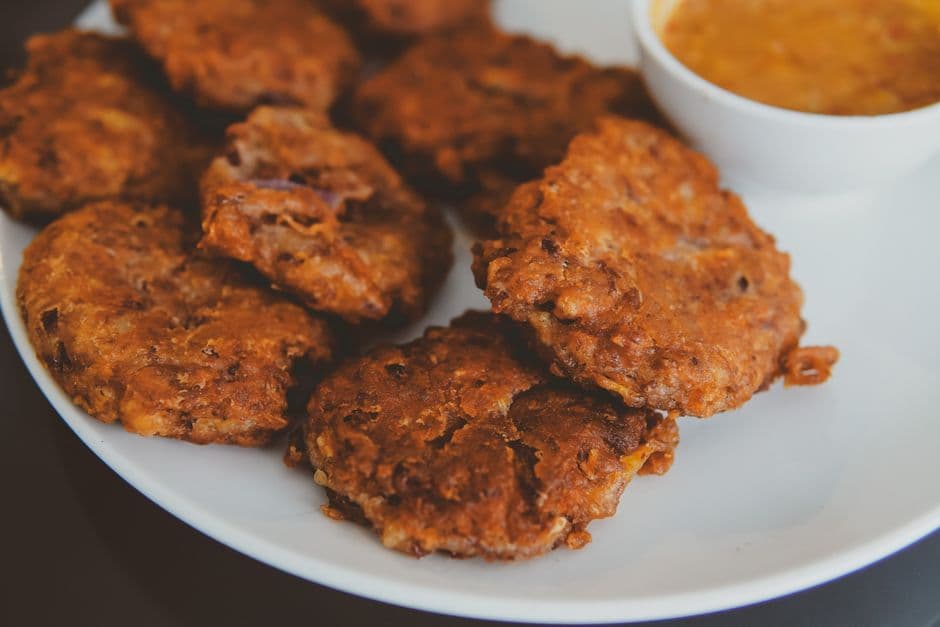
Clam Fritters
Crispy New England-style clam fritters with a fluffy interior and briny, tender chopped clams in every bite.
About This Recipe
Clam fritters are a beloved New England coastal staple, sold at roadside clam shacks from Maine to Rhode Island and served at church suppers and summer fairs throughout the region. At their best they are deeply golden on the outside — almost lacquered — with a light, airy crumb that still carries the unmistakable brininess of the sea. The batter is deliberately simple: flour, egg, buttermilk or milk, and a little baking powder so the fritters puff rather than flatten in the oil. Freshly shucked or good-quality canned chopped clams and their liquor go straight into the batter, seasoned with Old Bay, a hint of onion, and black pepper. The clam liquor does double duty, adding salinity and softening the batter so you can skip extra salt without sacrificing flavor. Dropped by the spoonful into 360°F oil, they fry in under three minutes, emerging with a shatter-crisp shell and a pillowy interior studded with plump clam pieces. The technique is forgiving but a few details matter. The batter should be thick enough to hold its shape when dropped but loose enough to spread slightly, roughly the consistency of thick pancake batter. Overmixing develops gluten and toughens the fritter, so stir just until the streaks of flour disappear. Oil temperature is the other critical factor: too low and the fritters absorb grease and turn dense; too high and the outside browns before the inside sets. Fry in small batches to keep the temperature steady, and drain on a wire rack so both sides stay crisp. Serve immediately with tartar sauce, a squeeze of lemon, and cold beer for the quintessential New England shore experience.
Ingredients
Serves 4
- 24 ozcanned chopped clams(with their liquor drained and reserved)
- 1 cupall-purpose flour
- 1.5 tspbaking powder
- 1 tspOld Bay seasoning
- 0.5 tspblack pepper
- 1 largeegg
- 0.5 cupbuttermilk
- 0.25 cupreserved clam liquor
- 3 tbspgrated onion(with juices)
- 2 tbspfresh parsley(finely chopped)
- 1 qtvegetable oil(for frying)
- 1lemon(cut into wedges)
Instructions
- 1
Drain the clams
Drain the clams over a bowl to collect the liquor, pressing gently. Measure out 1/4 cup of the liquor for the batter; reserve the rest for another use or discard. Pat the clams lightly dry so excess moisture does not thin the batter too much.
Chopped surf clams in cans are preferred over minced; they give a meatier bite.
- 2
Mix dry ingredients
Whisk together the flour, baking powder, Old Bay, and black pepper in a large bowl until completely combined. Distributing the leavening evenly ensures the fritters puff uniformly when they hit the oil.
- 3
Combine wet ingredients
In a separate bowl, beat the egg lightly, then stir in the buttermilk, reserved clam liquor, grated onion and its juices, and parsley. The buttermilk and liquor together create a slightly acidic environment that reacts with the baking powder for extra lift.
Grating the onion releases its juice into the batter, flavoring it without leaving crunchy pieces.
- 4
Make the batter
Pour the wet mixture into the dry ingredients and fold together with a spatula until just combined — a few lumps are fine. Fold in the drained clams gently. Do not overmix, or the fritters will be tough instead of light and airy.
- 5
Heat the oil
Pour 2 inches of vegetable oil into a heavy pot or Dutch oven and heat to 360°F over medium-high heat. Use a deep-fry thermometer; oil at the correct temperature is the single most important factor in achieving a crisp, non-greasy fritter.
- 6
Fry in batches
Drop rounded tablespoons of batter into the hot oil, frying 5 or 6 fritters at a time. Cook 2 to 3 minutes, turning once, until deep golden brown all over and a toothpick inserted in the center comes out clean. Maintain oil temperature between batches.
Let the oil return to 360°F between batches; crowding drops the temperature and makes fritters greasy.
- 7
Drain and serve
Transfer the finished fritters to a wire rack set over a baking sheet. Sprinkle with a pinch of flaky salt immediately. Serve hot with lemon wedges and tartar sauce or remoulade while the crust is at peak crunch.
Did you make this?
Rate it and help other cooks find the recipes that actually work.
One tap to sign in, and we'll save the rating you just picked.
Everything you need to plan your week — free
- Meal calendar
- Grocery list
- AI recipe ideas
Track what you eat
Snap your meal to log calories and macros, run fasting timers and track water in the free SnapCal app.
Pro Tips
- →
Use canned chopped surf clams rather than minced — they give meatier texture without extra chewiness from tougher whole-clam pieces.
- →
Keep the batter thick (like heavy pancake batter); if it runs off the spoon too easily, add a tablespoon of flour to help fritters hold their shape.
- →
Rest the mixed batter 5 minutes before frying so the baking powder activates and the flour fully hydrates.
- →
Fry in small batches and let the oil recover to 360°F between each round — this is the single biggest factor in a crisp, grease-free crust.
- →
Drain on a wire rack, not paper towels, so the bottoms stay crisp and do not steam themselves soggy.
Variations
- •
Fold in 2 tablespoons of diced jalapeño and a pinch of cayenne for spicy clam fritters.
- •
Add 1/4 cup of fresh or frozen corn kernels for a clam-and-corn fritter popular in coastal Connecticut.
- •
Swap the buttermilk for sour cream for a denser, richer fritter reminiscent of Rhode Island-style versions.
- •
Use freshly shucked littleneck or razor clams for the most intensely briny, traditional result when in season.
Storage
Clam fritters are at their best eaten fresh and hot. Refrigerate leftovers in an airtight container for up to 2 days. Reheat on a wire rack in a 200°C (400°F) oven or air fryer for 5 to 6 minutes to restore the crust; avoid the microwave, which turns them rubbery and limp.
History & Origin
Clam fritters have been part of New England coastal cooking since at least the 18th century, when clams were cheap, plentiful, and central to the diet of fishing communities from Massachusetts to Maine. Roadside clam shacks along Route 1 in New England popularized them alongside whole-belly fried clams in the early 20th century. Howard Johnson's restaurants helped spread fried clam dishes nationwide from the 1930s onward, cementing clam fritters as an American seaside icon.
Frequently Asked Questions
Can I use fresh clams instead of canned?
Yes, and fresh shucked clams give a sweeter, more intensely briny flavor. Shuck and chop about 1 pound of littleneck or steamer clams, collecting all the liquor as you go. The rest of the recipe stays exactly the same. Fresh clams are best in spring and fall when they are in peak season and most affordable.
Why are my clam fritters dense and doughy inside?
Dense fritters usually result from overmixing the batter, which develops gluten and tightens the crumb, or from oil that was too cool, causing the fritters to absorb grease instead of forming a quick crust. Mix the batter just until combined, maintain the oil at a steady 360°F, and make sure fritters are not larger than a heaping tablespoon for even cooking.
What dipping sauce goes best with clam fritters?
Classic tartar sauce — mayonnaise sharpened with pickle relish, lemon juice, and fresh dill — is the traditional pairing. New England remoulade, cocktail sauce with horseradish, or a simple aioli with lemon zest all work beautifully. The fritters' briny richness pairs well with anything acidic and slightly tangy.
Can I make the batter ahead of time?
You can mix the dry and wet ingredients separately up to a day in advance and refrigerate them. Combine them with the clams just before frying, because once the baking powder activates in the wet batter, the leavening power begins to dissipate. Batter that sits too long loses its lift, and the fritters will be flat and dense.
How do I prevent clam fritters from being greasy?
Greasy fritters almost always mean the oil was too cool or the pan was too crowded. When cold batter hits insufficiently hot oil, it absorbs fat before a crust can form. Use a thermometer, keep the oil at 360°F, fry in small batches, and drain on a wire rack rather than paper towels for the crispest result.
Nutrition Facts
Per serving (240g / 8.5 oz) · 4 servings total
Time Summary
Have Questions?
Ask our AI cooking assistant anything about this recipe — substitutions, techniques, scaling.
Chat with AI Chef →Featured in Guides
This recipe is featured in the following curated guides:
More American Recipes
You Might Also Like
Similar dishes from other cuisines around the world.
Free Kitchen Tools
Calculators and converters that pair with this page — no signup needed.
Put This Into a Plan
Schedule it, shop for it, and track what you already have.
Read Next
Longer reads that go deeper on the ideas behind this dish.
Community
Join the conversation
Sign in to leave a comment and save your favourite recipes