
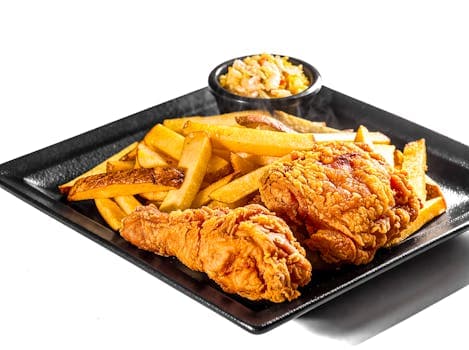
Country Fried Chicken
Classic American Country Fried recipe.
About This Recipe
Country fried chicken is the Sunday-dinner standard of the rural South: bone-in pieces soaked in seasoned buttermilk, dredged in flour, and shallow-fried in a heavy skillet until the crust is deep golden and the meat steams when you break it open. Unlike fast-food pressure-fried chicken, the skillet method gives an irregular, craggy crust and a slower, gentler cook. This version works because the overnight buttermilk soak tenderizes and seasons to the bone, a touch of buttermilk flicked into the dredge creates crisp shaggy bits, and the chicken is fried covered for the first half, an old farmhouse trick that keeps the meat juicy while the crust sets.
Ingredients
Serves 4
- 3.5 lbsbone-in chicken pieces(thighs, drumsticks, breasts, and wings)
- 2 cupsbuttermilk
- 1 tspkosher salt
- 1 tspblack pepper
- 1 tspgarlic powder
- 1 tbsphot sauce (such as Tabasco)
- 2 cupsall-purpose flour
- 1 tspsmoked paprika
- 0.5 tspcayenne pepper
- 1.5 cupspeanut oil(or lard, for shallow-frying)
Instructions
- 1
Prepare
Soak chicken pieces overnight in buttermilk seasoned with salt, black pepper, garlic powder, and a few shakes of hot sauce; the acid tenderizes while the salt brines the meat to the bone.
- 2
Cook
Whisk flour with paprika, salt, pepper, and a pinch of cayenne, then flick a few teaspoons of the buttermilk into it and toss. Dredge each piece firmly, pressing flour into every crevice, and rest 10 minutes on a rack.
The rest lets the coating hydrate and bond, so it will not slough off in the oil.
- 3
Combine
Heat three-quarters of an inch of oil to 340F in a cast-iron skillet. Add chicken skin-side down, cover, and fry 8 minutes; uncover, flip, and fry 8 to 10 minutes more until both sides are deep golden.
Covering the skillet at the start traps steam that helps the meat cook through before the crust over-darkens.
- 4
Serve
Check that thighs and breasts read 165F at the bone, then drain on a wire rack, never paper towels, and salt lightly while hot. Rest 5 minutes so the juices settle before serving.
Did you make this?
Rate it and help other cooks find the recipes that actually work.
One tap to sign in, and we'll save the rating you just picked.
Everything you need to plan your week — free
- Meal calendar
- Grocery list
- AI recipe ideas
Track what you eat
Snap your meal to log calories and macros, run fasting timers and track water in the free SnapCal app.
Pro Tips
- →
Cut a whole chicken into 8 pieces yourself for fresher meat and better value than pre-cut packs.
- →
Maintain the oil between 325F and 350F, adjusting the burner as pieces go in and out.
- →
A wire rack keeps the crust crisp; paper towels trap steam and soften the underside.
- →
Fry dark meat and white meat in separate batches, since breasts finish several minutes earlier.
- →
Save the seasoned frying drippings to make cream gravy in the same skillet.
Variations
- •
Make it spicy by adding two tablespoons of cayenne to the dredge and a brush of hot honey at the end.
- •
Use the same method on boneless thighs for sandwiches, cutting fry time to 5 minutes per side.
- •
Try a half-and-half dredge of flour and fine cornmeal for an extra-crunchy country crust.
- •
Serve smothered: return fried chicken to the skillet with onion gravy and simmer 15 minutes.
Storage
Refrigerate fried chicken loosely covered for up to 4 days; re-crisp in a 400F oven for 12 to 15 minutes rather than microwaving. It also freezes for 2 months and is genuinely good cold from the fridge, a Southern picnic tradition.
History & Origin
Fried chicken in the American South grew from the convergence of Scottish frying traditions and the seasoning and frying expertise of enslaved West African cooks, who shaped the dish into its modern form. By the 19th century it was a celebrated Sunday and special-occasion dish, and entrepreneurs like the Black waiter-cooks of Gordonsville, Virginia famously sold fried chicken to railroad passengers, spreading its reputation nationwide.
Frequently Asked Questions
What is the difference between country fried and Southern fried chicken?
The terms overlap heavily and many cooks use them interchangeably. Country fried usually implies skillet shallow-frying, sometimes finished covered or smothered in gravy, while Southern fried often refers to the same buttermilk-and-flour chicken deep-fried. The brine, dredge, and seasoning are essentially shared territory.
Can I skip the overnight buttermilk soak?
You can shorten it, but even 2 hours makes a measurable difference in juiciness and seasoning, and 30 minutes is the practical minimum. The lactic acid gently tenderizes while salt penetrates the meat. If you have no buttermilk, stir a tablespoon of lemon juice into whole milk and let it sit 10 minutes.
What oil is best for frying chicken?
Traditional Southern cooks used lard or shortening, which give superb flavor and crispness; peanut oil is the modern favorite for its high smoke point and clean taste. Vegetable or canola oil work fine too. Whatever you use, keep the depth around three-quarters of an inch and the temperature near 340F.
How do I know the chicken is done without a thermometer?
A thermometer reading 165F at the bone is by far the most reliable check, and an instant-read model is a cheap investment. Failing that, pierce the thickest part of the thigh: the juices should run clear with no pink, and the meat at the bone should show no translucence.
Nutrition Facts
Per serving (300g / 10.6 oz) · 4 servings total
Time Summary
Have Questions?
Ask our AI cooking assistant anything about this recipe — substitutions, techniques, scaling.
Chat with AI Chef →Featured in Guides
This recipe is featured in the following curated guides:
More American Recipes
You Might Also Like
Similar dishes from other cuisines around the world.
Browse by Ingredient
More recipes built around the same core ingredients.
Free Kitchen Tools
Calculators and converters that pair with this page — no signup needed.
Put This Into a Plan
Schedule it, shop for it, and track what you already have.
Read Next
Longer reads that go deeper on the ideas behind this dish.
Community
Join the conversation
Sign in to leave a comment and save your favourite recipes