
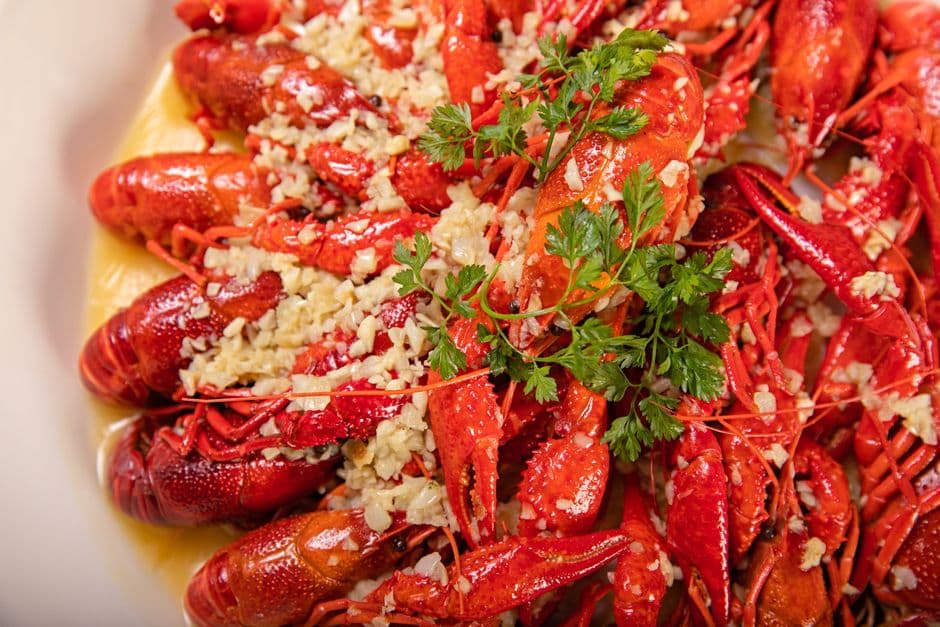
Louisiana Crawfish Étouffée
Cajun crawfish smothered in a blond roux, the holy trinity, and sweet tomato — served over fluffy white rice with a slick of melted butter on top.
About This Recipe
Étouffée — French for 'smothered' — is the dish that gives Louisiana its softest, most romantic flavor: sweet crawfish tails bathed in a buttery, blond-roux sauce built on onion, celery and bell pepper, lightly tomato-tinged, finished with parsley and green onion. Unlike its darker cousin gumbo, étouffée is paler, richer and shorter to cook, defined less by smoke than by the perfumed sweetness of crawfish fat. In Cajun homes around Breaux Bridge and Henderson, the dish is built during crawfish season (February through May) when sacks of live mudbugs are boiled by the dozen for backyard parties; the leftover tails — and crucially their orange fat — get peeled and frozen for étouffée all year. The proper version uses 'crawfish tail meat with fat,' a labeled product from Louisiana processors that delivers that signature golden color and bisque-like depth. The cook starts with a blond roux (not a dark gumbo roux), sweats the trinity slowly until silky, deglazes with shrimp or seafood stock, and folds in the crawfish tails at the very end, cooking them only long enough to heat through — overcooked crawfish turns rubbery and grainy in minutes. The whole thing is served over rice, garnished with green onion and parsley, and eaten with a beer and a hunk of French bread to mop the plate.
Ingredients
Serves 6
- 700 gLouisiana crawfish tail meat with fat, thawed if frozen(do not rinse — the orange fat is essential)
- 120 gunsalted butter
- 60 gall-purpose flour
- 1 largeyellow onion, fine dice
- 2 stalkscelery, fine dice
- 1green bell pepper, fine dice
- 4 clovesgarlic, minced
- 2 tbsptomato paste
- 500 mlshrimp or seafood stock, warm
- 1 tspsweet paprika
- 1/2 tspcayenne, more to taste
- 1 tspdried thyme
- 1bay leaf
- 3green onions, thinly sliced
- 30 gflat-leaf parsley, chopped
- 1 tbspWorcestershire sauce
- cooked long-grain rice, to serve
- Crystal hot sauce and lemon wedges, to serve
Instructions
- 1
Make a blond roux
Melt 80 g of the butter in a heavy 4-quart saucier over medium heat. Whisk in the flour and cook, stirring constantly, 6–8 minutes until the roux is the color of peanut butter and smells like toasted pie crust. This is a blond roux — much paler than gumbo roux; you want the floury taste cooked out without going dark.
- 2
Sweat the trinity
Add the onion, celery and bell pepper to the roux. The pan will hiss and the roux will tighten — keep stirring. Cook over medium-low heat 8–10 minutes until the vegetables are translucent, silky and have given up most of their moisture.
- 3
Bloom aromatics
Stir in the garlic, paprika, cayenne, thyme and bay. Cook 60 seconds until intensely fragrant. Add the tomato paste and cook another 90 seconds, stirring constantly, until the paste turns a shade darker and coats the vegetables.
- 4
Build the sauce
Pour in the warm shrimp stock in three additions, whisking smooth after each. Bring to a gentle simmer and cook 12–15 minutes, stirring often, until the sauce thickens to coat the back of a spoon and the raw flour taste is gone. The color should be a warm peachy-rust.
- 5
Add the crawfish
Lower heat to medium-low. Fold in the crawfish tails with all their fat. Cook only 4–5 minutes, stirring gently — the tails are already cooked and just need to heat through. Overcook them and they turn rubbery and the fat breaks.
Stir with a silicone spatula, not a metal spoon, to avoid mashing the tails.
- 6
Finish with butter and Worcestershire
Off the heat, swirl in the remaining 40 g of butter, the Worcestershire, half the green onions and half the parsley. Taste — you should land somewhere between sweet, buttery, and gently spicy. Adjust salt and cayenne; if it tastes flat, a tiny squeeze of lemon brings everything forward.
- 7
Plate and serve
Mound a scoop of hot rice in the center of warm shallow bowls. Ladle the étouffée around (not over) the rice so the rice stays distinct. Shower with the remaining green onion and parsley. Pass hot sauce and lemon wedges. Eat immediately — this is not a dish that benefits from waiting.
Did you make this?
Rate it and help other cooks find the recipes that actually work.
One tap to sign in, and we'll save the rating you just picked.
Everything you need to plan your week — free
- Meal calendar
- Grocery list
- AI recipe ideas
Track what you eat
Snap your meal to log calories and macros, run fasting timers and track water in the free SnapCal app.
Pro Tips
- →
Crawfish tail meat 'with fat' is non-negotiable; the orange fat is what gives étouffée its golden color and bisque-like richness. Riceland and Bayou Land are reliable brands.
- →
Shrimp shell stock is dramatically better than store-bought 'seafood stock' — save shells every time you cook shrimp and freeze them for exactly this dish.
- →
Don't overcook the crawfish — count to 5 minutes after they go in, then stop. They're precooked and tougher than shrimp.
- →
A blond roux is forgiving compared to a dark roux, but still needs constant stirring. Use a flat wooden spoon to reach the corners of the pan.
Variations
- •
Shrimp étouffée: substitute 700 g peeled raw shrimp, added in the final 4 minutes — cook until just pink.
- •
Creole-style: lean further into tomato (double the paste, add 200 g chopped tomato) for the New Orleans city version vs the country Cajun version.
- •
Crawfish-and-corn étouffée: stir in 200 g sweet corn kernels with the trinity for a summer twist.
- •
Make it dairy-free: substitute the butter with neutral oil plus a tablespoon of nutritional yeast — less rich but legitimately good.
Storage
Refrigerate up to 3 days in a sealed container; the sauce thickens further when cold. Reheat gently over low with a splash of stock to loosen — never microwave or the crawfish turns rubbery. Do not freeze: thawed étouffée separates and the tails go grainy.
History & Origin
Étouffée was popularized in Breaux Bridge, Louisiana, in the 1950s, with Aline Champagne of the Hebert Hotel often credited as the first to serve it commercially. The technique of smothering is older — French Acadians brought 'à l'étouffée' braising to Louisiana in the 1700s and adapted it with local crawfish and the Spanish-influenced trinity.
Frequently Asked Questions
Can I use crawfish from outside Louisiana?
Chinese-farmed crawfish (often sold in Asian markets) work but lack the fat of Louisiana mudbugs, so add an extra tablespoon of tomato paste and a knob of butter at the end. If you can mail-order Louisiana crawfish, it's worth it.
What if I can only find crawfish without fat?
Boost the dish with 2 tablespoons of tomato paste and stir in 50 g extra butter at the end. The color and depth won't be quite the same, but the dish is still excellent.
Is étouffée spicy?
Properly made, it's mildly warm — a background heat that supports the crawfish sweetness rather than overpowering it. Cajun home cooks often serve it mild and let diners add Crystal hot sauce at the table.
Why did my sauce break?
Either the heat was too high when you added the crawfish (above a gentle simmer), or you cooked it too long. Pull it off the heat the moment the tails are warm and the butter finish locks the sauce together.
Nutrition Facts
Per serving (400g / 14.1 oz) · 6 servings total
Time Summary
Have Questions?
Ask our AI cooking assistant anything about this recipe — substitutions, techniques, scaling.
Chat with AI Chef →Featured in Guides
This recipe is featured in the following curated guides:
More American Recipes
You Might Also Like
Similar dishes from other cuisines around the world.
Browse by Ingredient
More recipes built around the same core ingredients.
Free Kitchen Tools
Calculators and converters that pair with this page — no signup needed.
Put This Into a Plan
Schedule it, shop for it, and track what you already have.
Read Next
Longer reads that go deeper on the ideas behind this dish.
Community
Join the conversation
Sign in to leave a comment and save your favourite recipes