
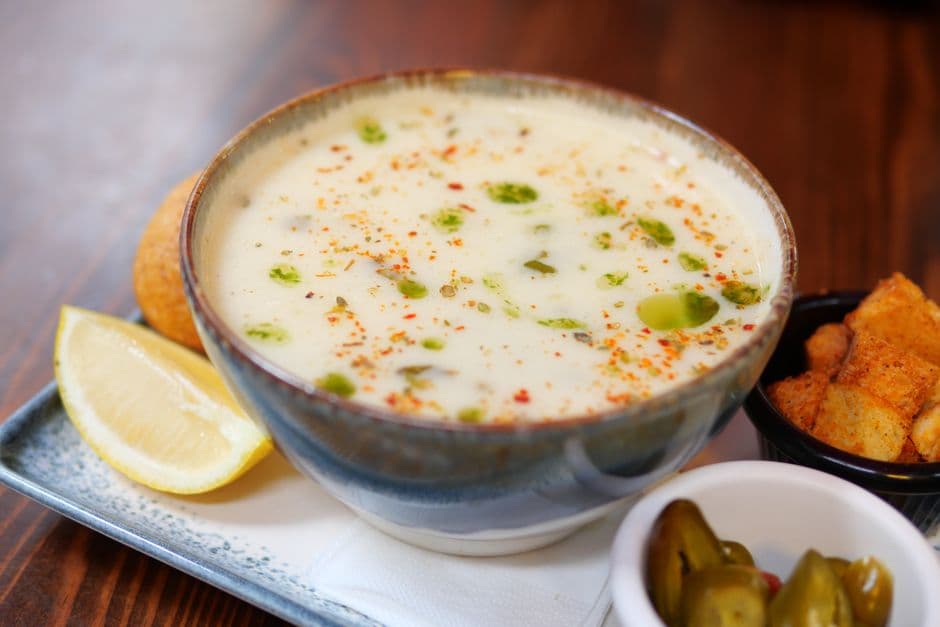
Cullen Skink (Scottish Smoked Haddock Soup)
Scotland's iconic chowder from the Moray Firth — smoked Finnan haddie poached in milk with onion and waxy potato into a creamy, woodsmoke-scented soup.
About This Recipe
Cullen skink takes its name from the fishing village of Cullen on the Moray Firth in north-east Scotland, where it has been made for at least two centuries from the village's most prized export: Finnan haddie, a cold-smoked haddock cured over green wood that imparts a distinctive pale yellow colour and a haunting woodsmoke aroma. The word 'skink' is old Scots for a soup or broth made from the shin of a beef, but here it has been borrowed for a humbler, fishier version. The dish is austere by design: smoked haddock is poached gently in whole milk and water with a single bay leaf until it releases its smoke and flavour into the liquid, then flaked and reserved. Onions are sweated in butter, waxy potatoes simmered in the strained poaching milk until tender, and the flaked fish folded back in at the end with a generous knob of butter and a flurry of chopped parsley. There is no flour, no cream, no leek (despite what many recipes claim), and certainly no smoked paprika — the smoke comes from the fish, not a spice rack. The texture sits between a chowder and a thick soup, with chunks of potato and pearly fish suspended in a creamy, faintly amber broth. Served with crusty oatcakes or a thick slice of brown bread, it is one of the great fish dishes of the British Isles and is now formally protected under a Scottish PGI bid.
Ingredients
Serves 4
- 500 gundyed naturally smoked haddock fillet (Finnan haddie if available), skin on
- 600 mlwhole milk
- 300 mlwater
- 1bay leaf
- 1 largewhite onion, finely diced
- 500 gwaxy potatoes (Charlotte or Maris Peer), peeled and diced 1 cm
- 50 ggood salted butter, plus extra to finish
- 2 tbspflat-leaf parsley, finely chopped
- freshly ground white pepper, to taste
Instructions
- 1
Poach the haddock
Place the haddock skin-side down in a wide pan. Pour over the milk and water, add the bay leaf, and bring to barely a tremble over medium heat. Reduce to low and poach for 6–7 minutes until the fish flakes when prodded with a knife.
- 2
Strain and flake
Lift the haddock onto a plate using a fish slice. Strain the poaching liquid through a fine sieve into a jug and reserve. Once cool enough to handle, remove the skin and any pin bones from the haddock, then flake into chunky pieces with two forks. Reserve in a warm bowl.
- 3
Sweat the onion
Wipe the pan dry. Melt the butter over low heat, add the onion with a small pinch of salt, and sweat gently for 10 minutes until completely soft and translucent but not coloured — colour gives bitterness to a delicate soup like this.
- 4
Cook the potatoes
Add the diced potato to the buttery onions and stir to coat. Pour in the strained smoky milk-poaching liquid. Bring to a low simmer and cook uncovered for 12–14 minutes until the potatoes are tender at the centre but still holding their shape.
- 5
Thicken naturally
Lift out about a third of the potato cubes with a slotted spoon and crush roughly with a fork on the side of the bowl. Stir the mash back into the soup — it will thicken the broth to a creamy chowder consistency without flour or cream.
- 6
Return the fish
Reduce the heat to its lowest setting and slide the flaked haddock back into the pan. Warm through gently for 2 minutes — boiling will toughen the fish. Taste the soup; smoked haddock is salty so adjust with white pepper but go easy on salt.
- 7
Finish and serve
Off the heat, stir in an extra knob of butter for shine and most of the parsley. Ladle into warm bowls and finish each with the remaining parsley and a final twist of white pepper. Serve straight away with oatcakes or buttered brown bread on the side.
Did you make this?
Rate it and help other cooks find the recipes that actually work.
One tap to sign in, and we'll save the rating you just picked.
Everything you need to plan your week — free
- Meal calendar
- Grocery list
- AI recipe ideas
Cook this hands-free
Get AI meal plans, step-by-step cooking mode, and your saved recipes in the free Bento app.
Pro Tips
- →
Insist on undyed naturally smoked haddock — bright yellow dyed haddock has a chemical smoke flavour and ruins the soup. Look for pale straw-coloured fillets.
- →
Do not let the soup boil once the fish is back in — gentle warming only. Boiling makes the haddock chalky and tightens the texture.
- →
Cream is non-traditional. Modern restaurants add it; a Cullen woman would not.
- →
If your smoked haddock is too salty, soak it in cold milk for 30 minutes before poaching and discard that milk; use fresh milk to cook.
Variations
- •
Cullen skink with leek — a 20th-century variant common in Edinburgh restaurants; soften 1 chopped leek with the onion.
- •
Modern cream version — finish with 100 ml double cream for a richer chowder-style soup popular in tourist restaurants.
- •
Cullen skink risotto — Tom Kitchin's adaptation, using the poaching milk as the cooking liquid for arborio rice.
- •
Cullen skink fish cakes — bind cold soup with mashed potato and breadcrumbs, fry in butter for the next day's lunch.
Storage
Refrigerate 2 days in a sealed container; the soup thickens significantly on chilling and develops in flavour. Reheat gently over low heat — never boil. Does not freeze well: the potatoes go grainy and the haddock becomes rubbery on thawing.
History & Origin
Cullen skink has been the staple of the Moray Firth fishing town of Cullen since at least the early 19th century, originally a way to use the day's smaller smoked haddock unsuitable for sale. The annual Cullen Skink World Championships have been held in the town since 2012, and a Scottish PGI application has been lodged to protect the dish by name.
Frequently Asked Questions
Can I use kippers or smoked mackerel?
No — both are oily fish with a much stronger smoke that overwhelms the soup. Cullen skink is specifically a smoked haddock dish. If you cannot find smoked haddock, plain haddock plus a few drops of liquid smoke is a poor but functional substitute.
What are oatcakes and where do I find them?
Scottish oatcakes are dry savoury crackers made from oatmeal — Nairn's and Stockan's are widely exported. They are the traditional accompaniment. A slice of buttered brown bread is the acceptable substitute.
Should I include the skin?
Remove the skin before flaking the fish — it goes rubbery when warmed twice. Poaching with the skin on protects the flesh from drying, which is why we leave it during the first step.
Can I make it dairy-free?
You can use unsweetened oat milk instead of dairy and finish with a drizzle of olive oil instead of butter. The soup loses some of its silkiness but the smoky haddock flavour comes through perfectly well.
Nutrition Facts
Per serving (400g / 14.1 oz) · 4 servings total
Time Summary
Have Questions?
Ask our AI cooking assistant anything about this recipe — substitutions, techniques, scaling.
Chat with AI Chef →Featured in Guides
This recipe is featured in the following curated guides:
More Scottish Recipes
You Might Also Like
Similar dishes from other cuisines around the world.
Free Kitchen Tools
Calculators and converters that pair with this page — no signup needed.
Put This Into a Plan
Schedule it, shop for it, and track what you already have.
Read Next
Longer reads that go deeper on the ideas behind this dish.
Community
Join the conversation
Sign in to leave a comment and save your favourite recipes