
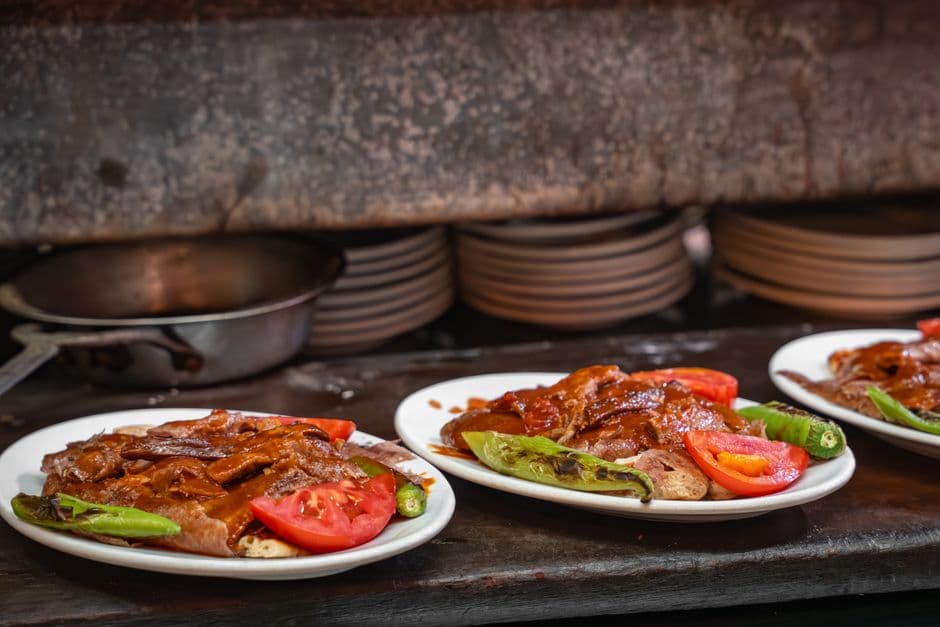
Cumin Roasted Lamb (Kimyonlu Kuzu)
Slow-roasted bone-in lamb shoulder marinated with cumin, garlic, and yogurt — tender, fragrant, and deeply satisfying in the Turkish Anatolian tradition.
About This Recipe
Cumin-roasted lamb is a celebration dish in Anatolian cooking, where lamb (kuzu) is the most revered meat and cumin (kimyon) the defining spice of the region's barbecue and roasting tradition. The preparation begins a day ahead: a lamb shoulder is pierced all over with a knife and rubbed with a thick paste of whole and ground cumin, garlic, yogurt, olive oil, and red pepper paste. The yogurt does double duty — it acts as a tenderizer (the lactic acid very slowly breaks down muscle fibers) and as a coating that prevents the exterior from drying out during the long roast. The result is a crust that is golden and slightly charred at the bone tips while the inner meat near the shoulder bone is impossibly tender, falling apart in long, juicy strands. The cumin must be used in two forms for full aromatic depth: whole seeds toasted in a dry pan and ground fresh alongside pre-ground cumin in the marinade. The volatile oils in freshly ground cumin are significantly more intense than store-bought pre-ground. The lamb roasts initially covered at 160°C for 2.5-3 hours to break down the collagen, then uncovered at 220°C for a final 20 minutes to caramelize the exterior. The juices that pool in the bottom of the roasting tray are the natural sauce — skim the fat and pour the reduced pan juices over the meat before serving.
Ingredients
Serves 6
- 1.8 kgbone-in lamb shoulder
- 1.5 tbspcumin seeds(toasted and ground)
- 1 tspground cumin
- 4 clovesgarlic(minced)
- 3 tbspfull-fat yogurt
- 2 tbspolive oil
- 1 tbspred pepper paste (biber salçası)
- 1 tspAleppo pepper (pul biber)
- 1.5 tspsalt
- 1 tspblack pepper
- 2 sprigsfresh thyme or rosemary
- 1 cupwater or light stock(for the roasting pan)
Instructions
- 1
Toast and Grind Cumin
Place the whole cumin seeds in a dry skillet over medium heat and toast, stirring constantly, for 2-3 minutes until fragrant and slightly darker. Remove immediately and grind to a coarse powder in a spice grinder or mortar and pestle. Combine with the pre-ground cumin.
- 2
Make the Marinade
Combine the ground cumin, garlic, yogurt, olive oil, red pepper paste, Aleppo pepper, salt, and black pepper into a thick paste. Taste for seasoning — it should be very well-seasoned, deeply aromatic, and slightly spicy.
- 3
Marinate the Lamb
Using a sharp knife, cut 8-10 deep slits all over the lamb shoulder, going 3-4cm deep. Push a little marinade paste into each slit with your finger. Coat the entire surface of the lamb generously with the remaining marinade, getting into all crevices. Cover with cling film and refrigerate for at least 4 hours, preferably overnight.
Overnight marination makes a significant difference — the yogurt and spices penetrate the meat and produce more complex flavor.
- 4
Slow Roast Covered
Remove the lamb from the fridge 1 hour before roasting. Preheat oven to 160°C. Place the lamb in a large roasting tray, add water/stock to the base, and tuck in the thyme or rosemary. Cover tightly with two layers of foil. Roast at 160°C for 2.5-3 hours until the meat is completely tender and pulls away easily from the bone.
Check halfway through and add more water if the tray looks dry — this prevents the drippings from burning.
- 5
Blast at High Heat
Remove the foil and increase oven temperature to 220°C. Roast uncovered for a further 15-20 minutes until the exterior is charred in places and the fat has rendered and caramelized.
- 6
Rest and Serve
Transfer the lamb to a carving board and rest for 15 minutes — resting allows the juices to redistribute back into the muscle fibers. Skim the fat from the pan juices and reduce them slightly in the roasting tray over a burner. Pull the meat apart with two forks and serve with the pan juices poured over.
Did you make this?
Rate it and help other cooks find the recipes that actually work.
One tap to sign in, and we'll save the rating you just picked.
Everything you need to plan your week — free
- Meal calendar
- Grocery list
- AI recipe ideas
Track what you eat
Snap your meal to log calories and macros, run fasting timers and track water in the free SnapCal app.
Pro Tips
- →
Toast whole cumin seeds fresh for significantly more aromatic, complex flavor than pre-ground cumin alone.
- →
Marinate overnight for the yogurt to penetrate and tenderize — 4 hours is the minimum, 24 hours is ideal.
- →
The lamb must reach an internal temperature of at least 85°C (185°F) to break down the collagen and become tender enough to pull apart.
- →
Don't skip the high-heat final blast — the caramelization and char of the exterior provides flavor contrast that makes slow-cooked meat exciting.
Variations
- •
Whole spice version: add coriander seeds and a cinnamon stick to the roasting tray for a more complex aromatic profile.
- •
Bone-out shoulder: roll a butterflied bone-out shoulder in the marinade, tie with kitchen twine, and reduce roasting time by 45 minutes.
- •
Lamb leg: substitute a leg of lamb (bone-in, 2-2.5kg) and increase the covered roasting time to 3.5 hours.
Storage
Leftover roasted lamb keeps refrigerated for up to 3 days. Reheat covered with a splash of water at 160°C for 20 minutes or in a pan with the reserved pan juices over medium-low heat until warmed through. Pulled lamb also freezes well in the pan juices for up to 3 months.
History & Origin
Lamb roasted with cumin and spices has been central to Anatolian and Central Asian Turkic cooking since before the Ottoman Empire. The use of cumin with lamb appears in some of the earliest surviving Turkish food records and reflects the historical spice trade route through Anatolia. Ottoman banquet records from the 16th century document whole roasted lamb (kuzu çevirme) as a royal feast dish, and the tradition of slow-roasted lamb on festival days (particularly Kurban Bayramı, the Feast of Sacrifice) continues unbroken today.
Frequently Asked Questions
How do I know when the lamb is tender enough?
Insert a fork into the thickest part and twist — if the meat tears apart easily without resistance, it is done. The internal temperature should be at least 85°C (185°F), which is much higher than medium-rare; at this temperature collagen has fully converted to gelatin, making the meat silky and pull-apart tender.
Can I cook this in a slow cooker?
Yes — marinate as described, then cook on LOW for 8-9 hours in a slow cooker. For the caramelized exterior, transfer to a hot oven (220°C) for 15-20 minutes before serving. The meat will be even more tender but the exterior less crispy.
What should I serve with cumin roasted lamb?
Classic pairings include bulgur pilav, rice, or flatbread to soak up the juices; cacık or yogurt sauce for cooling contrast; and a bright çoban salatası (shepherd's salad) on the side. Roasted root vegetables cooked in the pan alongside the lamb also work beautifully.
Nutrition Facts
Per serving (300g / 10.6 oz) · 6 servings total
Time Summary
Have Questions?
Ask our AI cooking assistant anything about this recipe — substitutions, techniques, scaling.
Chat with AI Chef →More Turkish Recipes
You Might Also Like
Similar dishes from other cuisines around the world.
Browse by Ingredient
More recipes built around the same core ingredients.
Free Kitchen Tools
Calculators and converters that pair with this page — no signup needed.
Put This Into a Plan
Schedule it, shop for it, and track what you already have.
Read Next
Longer reads that go deeper on the ideas behind this dish.
Community
Join the conversation
Sign in to leave a comment and save your favourite recipes