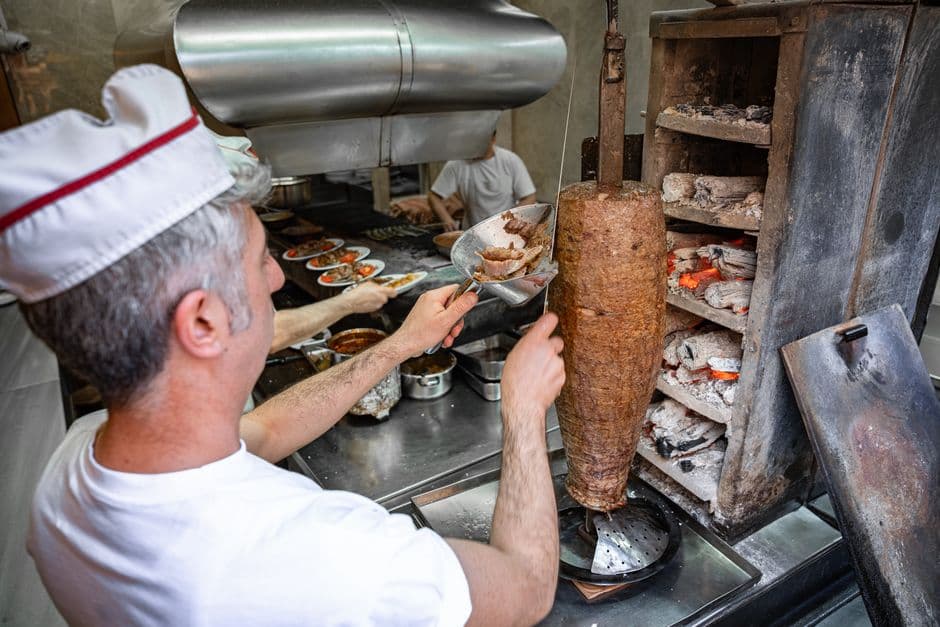
Juicy, spiced lamb and beef cooked home-style in a pan to replicate the rotating spit experience — sliced thin and served with flatbread, tomatoes, and yogurt sauce.
Döner kebab (döner meaning 'rotating' in Turkish) is without question the most globally recognized Turkish dish — a cone of seasoned, stacked meat turning slowly on a vertical spit, shaved in thin slivers and piled into bread. The commercial version requires industrial equipment, but a faithful home version is achievable using a loaf-style compact method: the spiced meat mixture is formed into a dense log, roasted in the oven, then thinly sliced and crisped in a hot pan. The key to authentic döner flavor lies in the fat content of the meat (at least 20% fat for juiciness), the spice blend (cumin, paprika, dried oregano, onion, garlic), and the application of heat in two stages — slow roasting for the interior, high-heat crisping for the shaved edges. Traditionally, authentic döner kebab is made from alternating layers of ground meat and thinly sliced marinated lamb, pressed together on the spit. In a home kitchen, a uniform spiced ground meat mixture (lamb mixed with beef for balance) is the practical equivalent. The mixture is kneaded thoroughly until it becomes very cohesive — this develops the protein bonds that give döner its characteristic firm yet tender texture when sliced. Served in a flatbread (dürüm), in a split half-bread (ekmek arası), or on a plate (tabak döner) with rice, tomato sauce, and yogurt, döner is the quintessential Turkish fast food with centuries of history behind it.
Serves 6
Combine ground lamb, ground beef, grated onion (moisture squeezed out), garlic, and all spices in a large bowl. Mix and knead vigorously for 5-7 minutes until the mixture becomes very smooth, paste-like, and cohesive — it should stick to itself and pull away from the bowl cleanly. This kneading step develops gluten-like protein bonds essential for firm döner texture.
Grate the onion and squeeze ALL moisture out through a cloth — wet onion prevents the meat from binding properly.
Lay a large sheet of cling film on the work surface. Pile the meat mixture in the center and use the cling film to roll it into a tight, compact log about 20cm long and 8cm in diameter. Twist the ends tightly to compress. Refrigerate for 1-2 hours (or overnight) to firm up and allow flavors to meld.
Preheat oven to 180°C. Remove cling film and place the meat log in a lightly oiled roasting tray. Roast for 50-60 minutes until cooked through to a core temperature of 75°C. The outside should be lightly browned. Let rest for 15 minutes.
Resting is important — slicing immediately allows all the juices to run out.
Using a very sharp knife, slice the döner log as thinly as possible — ideally paper-thin, 2-3mm slices. Heat a wide skillet with oil over very high heat until smoking. Add the sliced meat in a single layer and cook for 1-2 minutes without stirring until the edges are crispy and slightly charred. This crisping step replicates what happens on the rotating spit.
Pile the crisped döner slices into warm flatbread or dürüm wraps with sliced tomato, onion, and a generous squeeze of garlic yogurt sauce and Aleppo pepper. Alternatively, serve on a plate with rice pilaf and a pour of tomato sauce.
High fat content (20%+) is not optional — leaner meat produces dry, crumbly döner. The fat melts during cooking, self-basting the meat.
Slice as thinly as possible with the sharpest knife you own — thin slices crisp up much better and more closely replicate the spit-shaved original.
The skillet for crisping must be very hot and dry (or barely oiled) — steam will prevent crisping. Work in small batches.
Make extra döner meat and freeze sliced portions for quick weeknight meals — reheat directly in a hot pan from frozen.
Chicken döner: replace all meat with 1kg ground chicken thigh, increase cumin and paprika, and add a squeeze of lemon to the mixture.
Plate döner (tabak döner): serve the meat over a layer of pieces of torn pide bread soaked in tomato sauce, topped with sliced fresh tomato and yogurt.
Dürüm döner: wrap tightly in thin lavash with onion, tomato, and chili sauce.
The raw döner log can be refrigerated for up to 24 hours before roasting, or frozen raw for up to 1 month. Cooked sliced döner keeps in the refrigerator for 2 days. Reheat in a very hot pan for best results — microwaving makes it soft and grey.
Döner kebab is documented as originating in Bursa, the first Ottoman capital, in the 19th century. The first recorded döner was created by İskender Efendi of Bursa around 1867 — he stacked meat on a horizontal spit and then rotated it to vertical, allowing the fat to self-baste the meat continuously. His descendants still operate the İskender Kebab restaurant in Bursa today. Turkish immigrant communities brought döner to Germany in the 1970s, where the dürüm döner (wrap style) was adapted for European tastes and became the model for global döner culture.
The meat mixture needs sustained kneading for 5-7 minutes to develop protein bonds that hold the log together when sliced. Insufficiently kneaded döner crumbles rather than slicing clean. Also ensure the onion's moisture is fully squeezed out before adding to the meat.
Yes, but 100% beef produces a firmer, less juicy result. The classic döner flavor comes from lamb fat. If using only beef, add 2 tablespoons of cold butter grated into the mixture to compensate for the missing lamb fat.
The classic Turkish döner accompaniments are: garlic yogurt (yogurt with crushed garlic), a thin tomato sauce (domates sosu), and a drizzle of melted butter or Aleppo pepper oil. Street döner is often simply served with tomato slices, onion, and parsley inside the bread.
Per serving (280g / 9.9 oz) · 6 servings total
Ask our AI cooking assistant anything about this recipe — substitutions, techniques, scaling.
Chat with AI Chef →Join the conversation
Sign in to leave a comment and save your favourite recipes
Have feedback or need help?
We read every email and reply within 1–2 business days.
© 2026 MyCookingCalendar. All rights reserved.