
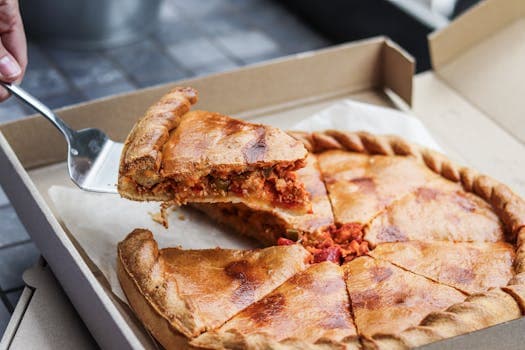
Deep Dish Chicago Pizza
Classic American Deep Dish recipe.
About This Recipe
Chicago deep dish inverts everything about thin-crust pizza: a buttery, slightly biscuit-like dough is pressed up the walls of a deep round pan, lined first with mozzarella slices, then toppings, and finally a chunky tomato sauce on top, because a 30-minute bake would scorch cheese left exposed. The crust often includes cornmeal or extra butter for that signature tender crunch. This version works because the dough gets a slow rise for flavor, the cheese layer waterproofs the crust against sauce, and the tomatoes are drained well so the slice holds together. Expect a knife-and-fork pizza closer to a savory pie, with each wedge cut tall and structural.
Ingredients
Serves 4
- 2.25 cupsall-purpose flour
- 0.25 cupfine cornmeal
- 1 tspinstant yeast
- 0.75 tspkosher salt
- 0.75 cupwarm water
- 6 tbspunsalted butter(melted, plus more for the pan)
- 12 ozlow-moisture mozzarella(sliced into quarter-inch rounds)
- 8 ozItalian sausage(raw, casings removed)
- 1 can (28 oz)whole peeled tomatoes(crushed by hand and drained well)
- 3 clovesgarlic(minced)
- 1 tspdried oregano
- 0.5 tspcrushed red pepper flakes
- 2 tbspgrated Parmesan
Instructions
- 1
Prepare
Mix flour, cornmeal, yeast, salt, melted butter, and water into a soft dough; knead just until smooth, about 5 minutes, then let it rise 1 to 2 hours until doubled. Overkneading makes the crust bready instead of tender.
- 2
Cook
Press the dough into a buttered 9-inch cake pan or deep-dish pan, working it 2 inches up the sides in an even quarter-inch layer. Let it rest 15 minutes if it springs back while shaping.
Laminate extra softened butter into the dough with one fold before panning for a flakier, pastry-like crust.
- 3
Combine
Layer sliced low-moisture mozzarella directly on the dough, then sausage or vegetables, then well-drained crushed tomatoes seasoned with garlic and oregano. Cheese on the bottom protects it from burning during the long bake.
Drain canned tomatoes in a sieve for 10 minutes; excess liquid is the main cause of a soggy bottom crust.
- 4
Serve
Bake at 425F on the lowest oven rack for 28 to 35 minutes, until the crust is deep golden and the sauce is bubbling. Rest 10 minutes before cutting so the layers set and slices hold their shape.
Did you make this?
Rate it and help other cooks find the recipes that actually work.
One tap to sign in, and we'll save the rating you just picked.
Everything you need to plan your week — free
- Meal calendar
- Grocery list
- AI recipe ideas
Track what you eat
Snap your meal to log calories and macros, run fasting timers and track water in the free SnapCal app.
Pro Tips
- →
Use low-moisture mozzarella in slices, not fresh mozzarella, which releases too much water under the sauce.
- →
Bake on the bottom rack so the crust browns and crisps before the top overcooks.
- →
Raw Italian sausage pressed in a thin layer cooks through during the bake; pre-cooking it dries it out.
- →
Rest the baked pizza at least 10 minutes; cutting immediately makes the cheese layer slide out of the slice.
- →
A seasoned cast-iron skillet works as well as a dedicated deep-dish pan and browns the crust even better.
Variations
- •
Make a spinach and garlic deep dish, a Chicago classic, by squeezing thawed spinach very dry before layering.
- •
Try a stuffed pizza by adding a thin dough lid under the sauce, in the style of Giordano's.
- •
Use a blend of mozzarella and provolone for a sharper, more aromatic cheese layer.
- •
Swap sausage for pepperoni layered under the cheese so the edges crisp against the crust.
Storage
Refrigerate slices wrapped tightly for up to 4 days and reheat in a 375F oven or skillet for 10 minutes to re-crisp the crust; the microwave turns it soggy. Whole baked pizza freezes well for 2 months wrapped in foil.
History & Origin
Deep-dish pizza is generally credited to Pizzeria Uno in Chicago, founded in 1943 by Ike Sewell and Ric Riccardo, though some accounts attribute the actual crust recipe to chef Rudy Malnati or cook Alice Mae Redmond. The style spread through family offshoots like Lou Malnati's and Pizano's, becoming Chicago's signature culinary export by the 1970s.
Frequently Asked Questions
Why does the sauce go on top of the cheese?
The bake time for a deep-dish crust runs 30 minutes or more, long enough that exposed cheese would scorch and toughen. Putting mozzarella directly on the dough and sauce on top protects the cheese, keeps the crust from getting soggy, and lets the tomatoes concentrate as they roast.
Can I make deep dish without a special pan?
Yes. A 9 or 10-inch cast-iron skillet is arguably better than a dedicated pan because it browns the crust beautifully, and a standard 2-inch-deep cake pan also works. Butter the pan generously; that fat essentially fries the outside of the crust as it bakes.
How is deep dish different from stuffed pizza?
Deep dish has one crust with cheese, toppings, and sauce layered inside it. Stuffed pizza, popularized by Nancy's and Giordano's, adds a second thin sheet of dough over the fillings before the sauce goes on, making an even taller, fully enclosed pie with a longer bake.
My bottom crust came out soggy. What went wrong?
Excess moisture is the usual culprit. Drain canned tomatoes thoroughly, squeeze watery vegetables like spinach or mushrooms, and bake on the lowest rack so the pan bottom gets direct heat. A 10-minute rest after baking also lets the crust firm up before slicing.
Nutrition Facts
Per serving (300g / 10.6 oz) · 4 servings total
Time Summary
Have Questions?
Ask our AI cooking assistant anything about this recipe — substitutions, techniques, scaling.
Chat with AI Chef →Featured in Guides
This recipe is featured in the following curated guides:
More American Recipes
You Might Also Like
Similar dishes from other cuisines around the world.
Browse by Ingredient
More recipes built around the same core ingredients.
Free Kitchen Tools
Calculators and converters that pair with this page — no signup needed.
Put This Into a Plan
Schedule it, shop for it, and track what you already have.
Read Next
Longer reads that go deeper on the ideas behind this dish.
Community
Join the conversation
Sign in to leave a comment and save your favourite recipes