
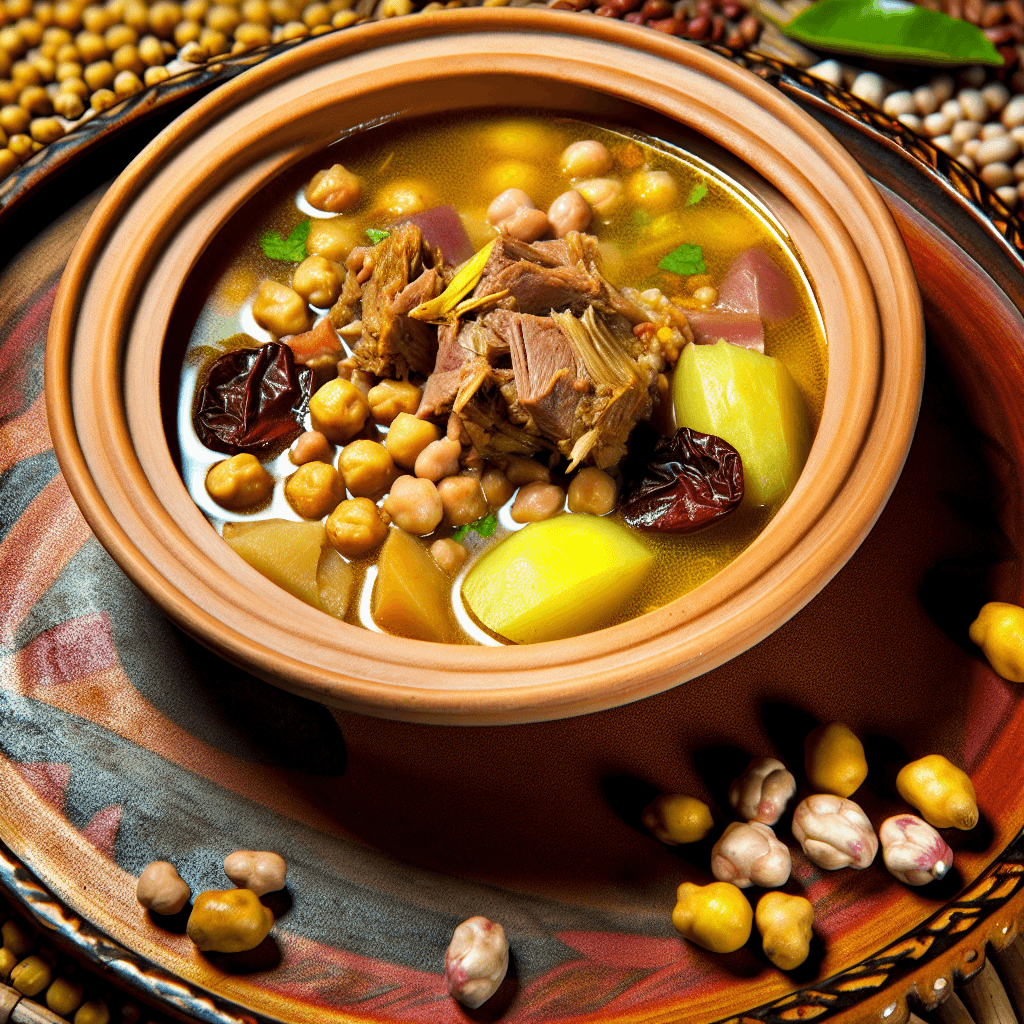
Dizi
Persian lamb and chickpea stew in individual pots — rustic and soul-warming.
About This Recipe
Dizi — also known as abgoosht, 'meat water' — is Iran's great working-class stew and a two-course meal from a single pot. Bone-in lamb, chickpeas, white beans, potatoes, and smoky dried limes simmer for hours, traditionally in individual stoneware crocks, until the meat falls from the bone and the broth turns rich and golden with turmeric. Then comes the ritual: the fragrant broth is poured off and eaten first as a soup, with torn flatbread soaked in it (a step called tilit). The remaining solids are pounded with a small pestle into a rustic mash called gusht kubideh, eaten wrapped in bread with raw onion, fresh herbs, and torshi pickles. It's inexpensive, deeply nourishing, and one of Iran's most communal eating experiences.
Ingredients
Serves 6
- 800 glamb with bone
- 1 canchickpeas (400g), drained
- 1 canwhite beans (400g), drained
- 3 mediumpotatoes, cubed
- 2dried limes
- 1 tspturmeric
- 1 tspsalt
- 1.5 literswater
Instructions
- 1
Layer the pots
Pierce the dried limes a few times with a knife so the broth can penetrate them. Divide the lamb, chickpeas, beans, potatoes, and dried limes among individual earthenware pots (or one Dutch oven), then add the turmeric, salt, and water to cover everything by a couple of inches.
Piercing the dried limes is essential — unpierced, they float uselessly and give up almost none of their smoky tartness.
- 2
Simmer low and slow
Bring to a gentle boil, skim any foam from the surface for a clearer broth, then cover and reduce to the lowest simmer. Cook for about 2 hours, until the lamb pulls apart at the touch of a fork and the potatoes are completely soft. Add hot water if the level drops below the solids.
A bare, lazy simmer keeps the broth clear and coaxes gelatin from the bones; a rolling boil turns it cloudy and toughens the meat.
- 3
Serve in two courses
Pour the golden broth into bowls and serve it first as a soup, with torn pieces of flatbread soaked in it — the beloved tilit. Then mash the meat, beans, and potatoes together with a pestle or fork, discarding the bones, and serve the mash with warm bread, raw onion wedges, fresh herbs, and pickles.
Squeeze the softened dried limes into the broth before serving for a final hit of bright, smoky acidity.
Did you make this?
Rate it and help other cooks find the recipes that actually work.
One tap to sign in, and we'll save the rating you just picked.
Everything you need to plan your week — free
- Meal calendar
- Grocery list
- AI recipe ideas
Track what you eat
Snap your meal to log calories and macros, run fasting timers and track water in the free SnapCal app.
Pro Tips
- →
Traditional stoneware dizi pots hold heat beautifully and add a rustic depth, but a heavy Dutch oven works fine at home.
- →
Low, slow cooking is non-negotiable — the broth gets its body from collagen that only releases over gentle, extended heat.
- →
Pierce the dried limes before cooking and press them against the pot near the end to release their juice into the broth.
- →
Use bone-in lamb shank or neck; the marrow and connective tissue are what make the broth rich rather than thin.
- →
Serve with the full traditional spread — flatbread, raw onion, fresh herbs (sabzi khordan), and torshi pickles — to cut the richness.
Variations
- •
Add a spoonful of tomato paste and a chopped tomato for the reddish Tehran-style abgoosht most common today.
- •
Substitute kidney beans for the white beans for an earthier, heartier pot.
- •
Lamb-and-quince dizi: add quince wedges in the final 45 minutes for a subtly sweet autumn version.
- •
Pressure-cooker shortcut: cook everything 45 minutes at high pressure, then proceed with the two-course serving ritual.
Storage
Refrigerate broth and solids (separately if possible) for up to 3 days; the flavor deepens overnight. Reheat gently on the stove, loosening the mash with a ladle of broth. The complete stew also freezes well for up to 2 months.
History & Origin
Dizi, more formally called abgoosht, has fed Iranian villagers, laborers, and travelers for centuries, with roots in the Qajar era when meat was scarce and a single small cut of lamb had to stretch across a family. The dish takes its name from the stoneware crock it cooks in, and dedicated dizi-saras — humble eateries serving nothing else — still operate across Iran. Its mash-and-broth ritual remains one of Persian cuisine's most distinctive communal traditions.
Frequently Asked Questions
What are dried limes and can I substitute them?
Dried limes (limoo amani, or loomi) are whole limes that have been brined and sun-dried until dark and hollow, developing a fermented, smoky-tart flavor that fresh citrus can't replicate. They're cheap and shelf-stable at any Persian or Middle Eastern grocery. In a pinch, use a few wide strips of lime zest plus a generous squeeze of juice at the end — different, but pleasantly bright.
What's the difference between dizi and abgoosht?
They're the same dish under two names. Abgoosht — literally 'meat water' — is the food itself, while dizi refers to the narrow stoneware crock it is traditionally cooked and served in. Over time the vessel's name attached to the dish, especially in Tehran's dizi-saras. Whether you cook it in individual crocks or one big pot, the recipe and the two-course ritual are identical.
How do I eat dizi the traditional way?
In two distinct courses from one pot. First, tear flatbread into a bowl, pour the hot broth over it, and eat the soaked bread and soup — this is tilit. Then mash the remaining meat, beans, and potatoes into a coarse paste using the small pestle (goosht-koob) that accompanies a proper dizi, and eat it wrapped in bread with bites of raw onion, fresh herbs, and pickles.
Can I use beef instead of lamb?
Yes — bone-in beef shank is the most common substitution and behaves very similarly, releasing collagen into the broth over the long simmer. Allow up to an extra 30 minutes for the beef to reach falling-apart tenderness. Boneless stew meat works in a pinch, but you'll lose the marrow richness, so consider adding a marrow bone or two to compensate.
Nutrition Facts
Per serving (500g / 17.6 oz) · 6 servings total
Time Summary
Have Questions?
Ask our AI cooking assistant anything about this recipe — substitutions, techniques, scaling.
Chat with AI Chef →More Persian Recipes
You Might Also Like
Similar dishes from other cuisines around the world.
Browse by Ingredient
More recipes built around the same core ingredients.
Free Kitchen Tools
Calculators and converters that pair with this page — no signup needed.
Put This Into a Plan
Schedule it, shop for it, and track what you already have.
Read Next
Longer reads that go deeper on the ideas behind this dish.
Community
Join the conversation
Sign in to leave a comment and save your favourite recipes