
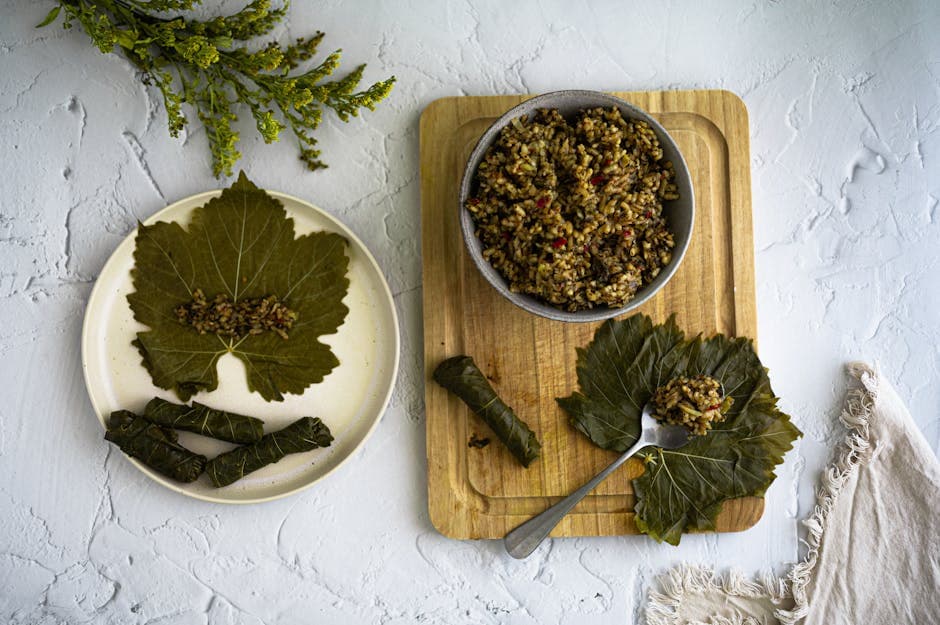
Dolmeh Barg
Persian stuffed grape leaves with sweet-sour herb and rice filling — a labor of love.
About This Recipe
Dolmeh Barg-e Mo — Persian stuffed grape leaves — are immediately distinguishable from their Greek or Levantine cousins by two signatures: an avalanche of fresh herbs and the beloved Persian sweet-sour balance. The filling weaves rice, ground lamb, and yellow split peas through handfuls of parsley, mint, tarragon, and chives, seasoned with cinnamon, sweetened with a little sugar, and soured with verjuice (ab-ghooreh) or lemon. The parcels braise slowly under a weighted plate in a tomato-pomegranate liquid until tender and glossy. Rolling dolmeh is famously communal work — generations gathered around a tray — and serving them signals genuine effort and affection for one's guests.
Ingredients
Serves 8
- 50grape leaves, jarred
- 300 gground lamb
- 1 cupshort-grain rice, parboiled
- 1/2 cupcooked yellow split peas
- 2 cupsmixed fresh herbs (parsley, mint, chives, tarragon)
- 2 tbspsugar
- 3 tbsplemon juice or verjuice
- 1 tspcinnamon
- 1 tspturmeric
- 1 tspsalt
- 2 tbsptomato paste
- 1 cupwater or pomegranate juice
Instructions
- 1
Make filling
Combine the lamb, parboiled rice, split peas, chopped herbs, sugar, lemon juice, cinnamon, turmeric, and salt, and knead briefly until evenly mixed. The filling should be loose and herb-flecked, not compacted — the rice will swell as it cooks.
Fry a teaspoon of filling and taste it: the sweet-sour balance should already be detectable, since flavors mute during braising.
- 2
Roll
Rinse the brined grape leaves in warm water and snip off any tough stems. Lay a leaf vein-side up with the stem end toward you, place a generous teaspoon of filling near the base, fold the bottom over, tuck in the sides, and roll firmly but not tightly into a small cigar.
Leave a little slack in each roll — rice expands, and overtight dolmeh split during cooking.
- 3
Cook
Line the pot with torn or imperfect leaves to prevent scorching, then pack the rolls seam-side down in snug concentric circles. Whisk the tomato paste into the water or pomegranate juice and pour it over, place an inverted heatproof plate on top to hold everything in place, cover, and simmer on low for 50–60 minutes.
The weighted plate is essential — without it the dolmeh float, unravel, and cook unevenly.
- 4
Serve
Let the dolmeh rest in the pot for 15 minutes off the heat so they firm up, then lift them out carefully and arrange on a platter. Serve warm or at room temperature with thick yogurt; the flavors are even better after a night in the refrigerator.
Did you make this?
Rate it and help other cooks find the recipes that actually work.
One tap to sign in, and we'll save the rating you just picked.
Everything you need to plan your week — free
- Meal calendar
- Grocery list
- AI recipe ideas
Track what you eat
Snap your meal to log calories and macros, run fasting timers and track water in the free SnapCal app.
Pro Tips
- →
Taste and adjust the sweet-sour balance before rolling — it should be noticeable but never cloying.
- →
Be generous with the herbs; their abundance is precisely what makes dolmeh Persian.
- →
Line the pot bottom with spare leaves to protect the first layer from scorching.
- →
Roll snug but not tight — the rice needs room to swell or the leaves will burst.
- →
Weight the rolls down with an inverted plate so they hold their shape through the long simmer.
Variations
- •
Make a vegetarian version by omitting the lamb and bulking the filling with extra split peas, walnuts, and raisins.
- •
Use blanched cabbage leaves (dolmeh kalam) when grape leaves are unavailable.
- •
Braise entirely in pomegranate juice with a spoonful of pomegranate molasses for the tangier northern style.
- •
Add barberries and chopped dried apricots to the filling for a festive sweet-sour intensity.
Storage
Refrigerate in a covered container for up to 4 days — the flavor genuinely improves on the second day as the sweet-sour braise penetrates the filling. Reheat gently with a splash of the cooking liquid, or serve at room temperature.
History & Origin
Stuffed leaves spread across the lands of the former Persian and Ottoman empires, and nearly every cuisine from Greece to the Caucasus claims a version; the word dolmeh itself comes from a Turkic root meaning 'filled'. The Persian rendition stands apart through its herb-saturated filling and the sweet-sour signature of verjuice and sugar — flavors documented in Safavid-era court cookbooks. In Iran, dolmeh-rolling remains a multigenerational kitchen ritual, particularly in Azerbaijan province, where the craft is a point of regional pride.
Frequently Asked Questions
What is verjuice?
Verjuice (ab-ghooreh) is the pressed juice of unripe sour grapes — gently tart and fruity without the sharpness of vinegar. It is a cornerstone souring agent in Persian cooking. Persian grocers sell it bottled; otherwise substitute fresh lemon juice or a mix of lemon and a little pomegranate juice.
Can I use fresh grape leaves?
Yes, and many Iranians prefer them in late spring when the leaves are young and tender. Pick medium leaves without holes, then blanch them in boiling salted water for 1–2 minutes until they darken and soften. Fresh leaves taste brighter and less briny than jarred — skip the rinsing step.
Why did my dolmeh unravel or burst?
Unraveling usually means the rolls weren't placed seam-side down or weren't weighted with a plate; bursting means they were rolled too tight for the rice to expand. Pack them snugly in the pot so they brace each other, keep the simmer gentle, and let them rest before lifting them out.
Are Persian dolmeh served hot or cold?
Either, and both are traditional. Warm dolmeh with yogurt make a starter or light main; room-temperature dolmeh appear on mezze spreads and picnic tables. Unlike Greek dolmades, they are not typically served chilled straight from the refrigerator — let them lose their fridge-cold edge first.
Nutrition Facts
Per serving (180g / 6.3 oz) · 8 servings total
Time Summary
Have Questions?
Ask our AI cooking assistant anything about this recipe — substitutions, techniques, scaling.
Chat with AI Chef →Featured in Guides
This recipe is featured in the following curated guides:
More Persian Recipes
You Might Also Like
Similar dishes from other cuisines around the world.
Browse by Ingredient
More recipes built around the same core ingredients.
Free Kitchen Tools
Calculators and converters that pair with this page — no signup needed.
Put This Into a Plan
Schedule it, shop for it, and track what you already have.
Read Next
Longer reads that go deeper on the ideas behind this dish.
Community
Join the conversation
Sign in to leave a comment and save your favourite recipes