
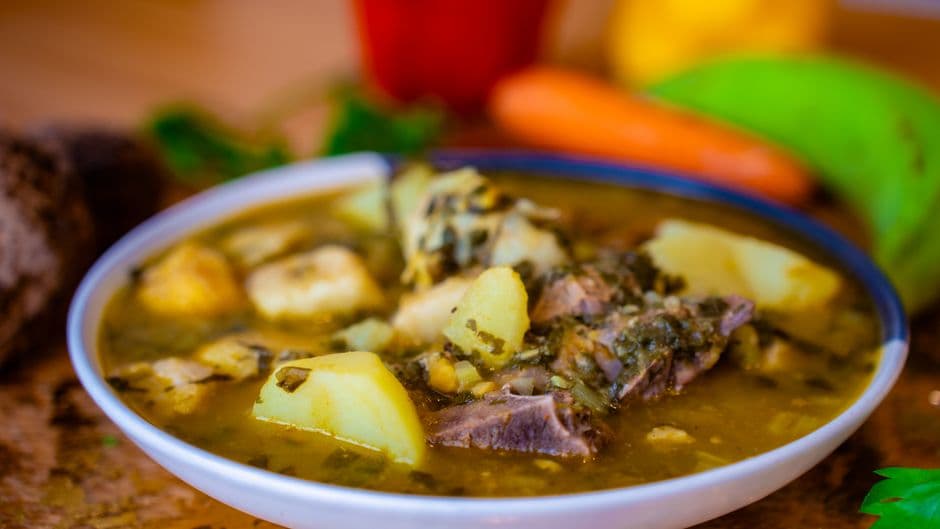
Dominican Sancocho Siete Carnes
The Dominican Republic's legendary 'seven-meat stew' — a celebratory pot of beef, pork, chicken, sausage, goat, oxtail and ribs simmered with root vegetables and culantro.
About This Recipe
Sancocho de siete carnes is the showstopper stew of the Dominican Republic — a fragrant, deeply meaty pot reserved for weddings, baptisms, birthdays and rainy Saturdays when family arrives unannounced. The 'seven meats' (siete carnes) are non-negotiable in the strict tradition: beef chuck, pork shoulder, chicken, smoked longaniza sausage, goat (or lamb), oxtail and short ribs — each contributes its own depth and texture to the broth. The vegetables are equally specific: yuca (cassava), ñame (yellow yam), yautía (taro), auyama (West Indian pumpkin), green plantain, ripe plantain, and corn on the cob cut into rounds. The base flavoring is sofrito (sautéed onion, bell pepper, garlic and cilantro), bound with tomato paste, oregano and a generous handful of cilantro's pungent Caribbean cousin culantro (recao). A real sancocho takes 4 hours minimum and produces a broth the color of weak coffee, thickened slightly by the dissolving starches of the root vegetables, with so many cuts of meat that each ladle becomes a small adventure. It is served in deep wooden bowls with white rice on the side, a wedge of avocado, a small cruet of fiery local hot sauce, and a frosty Presidente beer. The Dominican proverb says: 'Sancocho no se come, sancocho se celebra.' — Sancocho is not eaten, sancocho is celebrated.
Ingredients
Serves 10
- 500 gbeef chuck, cut into 4 cm cubes
- 500 gpork shoulder, cut into 4 cm cubes
- 500 gbone-in chicken thighs and drumsticks
- 300 gDominican longaniza or any smoked pork sausage, sliced thick
- 500 ggoat or lamb shoulder, bone-in, cut into chunks
- 500 goxtail, cut at the joints
- 500 gbeef short ribs, English-cut
- 2 limesto wash meats
- 1 largeyellow onion, fine dice
- 1green bell pepper, fine dice
- 8 clovesgarlic, minced
- 1 bunchcilantro, chopped (about 60 g)
- 6 leavesculantro (recao), chopped, or extra cilantro
- 3 tbsptomato paste
- 1 tbspdried oregano
- 2bay leaves
- 3 tbspneutral oil
- 1 cubeMaggi chicken bouillon (optional but traditional)
- 1 largeyuca, peeled and cut into 4 cm chunks
- 1ñame (yellow yam), peeled and cubed
- 1yautía (taro), peeled and cubed
- 500 gauyama (West Indian pumpkin) or kabocha, cubed
- 1green plantain, peeled and cut into rounds
- 1ripe plantain, peeled and cut into rounds
- 2 earscorn on the cob, cut into 4 rounds each
- cooked white rice, avocado wedges, lime, hot sauce, to serve
Instructions
- 1
Wash and season the meats
Place all the meats in a large bowl, rub with the cut limes and rinse under cold water — a Dominican tradition that removes surface impurities and any gaminess. Pat dry. Season generously with salt, half the garlic, half the oregano and a tablespoon of cilantro. Let sit 30 minutes at room temperature.
- 2
Brown the meats in stages
Heat oil in a very large heavy pot (8–10 quart) over high heat. Working in batches by meat type, brown each kind hard on all sides — beef and goat first (longer), then pork, then oxtail and short ribs, finally the chicken. Set browned meats aside in a bowl. The fond on the bottom is gold.
- 3
Build the sofrito
Reduce heat to medium. In the same pot, sauté the onion, bell pepper, remaining garlic and tomato paste 6 minutes until the tomato darkens and clings to the vegetables. Add the bay leaves, remaining oregano and culantro. Cook 60 seconds.
- 4
First simmer — toughest meats
Return the beef, pork, goat, oxtail and short ribs to the pot (not chicken or sausage yet). Pour in enough water to cover by 4 cm (about 3 liters). Add the Maggi cube if using. Bring to a boil, skim the surface scum, then reduce to a steady simmer. Cook covered 90 minutes, skimming occasionally.
- 5
Add chicken and sausage
After 90 minutes, add the chicken and sliced sausage. Simmer 30 more minutes. The chicken should be just cooked through and the other meats nearly tender.
- 6
Layer in the vegetables
Add the yuca, ñame, yautía and auyama (the firmest vegetables). Simmer 20 minutes. Then add the green plantain rounds and corn rounds — simmer 15 minutes. Finally add the ripe plantain — simmer 10 minutes. Total vegetable cook time: about 45 minutes.
- 7
Mash for body
Once the vegetables are tender, scoop out a cup of the softest pieces (auyama and yuca), mash with a fork, and stir back into the pot. This thickens the broth to the proper sancocho consistency — slightly creamy but still soupy.
If it's still too thin, mash more. If too thick, add hot water 200 ml at a time.
- 8
Finish and rest
Stir in the remaining cilantro and culantro. Taste — adjust salt heavily; sancocho needs assertive seasoning to push through all the meats. Off the heat, let it sit 15 minutes uncovered so the flavors marry and the fat rises to skim.
- 9
Serve as a celebration
Ladle into deep bowls, making sure each bowl gets a piece of each meat and a few different vegetables. Serve white rice in a small dish on the side (some Dominicans add it to the bowl, others eat it alongside). Pass avocado wedges, lime quarters and a small bottle of fiery local hot sauce. Cold beer mandatory.
Did you make this?
Rate it and help other cooks find the recipes that actually work.
One tap to sign in, and we'll save the rating you just picked.
Everything you need to plan your week — free
- Meal calendar
- Grocery list
- AI recipe ideas
Cook this hands-free
Get AI meal plans, step-by-step cooking mode, and your saved recipes in the free Bento app.
Pro Tips
- →
Lime-wash the meats — it's a Dominican home tradition that improves the broth clarity and removes any gaminess from goat or oxtail.
- →
Add the vegetables in order of cook time (hardest first, softest last) so everything finishes at the same moment without turning to mush.
- →
Culantro (recao) is the secret ingredient — it has a more intense, almost soapy-savory flavor than cilantro. Find it at Caribbean grocers; in a pinch use double cilantro plus a pinch of dried oregano.
- →
Skim the fat at the end; sancocho should be hearty but not greasy. Save the skimmed fat to fry plantains in another night.
Variations
- •
Sancocho de pollo: chicken-only weekday version, much faster (90 minutes total), still uses the same vegetables.
- •
Sancocho prieto: dark sancocho with smoked meats and longer cook for a richer, darker broth.
- •
Add white wine in step 4 (250 ml) for a non-traditional but excellent depth.
- •
Vegetarian: omit all meats and use a deeply roasted vegetable stock, doubled root vegetables, and beans — not authentic but legitimately satisfying.
Storage
Refrigerate up to 4 days in a sealed container; flavor peaks on day 2. Freezes 3 months in flat zip bags. Reheat gently with a splash of water and re-mash a few vegetables to restore body. The broth gels when cold — that's the collagen from the bones and is a sign of a great sancocho.
History & Origin
Sancocho descends from Spanish cocido (a chickpea-and-meat stew) introduced by colonists in the 16th century, fused with West African one-pot stew traditions and indigenous Taíno root vegetables (yuca, batata). The seven-meat version is a 20th-century Dominican refinement reserved for major celebrations; the dictator Trujillo reportedly served it to visiting heads of state in the 1940s.
Frequently Asked Questions
Do I really need seven meats?
For a true 'siete carnes' yes — each contributes a distinct flavor and texture. You can scale down to 'siete carnes lite' with 3–4 of the listed meats and still make a deeply satisfying sancocho, just call it 'sancocho' rather than 'siete carnes'.
Where do I find ñame, yautía and culantro?
Any Caribbean or Latin grocery store stocks them, fresh or frozen. In the US, many large supermarkets in cities with Dominican, Puerto Rican or Cuban populations now carry them. Frozen yuca and ñame are convenient and work fine.
Can I use a pressure cooker?
Yes — pressure cook the meats with the sofrito 35 minutes for the toughest meats, then release pressure and add the chicken, sausage and vegetables in the normal order, simmering uncovered. Saves about 90 minutes.
Why does my sancocho taste flat?
Almost always under-salted; sancocho needs aggressive seasoning to push through all the meat. Also check you used culantro or fresh cilantro at the end — those aromatic finishes are what gives sancocho its character.
Nutrition Facts
Per serving (580g / 20.5 oz) · 10 servings total
Time Summary
Have Questions?
Ask our AI cooking assistant anything about this recipe — substitutions, techniques, scaling.
Chat with AI Chef →Featured in Guides
This recipe is featured in the following curated guides:
More Dominican Recipes
You Might Also Like
Similar dishes from other cuisines around the world.
Free Kitchen Tools
Calculators and converters that pair with this page — no signup needed.
Put This Into a Plan
Schedule it, shop for it, and track what you already have.
Read Next
Longer reads that go deeper on the ideas behind this dish.
Community
Join the conversation
Sign in to leave a comment and save your favourite recipes