
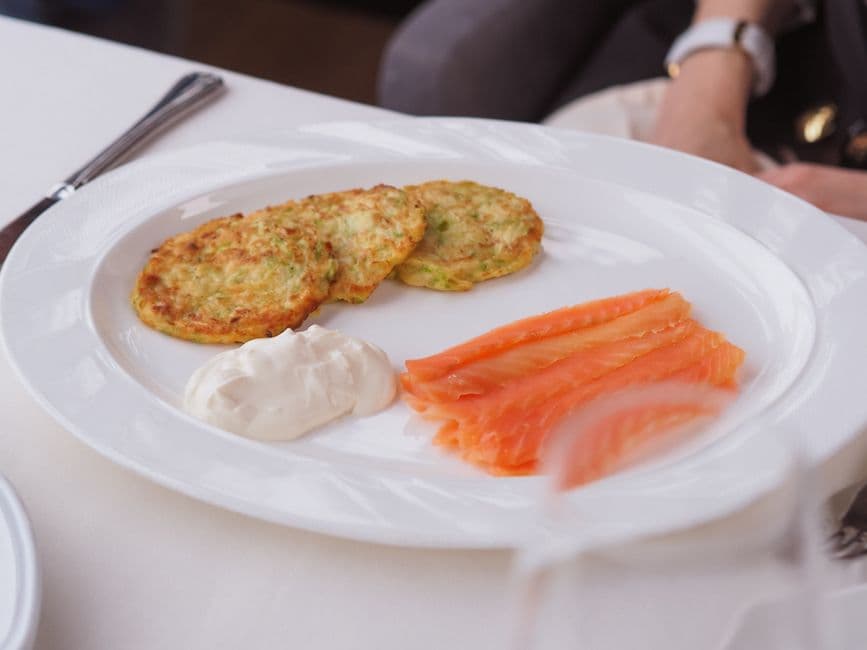
Draniki (Belarusian Crisp Potato Pancakes)
Belarus's national pancake — hand-grated potatoes fried in lacy golden disks until shatter-crisp at the edges and creamy inside, served with cold sour cream and fresh dill.
About This Recipe
Draniki are to Belarus what pizza is to Italy — the everyday national dish, the school-lunch comfort food, the grandmother specialty, and the proof that a country can build an entire culinary identity around the humble potato. Belarus consumes more potatoes per capita than almost any other nation on earth, and draniki are the highest expression of this devotion: raw potatoes are hand-grated (never food-processored — purists insist the difference is enormous), squeezed dry of their water, bound with a single egg and a spoon of flour, and fried in hot oil in small flat rounds until the edges are lace-crisp and dark brown while the centers stay creamy and almost translucent. The secret of great draniki is in the texture contrast — the outside should shatter audibly when you bite, while the inside should taste of just-cooked potato with no greasiness. They are eaten at every meal in Belarus: for breakfast with cold smetana (the country's beloved thick sour cream), for lunch alongside a cabbage salad, for dinner topped with stewed mushrooms or pork, and as a side at every celebration. Served sizzling hot straight from the pan with a cool dollop of sour cream that melts on contact, dill, and a glass of cold buttermilk, draniki are everything good Belarusian cooking aims for: simple ingredients, careful technique, and generous portions.
Ingredients
Serves 4
- 1 kgstarchy potatoes (Russet or King Edward), peeled
- 1 smallonion, grated
- 1 largeegg, lightly beaten
- 2 tbspall-purpose flour (or potato starch for crisper pancakes)
- 1 tspsalt, plus 1/2 tsp black pepper
- neutral oil for frying (sunflower is traditional)
- 200 gthick sour cream (smetana), cold, to serve
- fresh dill, chopped, to serve
Instructions
- 1
Grate the potatoes
Using the smallest holes of a box grater, grate the peeled potatoes into a large bowl. Yes, this takes 10 minutes; yes, you should do it by hand. A food processor gives a wet purée that fries soggy instead of crisp. Grate the onion the same way and add it — the onion's enzymes prevent the potatoes from oxidizing brown.
- 2
Squeeze dry — the critical step
Transfer the grated potato-onion mixture to the centre of a clean kitchen towel. Gather the corners and twist hard over the sink — you should release at least 150 ml of starchy white liquid. Let the liquid settle 60 seconds in a bowl, then carefully pour off the water and scrape the thick white starch from the bottom back into the potatoes. This starch is what binds them.
If you skip squeezing, your draniki will be limp pancake-shaped puddles. This step is non-negotiable.
- 3
Mix the batter
To the squeezed potatoes, add the beaten egg, flour, salt and pepper. Mix gently with a spoon just until uniform — do not over-mix or the potatoes will release more water. The texture should be loose and shaggy, not smooth or wet.
- 4
Heat the oil
Heat a wide skillet (cast iron is ideal) over medium-high heat. Add enough oil to coat the bottom generously — about 3 mm deep. When the oil shimmers and a tiny test bit of batter sizzles immediately and turns brown in 30 seconds, the oil is ready.
- 5
Fry the first batch
Drop heaping tablespoons of batter into the oil — about 4 per pan — and gently flatten with the back of the spoon to 1 cm thick disks. Fry undisturbed 3–4 minutes until the edges are dark golden-brown and you can see crisp lace forming. Flip carefully and fry 2–3 more minutes on the second side.
- 6
Drain and continue
Lift onto a paper-towel-lined plate (don't stack — they steam and lose crispness). Keep warm in a 90°C / 200°F oven on a wire rack while you fry the remaining batches. Top up the oil between batches and let it come back to temperature.
- 7
Serve immediately
Pile the hot draniki on a platter. Top each with a generous spoon of cold smetana — the contrast of hot and cold is the whole point. Sprinkle with chopped dill and a pinch of flaky salt. Serve at once with extra sour cream on the side.
Did you make this?
Rate it and help other cooks find the recipes that actually work.
One tap to sign in, and we'll save the rating you just picked.
Everything you need to plan your week — free
- Meal calendar
- Grocery list
- AI recipe ideas
Cook this hands-free
Get AI meal plans, step-by-step cooking mode, and your saved recipes in the free Bento app.
Pro Tips
- →
Hand-grate every time — this is the single biggest factor between great and mediocre draniki.
- →
Don't skip the onion. Even people who hate onions should add it; it stops oxidation and the flavor is mild after frying.
- →
Fry hot and fast. Low heat means soggy, oily pancakes. The oil should be hot enough that the batter immediately sizzles and the edges crisp within 30 seconds.
- →
Use real smetana if you can find it (Polish, Russian, or Belarusian deli) — it's thicker and tangier than American sour cream and elevates the dish.
Variations
- •
Draniki s machanka — topped with creamy mushroom-and-pork gravy, the most beloved Belarusian preparation.
- •
Add 100 g grated cheese (Belarusian or cheddar) to the batter for a richer version.
- •
Sweet draniki — skip the onion, add 1 tbsp sugar, and serve with jam and sour cream as a breakfast.
- •
Latkes-style: add an extra egg and a teaspoon of baking powder for a fluffier interior (more Jewish-Polish style).
Storage
Best eaten straight from the pan — draniki lose their crisp within an hour. Leftovers refrigerate 2 days; revive in a 200°C / 400°F oven for 5 minutes on a wire rack to re-crisp. Do not microwave — they turn rubbery. Freezing not recommended.
History & Origin
Draniki entered Belarusian cuisine in the late 19th century after the potato had become the dominant crop of the region. The dish became a national symbol during the Soviet period when potatoes were one of the few reliable foods, and draniki shops dotted Minsk and other Belarusian cities. Belarus officially declared draniki its national dish in the 2000s.
Frequently Asked Questions
Why do my draniki turn grey?
You didn't add onion fast enough, or you let the grated potatoes sit too long before frying. Onion enzymes prevent oxidation, and you should fry within 15 minutes of grating.
Can I make a big batch ahead?
Not really — the batter starts oxidizing within 30 minutes. If you must prep ahead, grate the potatoes into a bowl of cold water with a splash of lemon juice; drain and proceed.
Are draniki the same as latkes?
Cousins. Latkes (Jewish) typically have more flour, more egg, and a thicker, breadier texture. Draniki are lacier and more potato-forward. Both delicious, both delicious for different reasons.
Can I bake instead of fry?
You can — brush oiled parchment, bake at 220°C / 425°F 15 minutes per side. They won't be as crisp as fried, but they're healthier and very acceptable.
Nutrition Facts
Per serving (240g / 8.5 oz) · 4 servings total
Time Summary
Have Questions?
Ask our AI cooking assistant anything about this recipe — substitutions, techniques, scaling.
Chat with AI Chef →Featured in Guides
This recipe is featured in the following curated guides:
More Belarusian Recipes
You Might Also Like
Similar dishes from other cuisines around the world.
Free Kitchen Tools
Calculators and converters that pair with this page — no signup needed.
Put This Into a Plan
Schedule it, shop for it, and track what you already have.
Read Next
Longer reads that go deeper on the ideas behind this dish.
Community
Join the conversation
Sign in to leave a comment and save your favourite recipes