
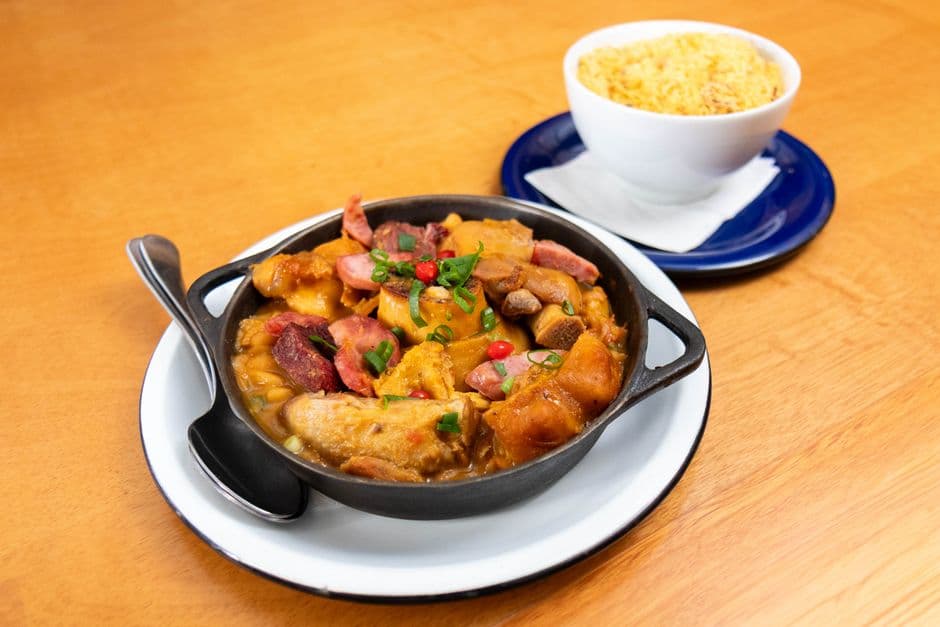
Dublin Coddle (Irish Sausage and Bacon Stew)
Dublin's working-class stovetop stew of pork sausages, smoked bacon rashers, onions and potato slowly coddled in a light broth until everything melts together.
About This Recipe
Dublin coddle is the original Friday-night, end-of-the-week pub stew of working-class Dublin, designed to use up the remaining sausages and bacon rashers from the week before the Catholic abstinence from meat on Friday. The dish is named for the verb 'to coddle' — to cook gently in liquid below boiling — and it sums up the technique perfectly: chunks of pork sausage and thick-cut smoked bacon are layered with raw onion and potato in a heavy pot, covered with a light beef stock or even just water, and left to simmer slowly on the stovetop (or, in proper Dublin fashion, in a low oven all afternoon) until the sausages plump up, the bacon perfumes the broth, the onions melt to translucence, and the potatoes start to fall apart at the edges into a creamy, savoury, slightly murky stew. Crucially, the sausages are not browned first. This is the cardinal sin of every English food writer who has tried to 'improve' the dish; Dubliners insist that the sausages must go into the pot pale and emerge pale, soft and tender, with the broth carrying all the smoke and pork flavour. The traditional accompaniment is a glass of cold Guinness, a slice of buttered soda bread, and, in the most authentic Dublin tradition, a bit of brown sauce on the side. Sean O'Casey, James Joyce and Jonathan Swift all immortalised coddle in their writing; it is a dish utterly without pretension, made from cheap ingredients, and beloved beyond reason by anyone who grew up with it.
Ingredients
Serves 4
- 8good-quality pork sausages (Irish or English butcher's, ideally Hick's or Hafner's)
- 300 gthick-cut smoked back bacon rashers, cut into 3 cm pieces
- 1 kgfloury potatoes (Rooster or Maris Piper), peeled and cut into thick slices
- 3 largewhite onions, peeled and thickly sliced
- 750 mllight beef or chicken stock (or water at a pinch)
- 1 small bunchflat-leaf parsley, chopped, to serve
- 1 tspfreshly ground black pepper
- salt, to taste (the bacon is salty — taste before adding)
- Guinness and brown soda bread, to serve
Instructions
- 1
Layer the pot — do not brown the meat
In a large heavy ovenproof pot or casserole, build a base layer of sliced onions. Lay the bacon pieces over the onions, then arrange the whole sausages on top. Do not be tempted to brown the meat first — this is the most common mistake and ruins the dish.
- 2
Add the potatoes
Layer the sliced potatoes over the meat and onions, packing them in fairly tight. Season with the black pepper but no salt yet — the bacon will provide plenty.
- 3
Cover with stock
Pour the stock over the potatoes — it should come just below the top layer of potato, not submerge it. If you have less, top up with water. Bring the pot to barely a simmer over medium heat.
- 4
Coddle, do not boil
Once you see the first gentle bubbles rising, reduce the heat to its lowest setting (or transfer to a 150°C/300°F oven). Cover with the lid and coddle for 90 minutes — the surface should tremble, never boil. The slow gentle cook is what defines coddle.
- 5
Remove the lid
Take the lid off and continue cooking uncovered for a further 25–30 minutes to reduce the broth slightly and let the top layer of potatoes start to dry out and brown faintly at the edges.
- 6
Check seasoning and rest
Pull the pot off the heat. Taste the broth and add salt if needed — the bacon usually does the work. Let the coddle rest 10 minutes off the heat so the flavours settle and the broth thickens slightly.
- 7
Serve traditionally
Ladle into deep warm bowls, making sure each portion gets sausage, bacon, plenty of potato, melted onion and a generous spoon of the porky broth. Scatter with parsley and serve with thick slices of buttered Irish brown soda bread and a pint of stout.
Did you make this?
Rate it and help other cooks find the recipes that actually work.
One tap to sign in, and we'll save the rating you just picked.
Everything you need to plan your week — free
- Meal calendar
- Grocery list
- AI recipe ideas
Cook this hands-free
Get AI meal plans, step-by-step cooking mode, and your saved recipes in the free Bento app.
Pro Tips
- →
Do NOT brown the sausages first. The white, pale colour of coddle is part of its identity and the unbrowned sausages stay extraordinarily soft and juicy.
- →
Use the best sausages you can afford — they are 50% of the dish. Cheap supermarket sausages give a watery, bland coddle.
- →
Smoked bacon is essential — unsmoked or pancetta will not give the right depth. In the UK and Ireland, use thick-cut smoked back rashers.
- →
Floury potatoes are non-negotiable — Rooster (Ireland) or Maris Piper. Waxy potatoes hold their shape too well and never give the creamy broken-edge texture coddle needs.
Variations
- •
Modern Dublin coddle — some restaurants brown the sausages and add Guinness; this is acceptable but not traditional.
- •
Guinness coddle — replace 250 ml of stock with a Guinness for a darker, malty broth (a trendy 2010s adaptation).
- •
Country coddle — add carrots and turnip with the potatoes for a more rural variation.
- •
Vegetarian coddle — replace the meat with vegetarian sausages and smoked tofu rashers, use a strong mushroom stock.
Storage
Refrigerate up to 3 days; the dish improves overnight as the broth gels and the flavours intensify. Reheat gently in a heavy pot over low heat, adding a splash of water if needed. Freezes well — portion into containers and freeze up to 2 months; thaw overnight before reheating.
History & Origin
Dublin coddle dates to at least the 18th century, a Friday-night stovetop stew designed to use up the week's leftover sausages and bacon before Saturday market and Sunday's roast. It is referenced by Jonathan Swift in his 1730 poetry, by Sean O'Casey in his 1924 play Juno and the Paycock, and by James Joyce in Ulysses (1922).
Frequently Asked Questions
Can I really not brown the sausages?
You really can't. Browning is what makes most stews taste good, but coddle is defined by its pale, gentle character. Browning gives you sausage stew, not coddle. Trust the technique.
Is coddle supposed to look beige and unattractive?
Yes. Coddle is an ugly, magnificent dish. The bowl that looks like grey-beige sludge tastes like a hug from your Dublin nanny. Do not try to pretty it up.
Can I make it in a slow cooker?
Yes — layer as described, pour over the stock, and slow-cook on low for 6–7 hours. This is in the spirit of the original all-day oven version and arguably more authentic than a 90-minute stovetop version.
What's brown sauce?
HP Sauce or YR Sauce — a tangy-sweet British brown condiment made from tomato, tamarind and spices. A few drops on the side of the plate are the unofficial-official Dublin garnish.
Nutrition Facts
Per serving (580g / 20.5 oz) · 4 servings total
Time Summary
Have Questions?
Ask our AI cooking assistant anything about this recipe — substitutions, techniques, scaling.
Chat with AI Chef →Featured in Guides
This recipe is featured in the following curated guides:
More Irish Recipes
You Might Also Like
Similar dishes from other cuisines around the world.
Free Kitchen Tools
Calculators and converters that pair with this page — no signup needed.
Put This Into a Plan
Schedule it, shop for it, and track what you already have.
Read Next
Longer reads that go deeper on the ideas behind this dish.
Community
Join the conversation
Sign in to leave a comment and save your favourite recipes