
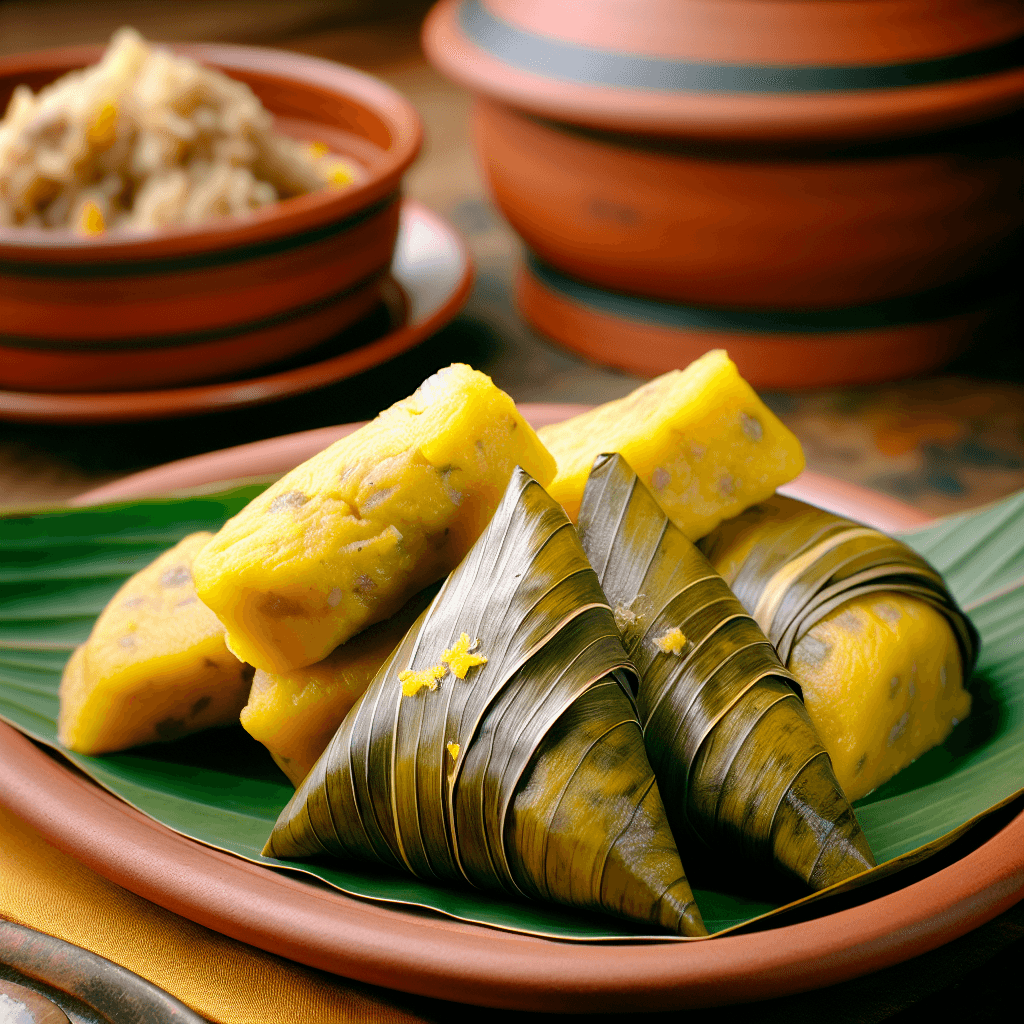
Ducana
Sweet potato and coconut dumplings steamed in banana leaves — a Montserratian festive treat.
About This Recipe
Ducana (also spelled 'dukana' or 'dokono' across the Caribbean) are steamed sweet potato and coconut dumplings that represent one of the most vivid examples of African culinary tradition transplanted to the Caribbean. They are made from grated sweet potato, desiccated coconut, brown sugar, vanilla, and warm spices — a mixture that is spooned onto squares of banana leaf, wrapped into tight parcels, tied with strips of leaf or kitchen string, and steamed over boiling water until the filling sets into a fragrant, dense, slightly sticky mass. The banana leaf wrapping is not merely aesthetic — it imparts a faint grassy, floral note to the ducana as it steams, and provides a self-contained cooking vessel that keeps the moisture locked in. Before using, the leaves must be softened over an open flame or in boiling water to make them pliable enough to fold without cracking; experienced cooks do this swiftly and confidently, passing each leaf through the flame in a single motion until it turns a brighter green and becomes supple. In Montserrat, ducana are traditionally served alongside saltfish — the sweetness of the dumplings acting as a perfect counterweight to the salinity and savouriness of the cod. The combination is celebrated enough that it appears on the island's coat of arms, cementing ducana's status as a national food symbol. At Christmas and community festivals, large batches are prepared by families and shared as gifts, wrapped in their distinctive leaf parcels.
Ingredients
Serves 6
- 500 gsweet potato(peeled and grated)
- 1 cupdesiccated coconut
- 0.5 cupbrown sugar
- 1 tspvanilla extract
- 0.5 tspcinnamon
- 6 piecesbanana leaf(softened over flame, cut into 30 cm squares)
Instructions
- 1
Prepare sweet potato
Peel and grate the sweet potato on the coarse side of a box grater into a large mixing bowl. Using your hands or a clean tea towel, squeeze firmly over the sink to extract as much excess liquid as possible — wet sweet potato produces dumplings that don't set properly. Discard the liquid.
Orange-fleshed sweet potato gives the best colour and sweetness; avoid white-fleshed varieties which are starchier and less fragrant.
- 2
Mix the filling
Add the desiccated coconut, brown sugar, vanilla extract, and cinnamon to the squeezed sweet potato. Mix thoroughly with your hands until the ingredients are evenly distributed and the mixture holds together loosely when pressed. Taste it — it should be sweetly spiced and fragrant. Adjust sugar or cinnamon to your preference.
- 3
Soften the banana leaves
Pass each banana leaf square briefly through an open gas flame or hold it 5 cm above an electric hob at medium heat, moving it constantly, for about 5–10 seconds per side until the leaf changes to a slightly brighter green and becomes flexible enough to fold without cracking. Alternatively, immerse in boiling water for 1 minute. Pat dry before using.
If banana leaves are unavailable, double layers of aluminium foil work as a functional substitute — the ducana won't have the subtle leaf aroma but will cook correctly.
- 4
Wrap the dumplings
Place a generous scoop of the sweet potato mixture (about 3–4 tbsp) in the centre of each prepared banana leaf square. Spread it slightly into an oval shape about 8 cm long. Fold one long side of the leaf over the filling, then fold the other side over to overlap. Tuck in the ends firmly to create a compact, sealed parcel and tie securely with kitchen string or strips of banana leaf.
- 5
Steam for 45 minutes
Set a steamer basket over a pot of rapidly boiling water. Arrange the ducana parcels seam-side down in the steamer, layering them if needed. Cover tightly and steam for 45 minutes, maintaining the boil throughout and adding more boiling water to the pot if the level drops. The parcels are done when the filling feels firm through the leaf when pressed gently.
- 6
Unwrap and serve
Remove parcels from the steamer and rest for 5 minutes. To serve, cut the string and peel back the banana leaf — the ducana should release cleanly and hold its shape. Serve warm alongside saltfish buljol for the classic Montserratian combination, or eat on their own as a snack.
Did you make this?
Rate it and help other cooks find the recipes that actually work.
One tap to sign in, and we'll save the rating you just picked.
Everything you need to plan your week — free
- Meal calendar
- Grocery list
- AI recipe ideas
Track what you eat
Snap your meal to log calories and macros, run fasting timers and track water in the free SnapCal app.
Pro Tips
- →
Squeezing excess moisture from the grated sweet potato is essential — wet filling produces soft, poorly set ducana that won't hold their shape when unwrapped.
- →
Soften banana leaves properly before wrapping. A stiff, un-softened leaf will crack and allow steam to escape, which leads to uneven cooking and dry dumplings.
- →
Foil makes a reliable substitute for banana leaves if needed, but use a double layer to prevent leaks and note that the characteristic herbal fragrance from the leaf will be absent.
- →
Ducana benefit from a small pinch of nutmeg added along with the cinnamon — the combination of the two warm spices is richer and more complex than cinnamon alone.
- →
Make a large batch and freeze unbaked parcels — go straight from freezer to steamer with an additional 15–20 minutes added to the cooking time.
Variations
- •
Nutmeg and allspice version: add 0.25 tsp each of freshly grated nutmeg and ground allspice alongside the cinnamon for a deeper, more complex spice profile.
- •
Pumpkin ducana: substitute grated Kabocha or Caribbean pumpkin for the sweet potato, adding an extra tablespoon of brown sugar to compensate for the lower natural sweetness.
- •
Raisin ducana: fold 50 g of raisins or mixed dried fruit into the mixture before wrapping — a popular variation at Christmas that adds a sweet chewiness to each bite.
- •
Coconut cream version: replace desiccated coconut with 100 ml of thick coconut cream for a smoother, moister, richer filling.
Storage
Refrigerate wrapped ducana for up to 3 days. To reheat, place the sealed parcels back in a steamer over boiling water for 10–12 minutes until hot through. Alternatively, unwrap and microwave for 1–2 minutes. Ducana can also be frozen uncooked — steam from frozen, adding 15–20 minutes to the total steaming time.
History & Origin
Ducana belongs to a family of wrapped and steamed cornmeal or root-vegetable dumplings found across the African diaspora, including dokono in Jamaica and tie-a-leaf in Barbados — all traceable to West and Central African traditions of wrapping food in leaves before cooking. In Montserrat and Antigua, the sweet potato and coconut version using banana leaves became so emblematic of the islands' cuisine that ducana and saltfish appears as the centrepiece of Antigua and Barbuda's coat of arms. The dish represents the synthesis of African technique, Caribbean ingredients (sweet potato and banana leaf), and European colonial trade goods (cinnamon, vanilla, refined sugar).
Frequently Asked Questions
Can I bake ducana instead of steaming?
You can bake them at 180 °C for 35–40 minutes, but the texture will be noticeably drier and the filling won't have the same moist, cohesive quality that steaming produces. Steaming is strongly preferred and worth the extra equipment. If you must bake, brush the foil or leaf parcels lightly with water before placing in the oven.
Where can I find banana leaves?
Asian and Caribbean grocery stores typically stock frozen banana leaves year-round — they are sold in large folded packages and keep for months in the freezer. Thaw overnight in the refrigerator before use, or briefly in warm water. In a pinch, double-thickness aluminium foil works functionally, though without the flavour contribution of the leaf.
How do I know when the ducana is cooked?
Press the parcel gently — it should feel firm and set with no give in the centre. If it still feels soft or squishy after 45 minutes, add water to the pot and steam for a further 10–15 minutes. Cutting open one parcel to check is perfectly acceptable on your first attempt.
What is the traditional pairing for ducana?
Saltfish (salt cod prepared as buljol or stewed with onions and tomatoes) is the quintessential partner — the saltiness of the fish perfectly offsets the sweetness of the dumpling. This combination is so central to Antiguan and Montserratian cuisine that it features on Antigua's national coat of arms.
Can I make the mixture ahead of time?
Yes — the sweet potato and coconut mixture can be prepared up to a day in advance and refrigerated. The banana leaves can also be softened and cut ahead. Do the wrapping and steaming just before serving for the freshest result.
Nutrition Facts
Per serving · 6 servings total
Time Summary
Have Questions?
Ask our AI cooking assistant anything about this recipe — substitutions, techniques, scaling.
Chat with AI Chef →Featured in Guides
This recipe is featured in the following curated guides:
More Montserratian Recipes
You Might Also Like
Similar dishes from other cuisines around the world.
Free Kitchen Tools
Calculators and converters that pair with this page — no signup needed.
Put This Into a Plan
Schedule it, shop for it, and track what you already have.
Read Next
Longer reads that go deeper on the ideas behind this dish.
Community
Join the conversation
Sign in to leave a comment and save your favourite recipes