
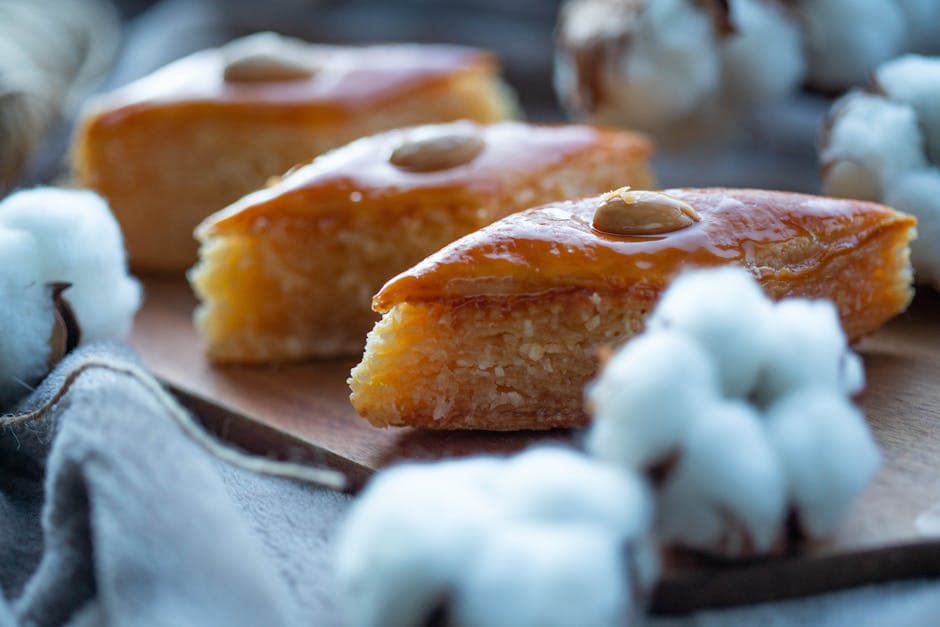
Egyptian Basbousa (Semolina Cake)
Moist, syrup-soaked semolina cake flavored with coconut and rose water — Egypt's most beloved dessert.
About This Recipe
Basbousa is the queen of Egyptian sweets — a dense, grainy semolina cake baked until golden, then drenched in a fragrant sugar syrup perfumed with rose water and lemon. The syrup soaks into every grain of semolina, making it simultaneously dense and impossibly moist. Found at every Egyptian bakery and celebration, it's impossible to have just one piece.
Ingredients
Serves 12
- 2 cupscoarse semolina
- 1 cupshredded coconut
- 1/2 cupsugar
- 1/2 cupplain yogurt
- 1/2 cupbutter, melted
- 1 tspbaking powder
- 1/4 cupblanched almonds (to garnish)
- 1.5 cupssugar (for syrup)
- 1 cupwater (for syrup)
- 2 tbsprose water (for syrup)
- 1 tbsplemon juice (for syrup)
Instructions
- 1
Make the batter
Combine semolina, coconut, sugar, baking powder, yogurt, and melted butter. Mix well. The mixture should hold together when pressed.
- 2
Pan and score
Press the mixture into a greased 30×20cm baking pan, about 2cm thick. Using a knife, score into diamond or square shapes. Press an almond into the center of each piece.
- 3
Bake
Bake at 180°C (350°F) for 25–30 minutes until golden brown on top.
- 4
Make the syrup
While the cake bakes, bring sugar and water to a boil. Simmer 5 minutes. Add rose water and lemon juice. Keep warm.
- 5
Soak and serve
As soon as the cake comes out of the oven, pour all the hot syrup evenly over it. Let it absorb for at least 30 minutes before cutting and serving.
Did you make this?
Rate it and help other cooks find the recipes that actually work.
One tap to sign in, and we'll save the rating you just picked.
Everything you need to plan your week — free
- Meal calendar
- Grocery list
- AI recipe ideas
Track what you eat
Snap your meal to log calories and macros, run fasting timers and track water in the free SnapCal app.
Pro Tips
- →
Pour the syrup while the cake is still hot and the syrup is still hot — this maximizes absorption.
- →
Score before baking, not after — it helps the syrup penetrate.
- →
The cake looks done before it is — make sure it's fully golden.
- →
Weigh dry ingredients on a scale instead of using cups — grams are the difference between a tender and a tough crumb.
Variations
- •
Add orange blossom water to the syrup
- •
Top with crushed pistachios instead of almonds
- •
Make a chocolate version with cocoa powder added to the batter
- •
Vegetarian: swap the protein for roasted king oyster mushrooms, smoked tofu or cooked chickpeas — adjust seasoning slightly upward to compensate.
Storage
Store at room temperature for 5 days, or refrigerate up to 2 weeks. Flavors improve after day 1.
History & Origin
Basbousa (also called harissa or revani in neighboring countries) is spread across the entire Arab world and Turkey. The Egyptian version is particularly coconut-rich and is the standard version found in Egyptian homes and bakeries.
Frequently Asked Questions
Can I use fine semolina?
Coarse semolina gives the characteristic texture. Fine semolina produces a softer, less grainy cake — both are valid.
How much syrup is too much?
Traditional basbousa is very generously syruped. All the syrup should go on — the cake absorbs it. Don't be alarmed.
Can I make this ahead of time?
Yes — most of the components can be prepared up to a day in advance and refrigerated separately. Reheat gently and assemble just before serving so textures stay distinct.
What can I substitute if I don't have all the ingredients?
Stay close to the role each ingredient plays: swap aromatics for similar ones (shallot for onion, lime for lemon), and keep the fat-acid-salt balance intact. Spice blends can usually be approximated with what's in the cupboard.
Nutrition Facts
Per serving · 12 servings total
Time Summary
Have Questions?
Ask our AI cooking assistant anything about this recipe — substitutions, techniques, scaling.
Chat with AI Chef →Featured in Guides
This recipe is featured in the following curated guides:
More Egyptian Recipes
You Might Also Like
Similar dishes from other cuisines around the world.
Free Kitchen Tools
Calculators and converters that pair with this page — no signup needed.
Put This Into a Plan
Schedule it, shop for it, and track what you already have.
Read Next
Longer reads that go deeper on the ideas behind this dish.
Community
Join the conversation
Sign in to leave a comment and save your favourite recipes