
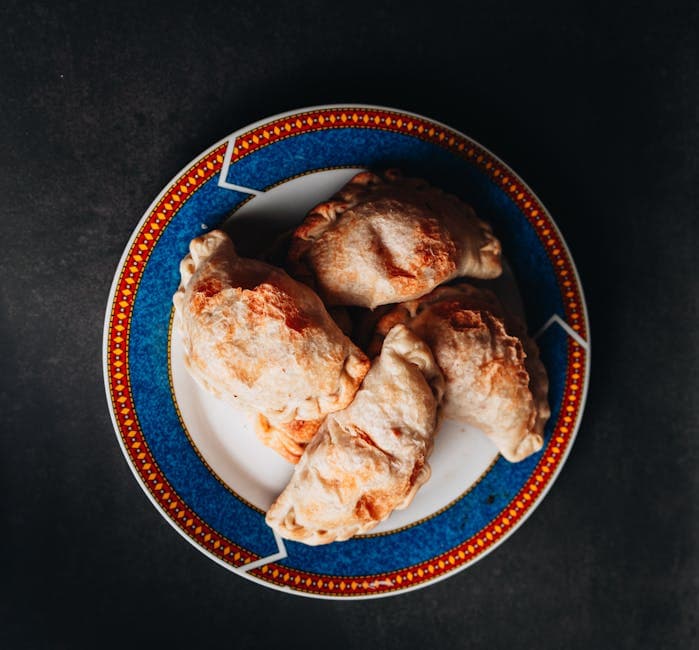
Empanadas Mendocinas (Argentine Beef Empanadas from Mendoza)
The Mendoza-style beef empanada — flaky baked or fried pastry filled with hand-cut beef, onion, hard-boiled egg, green olive and a generous pinch of cumin, served with a glass of Malbec.
About This Recipe
Empanadas mendocinas are the celebrated regional empanada of Mendoza, the heart of Argentine Malbec country at the foot of the Andes. They distinguish themselves from the salteñas of the north or the tucumanas of the central provinces by their generous use of cumin, the hand-cut (never ground) beef, the addition of finely chopped hard-boiled egg, a green olive and sometimes a single raisin, and the signature thirteen-pleat repulgue (decorative crimp) along the edge. The dough is enriched with beef fat (grasa de pella) for ideal flakiness, the filling is cooked the day before so the flavors marry and the meat juices are reabsorbed (preventing soggy bottoms), and the empanadas are baked in a clay oven (horno de barro) for a blistered, golden crust. At an asado, empanadas are the first course before the meat — passed hot from the oven to be eaten with the fingers, washed down with red wine. The bite reveals layered flavors: juicy onion-laced beef, the bright pop of olive, the richness of egg yolk, and the unmistakable warmth of cumin. Made at home and frozen raw, they reheat from frozen in the oven and remain one of the most rewarding investments in a Sunday afternoon kitchen project.
Ingredients
Serves 6
- 500 gall-purpose flour
- 1 tspsalt
- 100 grendered beef fat (grasa de pella) or lard, melted and cooled
- 200 mlwarm water, plus more as needed
- 600 gbeef chuck or flank, very finely diced by hand (not ground)
- 3 tbspbeef fat or olive oil
- 3 largeonions, finely diced
- 3scallions, sliced
- 1red bell pepper, finely diced
- 2 tbspsweet paprika
- 1.5 tbspground cumin (the soul of Mendoza-style)
- 1 tspground chili (ají molido) or red pepper flakes
- 1 tbspsalt, plus more to taste
- 3hard-boiled eggs, finely chopped
- 24pitted green olives
- 1egg, beaten with 1 tbsp milk (egg wash)
Instructions
- 1
Make the dough
In a large bowl, whisk flour and salt. Pour in the melted beef fat and rub through with fingertips until the mixture resembles coarse crumbs. Add the warm water gradually, mixing until a soft dough forms — you may need 20 ml more or less. Knead 5 minutes on a floured surface until smooth. Wrap in plastic and rest 30 minutes at room temperature.
Beef fat (grasa de pella) is essential for the authentic flaky-yet-tender Mendoza pastry. Lard is the next best substitute; butter gives the wrong texture.
- 2
Cook the filling — day before ideally
Heat the beef fat or olive oil in a wide skillet over medium heat. Add onions, scallions and red pepper. Cook gently 12–15 minutes until softened and translucent — this is the unhurried base of the filling.
- 3
Add the meat and spices
Raise heat to medium-high. Add the finely diced beef, paprika, cumin, ají molido and salt. Cook 8–10 minutes, stirring frequently, until the meat is just cooked through but still juicy. Taste and adjust — the filling should be aromatic, well-seasoned and a little wet (it will firm up as it cools).
- 4
Cool overnight
Spread the filling on a wide tray to cool quickly. Refrigerate at least 4 hours, ideally overnight. This rest is critical: the juices reabsorb into the meat, preventing soggy empanada bottoms, and the flavors meld.
- 5
Roll and cut the dough
Roll the dough out on a floured surface to 3 mm thickness. Cut into 12 cm circles using a bowl or empanada cutter. You should get about 24 discs. Stack with parchment between them to prevent sticking.
- 6
Fill and seal
Place a heaping tablespoon of cold filling in the center of each disc. Top with a pinch of chopped hard-boiled egg and one olive. Brush the edges lightly with water. Fold over into a half-moon and press to seal. Make the repulgue: pinch and twist the edge in tiny folds along the curve — traditionally 13 pleats. This isn't just decorative; it makes a tight seal.
- 7
Bake or fry
BAKE: Preheat oven to 220°C (425°F). Place empanadas on parchment-lined trays, brush tops with egg wash, and bake 18–22 minutes until deep golden and blistered. FRY: Heat oil to 180°C and fry empanadas in batches 3 minutes per side until golden brown and crisp. Drain on paper towels.
- 8
Serve
Serve hot or warm, on a wooden board, with a glass of Malbec or Bonarda. Eat with hands. A small bowl of chimichurri or a tomato-pepper salsa criolla can sit alongside, but in Mendoza they are usually eaten plain.
Did you make this?
Rate it and help other cooks find the recipes that actually work.
One tap to sign in, and we'll save the rating you just picked.
Everything you need to plan your week — free
- Meal calendar
- Grocery list
- AI recipe ideas
Track what you eat
Snap your meal to log calories and macros, run fasting timers and track water in the free SnapCal app.
Pro Tips
- →
Hand-cut beef is non-negotiable. Ground beef makes the filling pasty; hand-cut 5 mm cubes give the proper mouthfeel.
- →
Always cool the filling overnight before filling. This is the single biggest factor in great empanadas.
- →
Make a big batch and freeze raw on trays, then bag. Bake from frozen at 220°C for 25 minutes — no thawing needed.
- →
The 13-pleat repulgue is traditional and signals 'Mendoza-style' — but any tight crimp will do for home cooks. A fork-pressed edge works.
Variations
- •
Salteñas (Salta-style) — sweeter and spicier with potato cubes; juicier filling.
- •
Tucumanas — uses matambre (flank) and a stronger cumin hand.
- •
Empanadas de queso y cebolla — onion and three-cheese filling, the classic vegetarian option.
- •
Spicy version — add a finely chopped fresh chili to the onion base; doubles the ají molido at the end.
Storage
Cooked empanadas keep 3 days refrigerated; reheat in a 200°C oven 8 minutes (never microwave — pastry goes soggy). Freeze raw or cooked up to 3 months. Bake raw frozen empanadas directly from freezer.
History & Origin
Empanadas arrived in the Americas with Spanish colonists in the 16th century but evolved distinctly in each Argentine province. The Mendoza style developed in the 19th century as Italian and Spanish immigrants settled the wine country, and the use of beef fat in the dough reflects the cattle-rich Argentine pampa. The 13-pleat repulgue is said to represent the apostles, though it is more likely a regional pastry-craft tradition.
Frequently Asked Questions
Can I use store-bought empanada discs?
Yes — frozen Goya or La Saltena discs (especially 'tapas para empanadas para horno') are widely available in Latin grocers and Argentine cooks use them often for everyday baking.
Bake or fry — which is better?
Baked is traditional in Mendoza and Salta; fried is more common in Tucumán. Both are excellent. Baked is healthier and easier for a big batch.
Why is the filling falling out?
Either the filling is too hot when you fill (it shrinks as it cools), or the seal isn't tight. Always cool filling overnight and seal the edges firmly with water.
Can I make the dough with butter?
Yes but the texture is different — butter dough is more like a quiche pastry, beef-fat dough is the proper flaky empanada. Try both and decide.
Nutrition Facts
Per serving (110g / 3.9 oz) · 6 servings total
Time Summary
Have Questions?
Ask our AI cooking assistant anything about this recipe — substitutions, techniques, scaling.
Chat with AI Chef →Featured in Guides
This recipe is featured in the following curated guides:
More Argentinian Recipes
You Might Also Like
Similar dishes from other cuisines around the world.
Browse by Ingredient
More recipes built around the same core ingredients.
Free Kitchen Tools
Calculators and converters that pair with this page — no signup needed.
Put This Into a Plan
Schedule it, shop for it, and track what you already have.
Read Next
Longer reads that go deeper on the ideas behind this dish.
Community
Join the conversation
Sign in to leave a comment and save your favourite recipes