
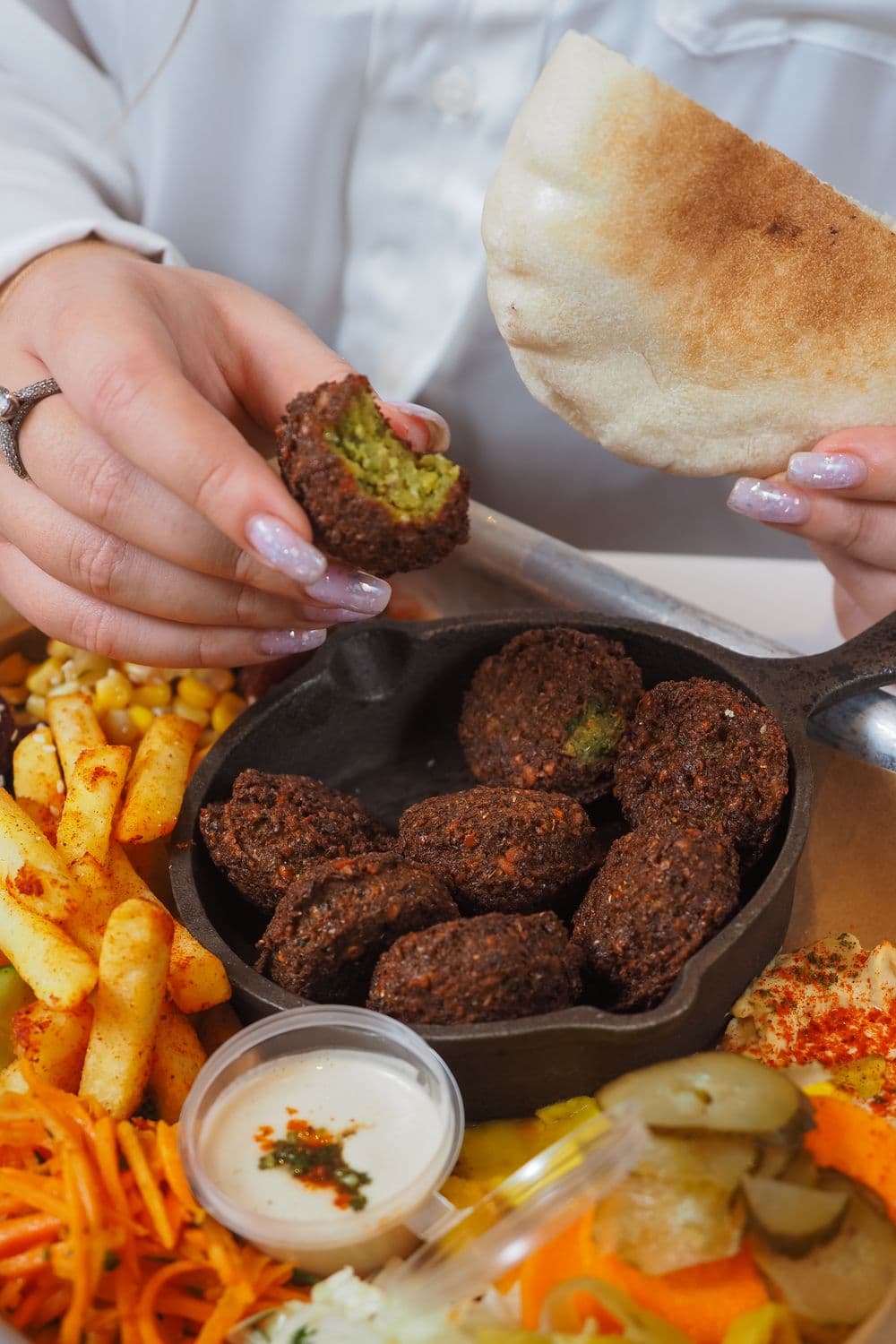
Falafel
Lebanese fried chickpea patties with herbs and spices — crispy, green inside, essential.
About This Recipe
Falafel are the Levant's beloved fried legume fritters — in the Lebanese style, made from dried chickpeas that are soaked but never cooked, ground with a garden's worth of parsley, cilantro, and green onion, and seasoned with cumin, coriander, and a whisper of cayenne. Fried at the right temperature, they emerge shatteringly crisp and deep brown outside while the interior stays vividly green, fluffy, and almost creamy. The cardinal rule is dried chickpeas only: canned ones are too wet and collapse in the oil. Stuffed into pita with tahini sauce, pickled turnips, tomato, and mint, falafel is Lebanon's great street-food equalizer — cheap, vegan by accident, and eaten by everyone from students to bankers.
Ingredients
Serves 12
- 2 cupsdried chickpeas, soaked overnight
- 1/2 cupfresh parsley, chopped
- 1/4 cupfresh cilantro, chopped
- 1/4 cupgreen onion, chopped
- 4 clovesgarlic, minced
- 1 tbspground cumin
- 1 tbspground coriander
- 1/2 tspcayenne pepper
- 1/2 cupflour
- 1 tspbaking powder
- 1 tspsalt
- oil for frying
Instructions
- 1
Drain and dry
Soak the dried chickpeas in plenty of cold water for at least 12 hours — they should double in size and snap cleanly when bitten. Drain thoroughly and spread on a towel to dry; surface moisture is the enemy of cohesive falafel.
Never cook the chickpeas — soaked-raw is what gives falafel its structure. Cooked or canned chickpeas turn to mush in the fryer.
- 2
Process
Pulse the chickpeas in a food processor with the herbs, green onion, garlic, cumin, coriander, and cayenne, scraping down the sides between pulses. Stop at a coarse, sandy green meal that holds together when pressed — well short of a smooth paste.
- 3
Bind and rest
Add the flour, baking powder, and salt and pulse a few more times just to distribute. Squeeze a handful: it should hold its shape without crumbling. Refrigerate the mixture 30 minutes so the flour hydrates and the patties firm up.
The rest in the fridge is the cheapest insurance against falafel disintegrating in the oil.
- 4
Shape and fry
Heat 5cm of oil to 170°C — test with a small piece, which should sizzle immediately and rise. Form walnut-sized patties with damp hands or a falafel scoop and fry in batches without crowding, 4–5 minutes, until deep mahogany. Drain on paper towels.
Oil that's too cool makes greasy falafel; too hot burns the crust before the center cooks. A thermometer pays for itself here.
- 5
Serve
Serve hot and crackling, tucked into warm pita with tahini sauce, sliced tomato, pickled turnips, and fresh mint, or arranged on a mezze platter with lemon wedges. Falafel lose their crunch as they cool, so fry in waves and eat immediately.
Did you make this?
Rate it and help other cooks find the recipes that actually work.
One tap to sign in, and we'll save the rating you just picked.
Everything you need to plan your week — free
- Meal calendar
- Grocery list
- AI recipe ideas
Track what you eat
Snap your meal to log calories and macros, run fasting timers and track water in the free SnapCal app.
Pro Tips
- →
Dried, soaked, uncooked chickpeas are non-negotiable — canned chickpeas guarantee falafel that fall apart.
- →
Pulse to a coarse meal, not a paste; overprocessing makes the interior dense and gummy.
- →
Chill the mixture at least 30 minutes before shaping so the patties hold together in the oil.
- →
Keep the oil at a steady 170°C and fry in small batches — crowding drops the temperature and breeds greasy falafel.
- →
Add a tablespoon of sesame seeds to the mixture or roll patties in them for extra crunch and nuttiness.
Variations
- •
Egyptian-style ta'ameya: replace the chickpeas with soaked split fava beans for a creamier, earthier fritter.
- •
Stuffed falafel: press a pocket into each patty and fill with sautéed onion and sumac before frying.
- •
Baked falafel: brush patties with oil and bake at 200°C, flipping once — lighter, though less crisp.
- •
Extra-herby green falafel: double the parsley and cilantro and add a handful of fresh dill for an intensely green crumb.
Storage
Fried falafel keep refrigerated for up to 3 days and are best revived in a hot oven or a quick re-fry; the microwave makes them rubbery. The uncooked mixture freezes well for up to 3 months — shape patties, freeze on a tray, and fry straight from frozen, adding a minute to the cooking time.
History & Origin
Falafel's origins are debated: one popular theory traces it to Coptic Christians in Egypt, who made fava-bean ta'ameya as a meatless dish for Lent, with the chickpea version spreading north through the Levant. By the early 20th century it was entrenched street food in Lebanon, Syria, and Palestine. Today several nations claim it as their own, and it has become a global symbol of Middle Eastern cooking.
Frequently Asked Questions
Why are my falafel falling apart in the oil?
Almost always one of three things: you used canned or cooked chickpeas instead of soaked dried ones, the mixture is too wet, or you skipped the resting step. Soaked-raw chickpeas provide the starch structure that binds falafel. If a test patty crumbles, pulse in another tablespoon of flour and chill the mixture for 30 minutes before frying again.
Can I bake or air-fry falafel instead of deep-frying?
Yes, with adjusted expectations. Brush shaped patties generously with oil and bake at 200°C for about 25 minutes, flipping halfway, or air-fry at 190°C for 12–14 minutes. You will get a pleasant golden crust, but not the all-over shattering crispness of deep-fried falafel — the trade-off is significantly less oil.
Why is the inside of good falafel green?
The green comes from a large quantity of fresh parsley, cilantro, and green onion ground into the chickpea base — it is a hallmark of well-made Levantine falafel, not food coloring. Pale beige interiors usually signal a skimpy hand with the herbs, which also means less flavor and a drier texture.
What sauce goes with falafel?
The classic is tarator: tahini whisked with lemon juice, garlic, and water until pourable and creamy. In a sandwich, it is joined by pickled turnips, tomato, cucumber, and mint. Some vendors add a drizzle of chili sauce or toum (Lebanese garlic sauce) for customers who want heat and punch.
Nutrition Facts
Per serving (100g / 3.5 oz) · 12 servings total
Time Summary
Have Questions?
Ask our AI cooking assistant anything about this recipe — substitutions, techniques, scaling.
Chat with AI Chef →Featured in Guides
This recipe is featured in the following curated guides:
More Lebanese Recipes
You Might Also Like
Similar dishes from other cuisines around the world.
Browse by Ingredient
More recipes built around the same core ingredients.
Free Kitchen Tools
Calculators and converters that pair with this page — no signup needed.
Put This Into a Plan
Schedule it, shop for it, and track what you already have.
Read Next
Longer reads that go deeper on the ideas behind this dish.
Community
Join the conversation
Sign in to leave a comment and save your favourite recipes