
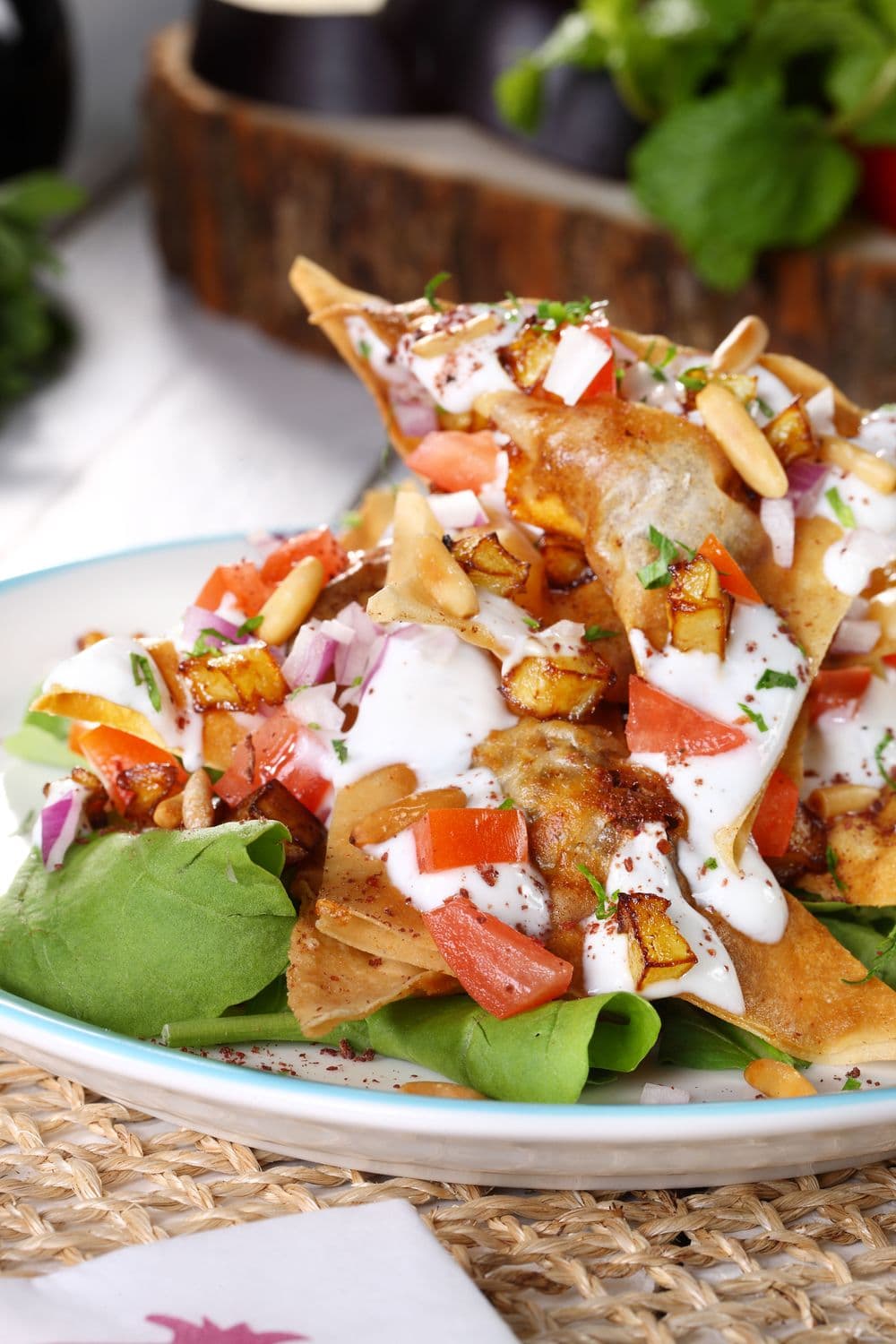
Fatteh
Lebanese layered bread, chickpeas, and yogurt dish — a magnificent mezze centerpiece.
About This Recipe
Fatteh — from the Arabic for breaking bread into pieces — is the Levant's great architecture of leftovers turned luxury: a base of crisped pita, a layer of warm spiced chickpeas, a blanket of garlicky tahini-yogurt, and a final flourish of butter-toasted pine nuts, pomegranate seeds, and herbs. In Lebanon it is weekend breakfast food, Ramadan food, and a mezze showpiece, always assembled at the last minute so each spoonful delivers crunch, cream, and warmth together. The version here balances the three layers carefully: pita toasted dry and golden so it resists the sauce, chickpeas warmed in seasoned liquid so they stay plump, and a yogurt sauce loosened just enough to cascade between the layers rather than sit on top.
Ingredients
Serves 6
- 2 canschickpeas (400g each), drained
- 3pita breads, torn into pieces
- 2 cupsfull-fat yogurt
- 2 clovesgarlic, minced
- 2 tbsptahini
- 2 tbsplemon juice
- 1/4 cuptoasted pine nuts
- 1/4 cuppomegranate seeds
- 2 tbspolive oil
- 1 tsppaprika
- 2 tbspfresh parsley
Instructions
- 1
Toast pita
Tear the pita into bite-sized shards, brush or toss them lightly with oil, and bake at 180°C for about 10 minutes, turning once, until uniformly golden and completely crisp — any pale, bendy pieces will turn to mush under the yogurt. Frying in shallow oil is the richer traditional alternative.
Toast the pita until it is crisper than feels necessary; it is the structural foundation of the whole dish.
- 2
Warm chickpeas
Simmer the drained chickpeas gently in a saucepan with a splash of water, a pinch of salt, and a pinch of cumin for about 5 minutes, until heated through and slightly softened. Keep them warm in a little of their liquid — warm chickpeas against cool yogurt is part of fatteh's signature temperature contrast.
- 3
Make yogurt sauce
Whisk the yogurt with the minced garlic, tahini, lemon juice, and a good pinch of salt until smooth and pourable — about the consistency of thick cream. If it is stiff, loosen it with a spoonful of the warm chickpea liquid so it will flow down between the bread layers.
Take the yogurt out of the fridge 20 minutes ahead; ice-cold sauce on warm chickpeas dulls the whole dish.
- 4
Assemble
Working just before serving, spread the crisp pita over a deep platter and moisten it with a ladleful of the warm chickpea liquid. Spoon the chickpeas over, pour the yogurt sauce across everything, then finish with the hot pine nuts, pomegranate seeds, parsley, a drizzle of olive oil, and a dusting of paprika.
Did you make this?
Rate it and help other cooks find the recipes that actually work.
One tap to sign in, and we'll save the rating you just picked.
Everything you need to plan your week — free
- Meal calendar
- Grocery list
- AI recipe ideas
Track what you eat
Snap your meal to log calories and macros, run fasting timers and track water in the free SnapCal app.
Pro Tips
- →
Fatteh waits for no one — assemble it at the table moments before eating, while the contrast of textures is intact.
- →
Pouring sizzling browned butter with the pine nuts over the yogurt at the very end, so it audibly crackles, is the classic dramatic finish.
- →
Full-fat yogurt is essential; low-fat versions turn watery against the warm chickpeas.
- →
A ladle of warm chickpea liquid over the pita first softens the bottom layer just slightly — the traditional texture trick.
- →
Prep every component ahead and store separately; assembly then takes under two minutes.
Variations
- •
Fatteh bil lahme: top with browned spiced ground lamb and extra pine nuts for the festive meat version.
- •
Chicken fatteh: layer in shredded poached chicken between the chickpeas and yogurt for a full meal.
- •
Eggplant fatteh: replace half the chickpeas with cubes of fried or roasted eggplant, a beloved Damascene-Lebanese variant.
- •
Drizzle pomegranate molasses over the top for a sweet-tart finish that cuts the richness.
Storage
Assembled fatteh does not keep — the bread softens within the hour. Store components separately instead: crisped pita airtight at room temperature for 3 days, the yogurt sauce and cooked chickpeas refrigerated for 3 days, and assemble fresh each time.
History & Origin
Fatteh belongs to an ancient family of Arab bread-based dishes documented since medieval times, built on the thrifty principle of giving stale flatbread a glorious second life. Versions span the region — Egyptian fatteh with rice and vinegar-garlic sauce, Damascene fatteh with eggplant or lamb — and the chickpea-and-yogurt style is the one most associated with Lebanon and Syria, where it anchors weekend breakfasts and Ramadan tables.
Frequently Asked Questions
Can I make it ahead?
You can — but only in pieces. Toast the pita, cook the chickpeas, mix the yogurt sauce, and toast the nuts up to a few days in advance, storing each separately. The actual layering must happen in the final minutes before serving; once sauced, the bread begins softening immediately and the dish loses its defining contrast.
Should fatteh be hot or cold?
Neither — it is a deliberate study in temperature contrast. The chickpeas and the nut topping should be hot, the yogurt sauce at cool room temperature, and the pita crisp and dry. That warm-cool interplay in a single spoonful is the experience the dish is built around, which is also why it cannot sit.
Can I use dried chickpeas?
Dried chickpeas, soaked overnight and simmered until very tender (about 60–90 minutes, less with a pressure cooker), give plumper texture and a superior cooking liquid for moistening the bread and loosening the sauce. Canned are a completely respectable shortcut — warm them in seasoned water to mimic that broth.
Is fatteh the same as fattoush?
They share the idea of repurposed crisped pita but are different dishes. Fattoush is a fresh vegetable salad with sumac dressing and pita croutons; fatteh is a warm layered dish of bread, chickpeas or meat, and garlicky yogurt. In Lebanon fattoush is a salad course while fatteh leans breakfast and mezze.
Nutrition Facts
Per serving (400g / 14.1 oz) · 6 servings total
Time Summary
Have Questions?
Ask our AI cooking assistant anything about this recipe — substitutions, techniques, scaling.
Chat with AI Chef →Featured in Guides
This recipe is featured in the following curated guides:
More Lebanese Recipes
You Might Also Like
Similar dishes from other cuisines around the world.
Browse by Ingredient
More recipes built around the same core ingredients.
Free Kitchen Tools
Calculators and converters that pair with this page — no signup needed.
Put This Into a Plan
Schedule it, shop for it, and track what you already have.
Read Next
Longer reads that go deeper on the ideas behind this dish.
Community
Join the conversation
Sign in to leave a comment and save your favourite recipes