
persiandinner
Fesenjan
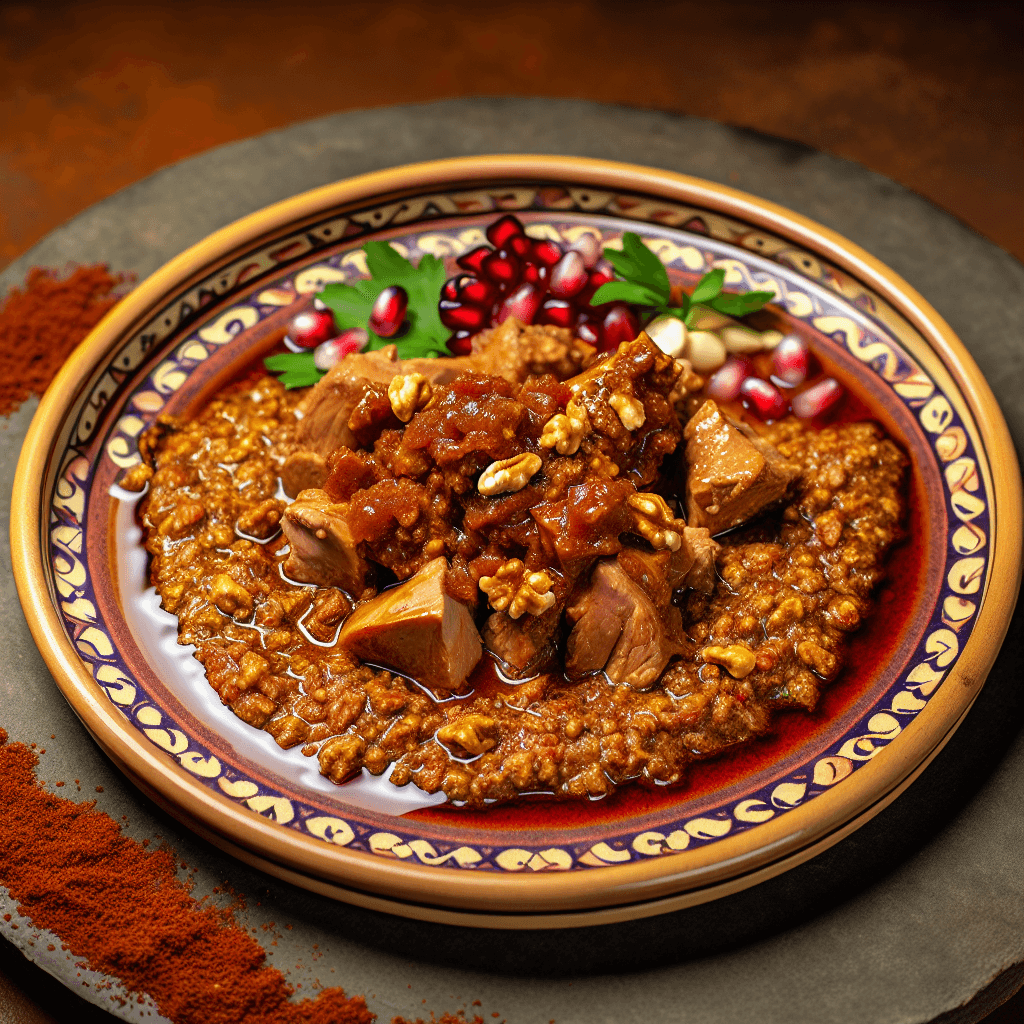
Persian pomegranate and walnut stew with duck — sweet, sour, nutty, luxurious.
Prep
25 min
Cook
90 min
Servings
6
Difficulty
Hard
4.9
Sign in to rate#persian#duck#pomegranate#walnut#luxury
Persian pomegranate and walnut stew with duck — sweet, sour, nutty, luxurious.
Fesenjan (khoresh-e fesenjan) is the most regal of Persian stews, born in the lush, pomegranate-rich province of Gilan along the Caspian Sea, where it was traditionally made with wild duck. Finely ground walnuts are toasted, then simmered slowly with pomegranate juice and molasses until the nuts release their oils and the sauce thickens to a glossy, deep mahogany — a transformation that cannot be hurried. The flavor is a sophisticated tightrope walk: tart pomegranate against the walnuts' richness, with cinnamon and ginger humming underneath. Served over saffron rice and jeweled with fresh pomegranate seeds, it is the dish Iranians reserve for Yalda night, weddings, and honored guests.
Serves 6
Pat the duck pieces dry and season lightly with salt. Heat the oil in a heavy pot over medium-high heat and brown the pieces on all sides, about 10 minutes total, rendering some of the fat. Transfer to a plate, leaving the fat behind.
Dry skin is the key to good browning — moisture steams instead of searing.
Lower the heat to medium and cook the diced onions in the same fat, scraping up the browned bits, until soft and golden, about 10 minutes. Stir in the garlic and grated ginger and cook 1 minute more until fragrant.
Add the finely ground walnuts and toast them in the pot, stirring constantly, for 2 minutes. They should smell nutty and darken slightly without scorching — burnt walnuts make the whole stew bitter.
Grind the walnuts almost to a paste in a food processor; the finer the grind, the silkier and thicker the final sauce.
Pour in the pomegranate juice, pomegranate molasses, and water, then add the cinnamon, salt, and pepper. Stir thoroughly so the walnuts dissolve into the liquid with no dry clumps clinging to the bottom of the pot.
Nestle the duck back into the sauce, bring to a boil, then drop to the gentlest simmer, partially covered. Cook about 60 minutes, stirring every 15 minutes so the walnuts don't catch, until the duck is tender and the sauce has turned dark, thick, and glossy with beads of walnut oil on the surface.
The sauce darkening from tan to deep chocolate-brown is your visual cue that fesenjan is properly done.
Taste and balance — add a spoon of molasses if it needs more tang, or a pinch of sugar if too sharp. Serve ladled over saffron basmati rice and scatter fresh pomegranate seeds over each plate for bursts of brightness.
Everything you need to plan your week — free
Cook this hands-free
Get AI meal plans, step-by-step cooking mode, and your saved recipes in the free Bento app.
Use 100% pure pomegranate juice, not sweetened cocktail or from-concentrate blends — the sauce's balance depends on real tartness.
Taste your pomegranate molasses first: brands vary wildly from sweet to mouth-puckering, so adjust quantity accordingly.
Buy the freshest walnuts you can and taste one before grinding; stale walnuts carry a rancid bitterness no amount of simmering fixes.
Stir regularly during the braise — the walnut sauce loves to stick and scorch on the pot bottom.
Fesenjan should read sweet-and-sour (malas, as Iranians say); some families lean sweeter, some tarter, so adjust to your table's taste.
Chicken thigh fesenjan is the most common everyday version — lighter than duck and faster, done in about 45 minutes.
Northern Iranian cooks make it with tiny meatballs of ground lamb or with fish along the Caspian coast.
A vegetarian fesenjan with butternut squash or fried eggplant chunks is increasingly popular and genuinely excellent.
Add a few prunes or dried apricots during the braise for a sweeter, fruitier Azerbaijani-influenced profile.
Refrigerate up to 3 days — like most khoresh, fesenjan is famously better on day two once the walnut and pomegranate flavors marry. It freezes well for 2 months; reheat gently, stirring, with a splash of water to re-loosen the sauce.
Fesenjan originates in Gilan province on Iran's Caspian coast, where pomegranate orchards and walnut groves made the pairing natural and wild duck was the original protein. Archaeological inventories from Persepolis show walnuts and pomegranates stocked in Achaemenid-era kitchens 2,500 years ago, hinting at the combination's ancient pedigree. Today fesenjan is essential to Shab-e Yalda, the Persian winter solstice celebration, and to wedding feasts nationwide.
Absolutely — chicken is actually the more common choice in modern Iranian homes. Use 800g of bone-in thighs for the best flavor, or boneless thighs for convenience; breast works but can dry out. Reduce the braising time to 40-45 minutes. Duck remains the festive, traditional Gilani choice because its richness stands up to the intense sauce.
Mild bitterness comes from walnut skins and usually mellows with longer, slower simmering — give it another 20-30 minutes. Balance it with a teaspoon of sugar or honey at a time. If the bitterness is harsh and chemical, the walnuts were stale or got scorched during toasting; sadly that can't be fully rescued, so always taste walnuts before using.
Properly finished fesenjan is thick enough to coat a spoon heavily and mound slightly on rice — closer to a loose nut butter than a soup, with a sheen of walnut oil at the edges. If yours is thin after an hour, simmer uncovered and stir until it reduces. If it tightens too much, loosen with hot water a few tablespoons at a time.
Juice provides volume, fruitiness, and gentle tartness; molasses is juice reduced to a dark syrup, contributing concentrated sour depth and color. Using both, as here, gives the most balanced result. If you only have molasses, use 4-5 tablespoons total and replace the juice with water, then adjust sweetness and tartness at the end.
Per serving (400g / 14.1 oz) · 6 servings total
Ask our AI cooking assistant anything about this recipe — substitutions, techniques, scaling.
Chat with AI Chef →This recipe is featured in the following curated guides:
Join the conversation
Sign in to leave a comment and save your favourite recipes
Everything you need to plan your week — free
Have feedback or need help?
We read every email and reply within 1–2 business days.
© 2026 MyCookingCalendar. All rights reserved.