
Karjalanpiirakka (Karelian Rice Pasties)
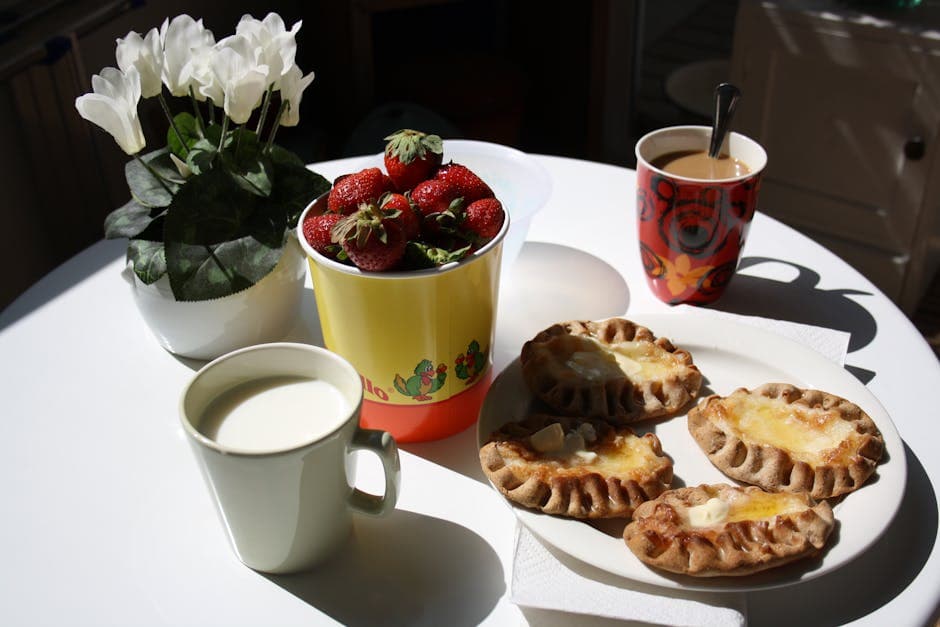
Finland's iconic open rye pasties filled with creamy rice porridge, topped with butter and egg-butter mash.
About This Recipe
Karjalanpiirakka are oval, open-faced rye pastries the colour of polished walnut, filled with silky rice porridge and crimped along the edges into pretty pinched waves. They originate in the Karelian region straddling Finland and north-west Russia and earned EU Protected Geographical Indication status in 2003. The dough is rye-heavy, rolled paper-thin so it crackles when bitten. The filling is full-cream rice cooked low and slow until pudding-soft. Out of the oven, every piirakka is brushed with melted butter and stacked in a tea towel to soften. Finns eat them at breakfast with munavoi — finely chopped hard-boiled egg whipped with butter and salt — that melts into the warm pastry. They are a daily fixture in every Finnish bakery from Helsinki to Rovaniemi.
Ingredients
Serves 6
- 150 grye flour
- 100 gall-purpose flour, plus extra for rolling
- 1/2 tspfine salt
- 150 mlcold water
- 2 tspvegetable oil
- 120 gshort-grain or pudding rice
- 250 mlwater (for rice)
- 700 mlwhole milk
- 1/2 tspfine salt (for filling)
- 40 gunsalted butter, melted (for brushing)
- 3hard-boiled eggs (for munavoi)
- 60 gsalted butter, soft (for munavoi)
- flaky salt to finish
Instructions
- 1
Cook the rice base
Bring rice and 250 ml water to a boil in a heavy pot. Simmer covered 5 minutes until the water is absorbed. Pour in milk and salt, lower heat to the gentlest simmer, and cook uncovered 40 minutes, stirring every few minutes, until very creamy. Cool to lukewarm.
- 2
Make the dough
Whisk rye flour, plain flour, and salt together. Pour in cold water and oil, then knead 6 minutes to a firm but pliable dough. Wrap and rest 20 minutes.
- 3
Shape the rounds
Roll the dough into a long log; cut into 12 equal pieces. Roll each into a paper-thin oval, 13 × 9 cm. Stack with a dusting of flour between.
- 4
Fill
Heat oven to 250°C (or as hot as it goes). Place 2 heaped tbsp rice porridge along the centre of each oval, leaving a 2 cm border.
- 5
Crimp the edges
Lift the long edges up and over, pinching them into pleated waves so the filling shows through a long oval window. Don't seal completely — these are open pasties.
- 6
Bake hot and fast
Slide onto a baking sheet. Bake 12–14 minutes until the crust is deeply burnished and the filling is bubbling and pale gold.
- 7
Brush and soften
Immediately brush each pasty generously with melted butter. Stack between two layers of clean tea towel for 10 minutes — this is the crucial step that softens the rye into a pliable, classic Karelian texture.
- 8
Make munavoi and serve
Mash hard-boiled eggs and soft butter together with a fork. Season with salt. Serve warm piirakka with a heaping spoon of munavoi on top, melting in.
Did you make this?
Rate it and help other cooks find the recipes that actually work.
One tap to sign in, and we'll save the rating you just picked.
Everything you need to plan your week — free
- Meal calendar
- Grocery list
- AI recipe ideas
Track what you eat
Snap your meal to log calories and macros, run fasting timers and track water in the free SnapCal app.
Pro Tips
- →
Stir the rice porridge often in the last 10 minutes — the milk catches and burns quickly at the bottom.
- →
Don't seal the edges completely; the open oval window is a defining visual of karjalanpiirakka.
- →
Brushing with butter and resting under a towel is non-negotiable — without it the crust is brittle and dry.
- →
Use rye flour from a Northern European brand if possible; some American rye flour is too finely milled and lacks the chew.
Variations
- •
Mashed-potato filling (peruna-piirakka) is common in eastern Finland.
- •
Buckwheat-porridge filling is the older Karelian-Russian style, predating the rice version.
- •
Sweet version: skip salt, add 1 tbsp sugar and 1 tsp cardamom to the rice filling.
Storage
Keep in a tin lined with a tea towel for 2 days at room temperature, or freeze up to 3 months. Refresh in a 200°C oven for 4 minutes; refresh with a brush of butter.
History & Origin
Karjalanpiirakka originated in Karelia in the 17th century and migrated west with Karelian refugees displaced after the 1944 cession to the Soviet Union. The EU granted them Protected Geographical Indication status in 2003 — only Finnish bakeries may legally market them under that name in the EU.
Frequently Asked Questions
Can I use a different rice?
Short-grain rice is essential — long-grain doesn't release enough starch to make the filling creamy. Italian arborio or Spanish bomba both work as substitutes.
What does munavoi taste like?
Like the world's most luxurious egg salad: rich, slightly sweet from soft butter, salty, and silky. It's the perfect counterpart to the slightly tart rye crust.
Are karjalanpiirakka gluten-free?
No — both rye and wheat flour contain gluten. There is no traditional gluten-free version; some modern Finnish bakeries make oat-flour adaptations for coeliacs.
Nutrition Facts
Per serving (110g / 3.9 oz) · 6 servings total
Time Summary
Have Questions?
Ask our AI cooking assistant anything about this recipe — substitutions, techniques, scaling.
Chat with AI Chef →Featured in Guides
This recipe is featured in the following curated guides:
More Finnish Recipes
You Might Also Like
Similar dishes from other cuisines around the world.
Free Kitchen Tools
Calculators and converters that pair with this page — no signup needed.
Put This Into a Plan
Schedule it, shop for it, and track what you already have.
Read Next
Longer reads that go deeper on the ideas behind this dish.
Community
Join the conversation
Sign in to leave a comment and save your favourite recipes