
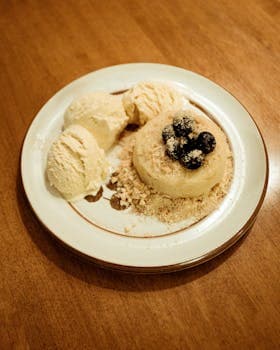
Foutou Banane
Pounded plantain dumplings — Guinea's softer, sweeter cousin to fufu.
About This Recipe
Foutou Banane occupies a unique and beloved position in West African cuisine — it is softer, slightly sweeter, and more aromatic than its cousin yam fufu, with a pliable, almost velvety texture that clings to soups in a different way. Made from ripe plantains boiled until completely yielding and then pounded vigorously in a mortar, foutou banane is a staple of Guinean and Ivorian tables and is eaten as the primary starch at the main daily meal. The ripeness of the plantain is everything: yellow plantains with extensive black spotting are at the ideal stage of sweetness and starch conversion, breaking down beautifully under the pestle into a homogeneous, glossy mass that requires less effort to smooth than denser yam-based fufu. The dish is particularly associated with the forest regions of Guinea, where plantains grow in abundance year-round, and with the coastal communities of the Guinée Maritime region around Conakry. Its natural companion is sauce graine — a deeply rich soup made from pounded fresh palm nuts, slow-cooked with chicken, smoked fish, or bush meat — which provides the fatty, intensely savoury counterpoint to the plantain's gentle sweetness. Groundnut stew (tiga dege na) is equally classic. The pounding of foutou banane is traditionally women's work and is done communally in households across Guinea; the sound of the pestle striking the mortar at mealtimes is as characteristic of Guinean neighbourhoods as any other sensory marker. When made well, foutou banane should be smooth enough to roll into perfect spheres between wet palms, dense enough to maintain its shape in a bowl of soup, and just sticky enough to scoop up every drop of the accompanying sauce.
Ingredients
Serves 4
- 4 largeripe plantains (yellow/black-spotted), peeled and chunked
- 1/2 tspsalt
- waterfor boiling
Instructions
- 1
Select and prepare the plantains
Choose plantains that are at least two-thirds yellow with significant black spotting — the more black the skin, the riper and sweeter the fruit, and the more easily it will pound to a smooth texture. Peel and cut into large chunks of roughly 7cm. Avoid fully green plantains, which are too starchy and fibrous to pound smooth.
If your plantains are under-ripe (mostly yellow with no black spots), place them unpeeled in a 150°C oven for 15 minutes to accelerate ripening — the skin will blacken and the interior will soften without fully cooking.
- 2
Boil until completely tender
Place plantain chunks in a large pot, cover with cold water, add the salt, and bring to a boil over high heat. Cook for 18–22 minutes until absolutely tender — a fork should slide in and out with zero resistance and the pieces should look like they are about to fall apart. Drain thoroughly in a colander and shake out excess water.
- 3
Pound immediately
Transfer the hot, drained plantain to a large wooden mortar while still steaming. Begin pounding with the pestle using firm downward strikes, turning the pestle with each impact to break the pieces. At first the plantain will be chunky; after 3–4 minutes of steady pounding it will begin to unify into a single cohesive mass.
Pound while the plantain is as hot as possible — the sugars and starches are at their most pliable when hot, and the texture smooths out much more quickly. Working with cooled plantain produces a foutou with a slightly grainy, less silky finish.
- 4
Add water and refine
Once the plantain has mostly come together, dip the pestle tip in a bowl of warm water between strikes, adding minimal moisture incrementally. Continue pounding for another 6–8 minutes, turning and folding the foutou with a wet spatula every 10–12 strikes, until the surface is completely smooth with no visible lumps or stringy fibres.
- 5
Test the texture
Stretch a small piece between two wet fingers — it should extend a centimetre or two before tearing, demonstrating a smooth, cohesive texture. Press a wet thumb into the surface — it should leave a clean impression with smooth walls. If the foutou feels coarse or stringy, continue pounding.
- 6
Shape and serve
Wet both hands generously with warm water. Pinch off portions of foutou and roll each between your palms into a smooth sphere roughly the size of a large orange — wet hands prevent sticking. Place in individual bowls and ladle sauce graine or groundnut stew generously around the foutou, not over it, allowing the diner to use the foutou to scoop.
Did you make this?
Rate it and help other cooks find the recipes that actually work.
One tap to sign in, and we'll save the rating you just picked.
Everything you need to plan your week — free
- Meal calendar
- Grocery list
- AI recipe ideas
Cook this hands-free
Get AI meal plans, step-by-step cooking mode, and your saved recipes in the free Bento app.
Pro Tips
- →
Deeply ripe plantains — those with heavily blackened skins — produce a foutou that is noticeably smoother and slightly sweeter than moderately ripe ones. They also take 3–4 fewer minutes of pounding to achieve the right texture.
- →
Keep warm water in a bowl beside the mortar and wet the pestle tip between strikes once the mass has come together — just 2–3 drops per strike is all that's needed. Too much water loosens the foutou and makes it soft and formless.
- →
If you don't have a mortar and pestle, use a stand mixer with the dough hook attachment at the lowest setting. Process the hot boiled plantain for 8–10 minutes, adding warm water one teaspoon at a time. The texture will be slightly less compact but still delicious.
- →
Unlike yam fufu, foutou banane retains a faint natural sweetness from the ripe plantain — this is a feature, not a flaw. Pair it with intensely savoury sauces (palm nut, groundnut) that need the counterpoint.
- →
For a slightly richer foutou, add 1 teaspoon of red palm oil to the mortar during the last 2 minutes of pounding and work it through — the oil enriches the texture and gives the foutou a warm, golden hue.
Variations
- •
Plantain-cassava hybrid foutou: boil equal weights of ripe plantain and peeled cassava together, then pound together. The cassava adds density and a neutral starchiness that balances the plantain's sweetness.
- •
Palm-oil enriched: fold 2 teaspoons of red palm oil into the foutou during the final pounding stage for a richer flavour and an attractive amber colour traditional in some Guinean households.
- •
Ivorian-style (foutou igname): replace plantain with boiled white yam for the classic Ivorian foutou igname — denser, whiter, and less sweet, the most common foutou variant in Abidjan.
- •
Overripe banana foutou: in season, overripe domestic bananas (not plantains) can be used for a sweeter, softer foutou suited to pairing with mild fish sauces or eaten as a dessert with honey.
Storage
Foutou banane is best served immediately after making. It stiffens quickly as it cools, losing its pliable texture within 30–45 minutes at room temperature. For storage, wrap individual portions tightly in cling film and refrigerate for up to 2 days. To reheat, steam the wrapped portions over boiling water for 8–10 minutes until soft and warm throughout, unwrapping only just before serving. Do not microwave unwrapped — it dries the surface and causes cracking.
History & Origin
Pounded plantain dishes have been made across the forest regions of West Africa for centuries, wherever the plantain — a cultivar of Musa acuminata brought to Africa from Southeast Asia, likely via Arab trade routes, between the 6th and 10th centuries CE — grows abundantly. In Guinea, foutou banane is particularly associated with the Guinée Maritime and Forestière regions, where plantain cultivation forms a central part of the agricultural economy. The dish is closely related to Ivorian foutou igname and Togolese/Ghanaian fufu, all part of the same broad tradition of pounded starchy staples that defines West African cuisine.
Frequently Asked Questions
Can I use green plantains for foutou banane?
Ripe (yellow/black-spotted) plantains are strongly preferred for this dish. Green plantains are high in resistant starch and contain very little sugar, so they pound to a much stiffer, denser, and less smooth texture than ripe ones. If only green plantains are available, boil them for 30–35 minutes and accept that the foutou will be firmer and more neutral in flavour.
Is foutou banane the same as fufu?
They are closely related — both are pounded starchy staples eaten as the main carbohydrate at the primary daily meal and used to scoop up accompanying soups. The key difference is the starch base: fufu uses yam or cassava, while foutou banane uses plantain. This gives foutou a softer, slightly sweeter, more aromatic character compared to the neutral, very elastic yam fufu.
What soup pairs best with foutou banane?
Sauce graine (palm nut soup) is the classic Guinean pairing — its intense richness and slight bitterness make a perfect counterpoint to the plantain's sweetness. Tiga dege na (groundnut stew) is equally traditional and widely eaten. Light tomato-based sauces with fish or chicken also work very well. The foutou's gentle sweetness is versatile enough to pair with almost any richly flavoured West African soup.
How do I know when the foutou has been pounded enough?
The surface should be completely smooth with no visible lumps, bumps, or stringy fibres from the plantain. Stretch a small piece between wet fingers — it should extend smoothly before breaking rather than crumbling apart. If you see white spots or feel granularity when pressing with a wet thumb, continue pounding for another 3–4 minutes.
Can foutou banane be made in advance for guests?
It is best made as close to serving time as possible. If you need to prepare ahead, make it up to 30 minutes early and keep it in the covered mortar (or a covered bowl), placing a damp cloth on top of the foutou to prevent a skin from forming. Briefly knead with wet hands before shaping into balls just before serving.
Nutrition Facts
Per serving (200g / 7.1 oz) · 4 servings total
Time Summary
Have Questions?
Ask our AI cooking assistant anything about this recipe — substitutions, techniques, scaling.
Chat with AI Chef →More Guinean Recipes
You Might Also Like
Similar dishes from other cuisines around the world.
Free Kitchen Tools
Calculators and converters that pair with this page — no signup needed.
Put This Into a Plan
Schedule it, shop for it, and track what you already have.
Read Next
Longer reads that go deeper on the ideas behind this dish.
Community
Join the conversation
Sign in to leave a comment and save your favourite recipes