
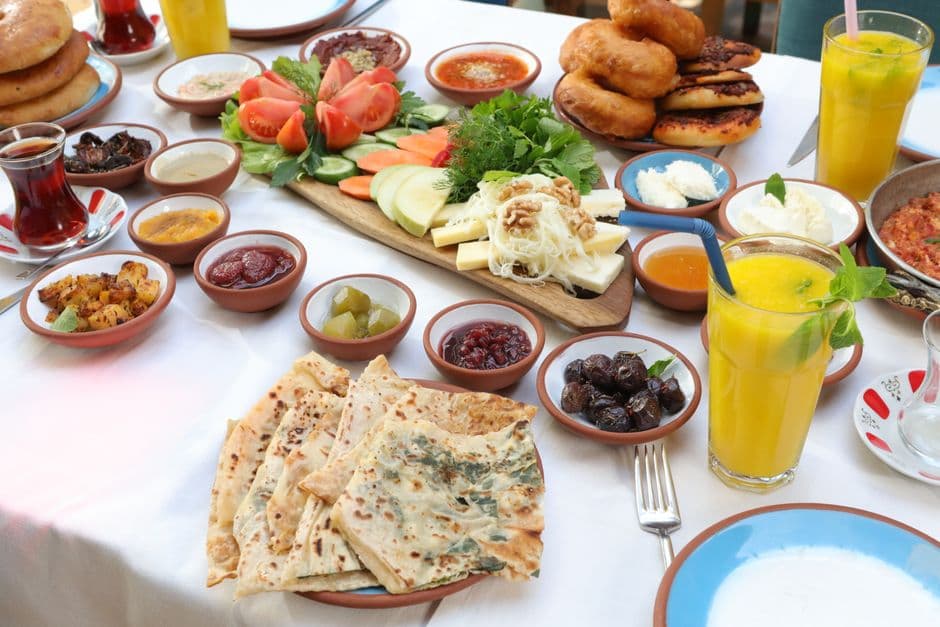
Nane Çayı (Fresh Mint Tea)
Refreshing hot infusion of fresh spearmint leaves — caffeine-free, deeply calming, and a cornerstone of Turkish hospitality served after meals.
About This Recipe
Nane çayı (fresh mint tea) occupies a distinctly different cultural space than Turkey's famous black tea (çay). Where black tea is the engine of daily social life, mint tea is a gentle postprandial ritual — served after rich meals to aid digestion, offered to guests as a warming welcome in winter, and drunk cold and sweetened as a refreshing summer beverage. Turkey grows several varieties of mint, with spearmint (nane, Mentha spicata) being the most widely used in tisanes. The plant grows prolifically in Anatolian gardens and is sold in fresh bunches at every market, where the aroma of crushed mint leaves scents the surrounding stalls. The preparation is pure simplicity: fresh spearmint sprigs, water just below boiling (not boiling — boiling water can make herbal infusions bitter by extracting harsh compounds), and a few minutes of steeping. The key variable is quantity — Turkish mint tea is strongly brewed, with a large bunch of fresh mint rather than a decorative sprig. Served in the classic Turkish tulip-shaped tea glass (ince belli bardak), strained through a small mesh sieve or using a glass teapot, and sweetened with sugar if desired. A slice of lemon is an optional but common addition that brightens the herbal flavor. In traditional Anatolian hospitality, turning down an offered glass of mint tea is considered impolite — the guest who drinks their tea is the guest who will return.
Ingredients
Serves 4
- 1 large bunchfresh spearmint (nane)(about 30-40g, stems and leaves)
- 800 mlwater
- sugar(to taste — serve separately)
- lemon slicesoptional, to serve
Instructions
- 1
Prepare the Mint
Wash the fresh mint sprigs under cold running water to remove any dirt. Gently shake off excess water. Roughly tear or bruise the larger leaves between your fingers to release more essential oils — this small step noticeably intensifies the mint flavor in the final tea.
Don't chop or mince the mint — torn or bruised leaves infuse beautifully without releasing the bitter compounds that can come from cutting.
- 2
Heat the Water
Bring the water to near-boiling in a kettle or saucepan — aim for 85-90°C (when small bubbles form on the bottom of the pan but before a rolling boil). Using water at a full rolling boil can make herbal teas bitter and harsh.
- 3
Steep the Mint
Place the prepared mint sprigs in a teapot or large heatproof jug. Pour the hot water over the mint. Cover with a lid or small plate. Let steep for 4-6 minutes — 4 minutes gives a delicate, lighter tea; 6 minutes gives a stronger, more intense infusion.
- 4
Strain and Serve
Strain the tea through a fine mesh sieve into small Turkish tea glasses (ince belli bardak) or small regular glasses. Serve immediately with a bowl of sugar cubes on the side and lemon slices if desired. In Turkish tradition, the sugar is added to taste at the table, not stirred in during preparation.
Did you make this?
Rate it and help other cooks find the recipes that actually work.
One tap to sign in, and we'll save the rating you just picked.
Everything you need to plan your week — free
- Meal calendar
- Grocery list
- AI recipe ideas
Track what you eat
Snap your meal to log calories and macros, run fasting timers and track water in the free SnapCal app.
Pro Tips
- →
Use spearmint (nane) rather than peppermint — spearmint is sweeter and less medicinal, and is the standard Turkish choice for drinking tea.
- →
Don't use boiling water — just below boiling (85-90°C) preserves the volatile aromatic compounds that give mint tea its bright, cooling character.
- →
A large quantity of mint is key — Turkish mint tea is strongly flavored, not a faint infusion. Use a generous bunch, not just a few leaves.
- →
Re-steep the same mint for a second, lighter pot — the first infusion takes the strongest flavor, but the second pot is still pleasant.
Variations
- •
Nane-limon çayı: add fresh lemon juice and extra lemon slices for a brighter, more refreshing drink.
- •
Nane-zencefil çayı: add a few slices of fresh ginger with the mint for a warming winter drink.
- •
Cold mint tea: steep extra strong, cool to room temperature, refrigerate, and serve over ice — a Turkish summer classic.
- •
Dried mint tea: in winter when fresh mint is less available, use 2 tsp dried mint per cup — steep for only 3 minutes to avoid bitterness.
Storage
Fresh mint tea is best drunk immediately. Leftover brewed tea can be refrigerated for up to 24 hours and drunk cold. Fresh mint sprigs should be stored in the refrigerator with stems in a glass of water and leaves covered loosely with a plastic bag — they keep for 1-2 weeks this way.
History & Origin
Mint has been cultivated in Anatolia and used medicinally and culinarily for at least 3,000 years. Ancient Greek and Roman herbalists (including Pliny and Dioscorides) wrote extensively about Anatolian mint's digestive properties. In Ottoman Turkey, mint tea was a common household remedy for indigestion, nausea, and respiratory ailments, brewed and consumed throughout the day. The tradition of serving herbal teas after meals (despite black tea's dominance) persists throughout Turkey and the broader Middle Eastern and Mediterranean world.
Frequently Asked Questions
What type of mint should I use for Turkish mint tea?
Spearmint (Mentha spicata) is the traditional choice — it is sweeter, more rounded, and less intensely medicinal than peppermint. In Turkey it is called nane and is sold in large fresh bunches. If only peppermint is available, use half the amount as it is much stronger.
How long should I steep the mint?
4-6 minutes for hot tea is the sweet spot — 4 minutes gives a lighter, brighter infusion while 6 minutes gives a stronger, slightly more intense tea. Beyond 8 minutes, mint tea can start to taste slightly bitter. The color should be a clear, pale green-yellow.
Can I mix mint with Turkish black tea?
Yes — some Turkish households add a sprig of fresh mint to the upper pot of a double-stacked çaydanlık (Turkish tea maker) to make a lightly mint-scented black tea. This is a pleasant variation but quite different from pure fresh mint tea.
Nutrition Facts
Per serving (200g / 7.1 oz) · 4 servings total
Time Summary
Have Questions?
Ask our AI cooking assistant anything about this recipe — substitutions, techniques, scaling.
Chat with AI Chef →Featured in Guides
This recipe is featured in the following curated guides:
More Turkish Recipes
You Might Also Like
Similar dishes from other cuisines around the world.
Free Kitchen Tools
Calculators and converters that pair with this page — no signup needed.
Put This Into a Plan
Schedule it, shop for it, and track what you already have.
Read Next
Longer reads that go deeper on the ideas behind this dish.
Community
Join the conversation
Sign in to leave a comment and save your favourite recipes