
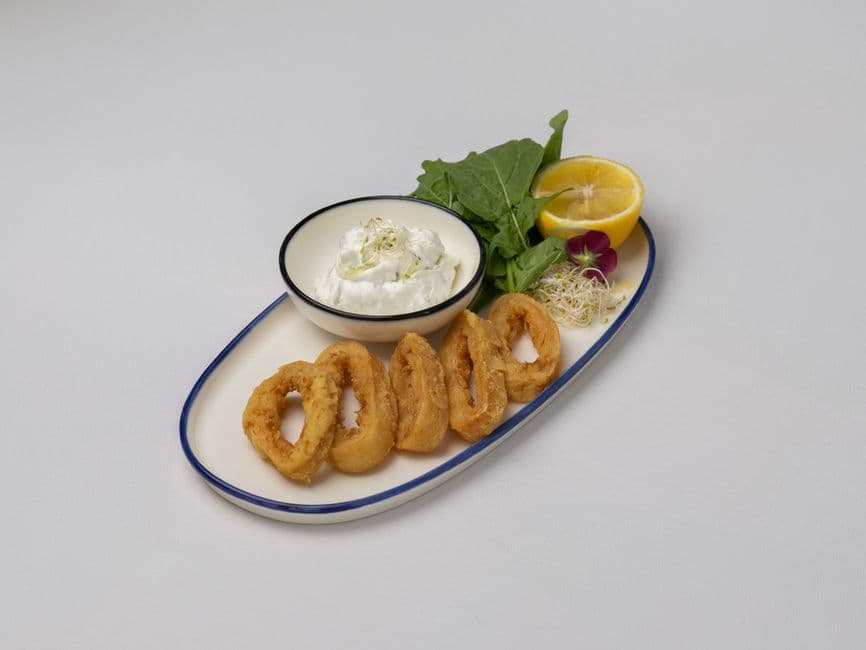
Kalamar Tava (Turkish Fried Calamari)
Crispy golden calamari rings coated in seasoned semolina and cornflour, fried in clean hot oil, and served with tarator sauce — the essential Aegean seafood meze.
About This Recipe
Kalamar tava — Turkish fried calamari — is one of the most popular items on the menu of any Turkish meyhane (tavern) or seaside restaurant from Istanbul to Bodrum. The Turkish approach to fried calamari differs meaningfully from Italian calamari fritti: rather than a pure flour coating, Turkish cooks frequently use a mixture of fine semolina and cornflour (or a combination of rice flour and cornflour), producing a coating that is crunchier, less puffy, and more golden than an all-flour version. The semolina adds texture and an extra layer of crunch that holds up against the moisture of the calamari for longer after frying. Critically, Turkey's Aegean and Marmara coasts provide excellent fresh squid, and freshness is paramount — frozen calamari often produces a waterlogged coating that fails to crisp properly. The fried rings are served with tarator, a classic Anatolian cold sauce of bread, walnuts, garlic, and olive oil blended to a creamy paste, or sometimes with a simple lemon-spiked aioli. The combination of the light, crackling calamari against the creamy, garlicky tarator is fundamental to the Turkish seafood experience. Kalamar tava is always accompanied by iced raki or white wine and is meant to be eaten standing around a communal plate, never as a lone appetizer.
Ingredients
Serves 4
- 600 gcleaned squid tubes and tentacles(fresh or thoroughly thawed and dried)
- 100 gfine semolina
- 50 gcornflour (cornstarch)
- 50 grice flour or all-purpose flour
- 1 tspsalt
- 1/2 tspblack pepper
- 1/2 tspAleppo pepper (pul biber)
- 2 largeeggs(beaten, for coating)
- oilfor deep frying (sunflower or vegetable)
- 2 lemonscut into wedges, to serve
Instructions
- 1
Prepare the Squid
Slice the squid tubes into 1-1.5cm rings. Pat all pieces — rings and tentacles — completely dry with paper towels. Moisture is the enemy of a crispy crust: any water will cause the coating to steam rather than fry, producing a soft, soggy result.
If using frozen squid, thaw overnight in the fridge, then spread on paper towels for 30 minutes before use — squeeze gently to remove excess water.
- 2
Prepare the Coating
Combine semolina, cornflour, rice flour, salt, black pepper, and Aleppo pepper in a wide, shallow dish. Mix thoroughly. Beat the eggs in a separate shallow bowl. Set up as an assembly line: squid → egg → semolina mixture → frying oil.
- 3
Heat the Oil
Fill a deep heavy-based saucepan or deep skillet with oil to a depth of at least 6cm. Heat to 180-185°C. Use a thermometer for accuracy, or test with a small piece of bread — it should turn golden in 30-40 seconds at the correct temperature.
- 4
Coat and Fry
Working in batches, dip each piece of squid first in beaten egg, then press firmly in the semolina mixture to coat. Shake off excess. Lower gently into the hot oil using tongs or a spider strainer — don't crowd the pot (cook in batches of about 8-10 pieces). Fry for 2-3 minutes until deeply golden and crispy.
Don't overcook — calamari becomes rubbery if cooked beyond 3 minutes. The coating should be golden, not dark brown.
- 5
Drain and Serve
Remove with a slotted spoon to a wire rack set over paper towels. Season immediately with a little extra salt while still hot. Serve immediately on a warm plate with lemon wedges and tarator sauce alongside.
Did you make this?
Rate it and help other cooks find the recipes that actually work.
One tap to sign in, and we'll save the rating you just picked.
Everything you need to plan your week — free
- Meal calendar
- Grocery list
- AI recipe ideas
Track what you eat
Snap your meal to log calories and macros, run fasting timers and track water in the free SnapCal app.
Pro Tips
- →
Dry the squid completely — any surface moisture causes the coating to fall off and the oil to spit violently.
- →
Fry in small batches — adding too much at once drops the oil temperature, resulting in greasy, soft calamari.
- →
Season with salt immediately after frying while the rings are still hot — salt won't stick well to a cooled crust.
- →
For extra crunch, double-coat: dip in egg, then semolina, then back in egg, then semolina again.
Variations
- •
Spiced calamari: add 1/2 tsp smoked paprika and 1/4 tsp cayenne to the coating mixture.
- •
Beer-battered version: dip in a light beer batter instead of egg + semolina for a puffier, lighter coating.
- •
Air-fried: coat as described, spray with oil, and air-fry at 200°C for 8-10 minutes, turning once — significantly less oil with good results.
Storage
Fried calamari is best eaten immediately — it loses its crispiness within 20-30 minutes. Leftover pieces can be briefly revived in a very hot oven (220°C) or air fryer for 3-4 minutes. Do not refrigerate and reheat, as the crust becomes irrecoverably soft.
History & Origin
Calamari has been a staple of Turkish, Greek, and Levantine coastal cooking for millennia — squid and octopus are depicted in ancient Aegean and Minoan art and have been consumed in the region since prehistoric times. The Turkish Aegean coast (Ege kıyıları) has one of the most sophisticated seafood traditions in the country, and fried calamari in various forms appears in meyhane (traditional Turkish tavern) culture from the 19th century onward. The pairing with tarator sauce — garlic, walnut, and bread emulsion — is specifically Turkish and distinguishes kalamar tava from Italian and Spanish fried squid preparations.
Frequently Asked Questions
Why does my fried calamari turn out rubbery?
Rubbery calamari has two main causes: overcooking (beyond 2-3 minutes in the hot oil) or frying at too low a temperature. Properly fresh calamari fried at 180-185°C for exactly 2-3 minutes should be tender inside and crispy outside. A thermometer is strongly recommended.
What is tarator sauce?
Tarator is a classic Turkish and Levantine cold sauce made from day-old white bread soaked in water, walnuts, garlic, lemon juice, and olive oil all blended to a creamy paste. It is the traditional accompaniment for fried seafood, grilled vegetables, and as a meze dip. Store-bought aioli or garlic mayonnaise is a simpler substitute.
Nutrition Facts
Per serving (180g / 6.3 oz) · 4 servings total
Time Summary
Have Questions?
Ask our AI cooking assistant anything about this recipe — substitutions, techniques, scaling.
Chat with AI Chef →Featured in Guides
This recipe is featured in the following curated guides:
More Turkish Recipes
You Might Also Like
Similar dishes from other cuisines around the world.
Browse by Ingredient
More recipes built around the same core ingredients.
Free Kitchen Tools
Calculators and converters that pair with this page — no signup needed.
Put This Into a Plan
Schedule it, shop for it, and track what you already have.
Read Next
Longer reads that go deeper on the ideas behind this dish.
Community
Join the conversation
Sign in to leave a comment and save your favourite recipes