
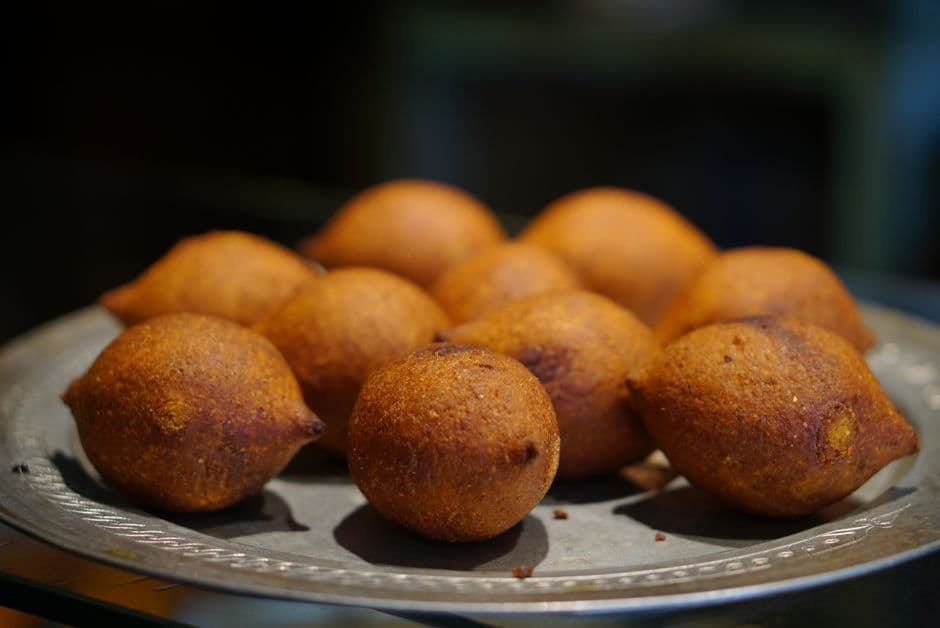
Kibbeh Kızartması (Fried Stuffed Kibbeh)
Crispy torpedo-shaped shells of spiced fine bulgur stuffed with seasoned ground lamb, pine nuts, and caramelized onion — the jewel of Levantine and southeastern Turkish cuisine.
About This Recipe
Kibbeh (also spelled kebbeh, kubbeh, or kibba) is considered the national dish of Syria and Lebanon, but it is deeply embedded in the culinary tradition of southeastern Turkey — particularly the regions of Hatay, Antakya, and Şanlıurfa, where the Arab, Turkish, and Levantine food cultures converge. The dish consists of two components: a firm outer shell made from fine bulgur mixed with very finely ground meat and spices (the 'dough'), and an inner filling of coarser ground meat cooked with onion, pine nuts, and warm spices. The shells are hand-formed into the classic torpedo or oval shape, sealed, and then deep-fried until they develop a crackly golden-brown exterior while the interior remains moist and fragrant. The outer bulgur shell is the technical challenge: it must be kneaded extensively with the ground meat until the mixture becomes a completely cohesive, pliable paste that can be shaped without cracking. A small amount of ice water is added during kneading to keep the mixture cool and workable. Shaping each kibbeh requires the right technique: a ball of shell mixture is pressed onto a wet palm and hollowed with a wet finger to create a thin-walled cup, filled, then sealed and shaped into the torpedo form. This process takes practice but produces a shell of varying thickness — slightly thicker at the ends for structural integrity, thinner in the middle where the filling concentrates. The result, eaten hot with yogurt or cacık, is one of the most satisfying fried foods in the Levantine tradition.
Ingredients
Serves 5
- 400 gfine bulgur (ince bulgur)
- 250 gvery finely ground lean lamb or beef(for the shell)
- 1 tspsalt
- 1 tspcumin
- 1/2 tspAleppo pepper
- ice wateras needed for kneading
- 300 gground lamb(for the filling)
- 2 mediumonions(finely diced)
- 50 gpine nuts
- 1 tspcinnamon
- 1/2 tspallspice
- 2 tbspbutter
- oilfor deep frying
Instructions
- 1
Make the Filling
Melt butter in a pan over medium heat. Add onion and cook until golden, 8-10 minutes. Add pine nuts and toast until golden, 2 minutes. Add ground lamb, cinnamon, allspice, salt and pepper. Cook until browned, breaking up clumps. Remove from heat, cool completely before using.
The filling must be completely cool before stuffing — warm filling makes the shell difficult to shape and seal.
- 2
Make the Shell Mixture
Combine fine bulgur, finely ground lean meat, salt, cumin, and Aleppo pepper. Knead vigorously, adding ice water a tablespoon at a time, for 8-10 minutes until the mixture is completely smooth, paste-like, and holds together firmly without cracking when pressed. Refrigerate for 20 minutes.
- 3
Shape the Kibbeh
With wet hands, take a golf-ball-sized piece of shell mixture. Roll into a ball, then press your wet index finger through the center and hollow out a thin-walled cup shape, turning the shell as you work to ensure even thickness (2-4mm throughout). The cup should hold about 1 tbsp of filling.
- 4
Fill and Seal
Spoon about 1 tablespoon of cooled filling into the hollow. Carefully bring the open end together, sealing and tapering into a pointed torpedo shape. Roll between wet palms to smooth the surface. No cracks in the shell — any crack will let oil penetrate during frying and cause the kibbeh to burst.
- 5
Fry Until Golden
Heat oil in a deep pot to 175-180°C. Fry kibbeh in batches of 4-5, not crowding, for 4-5 minutes until deep golden brown all over, turning once or twice. Remove with a slotted spoon to a paper towel-lined tray. Rest 2 minutes before serving.
Did you make this?
Rate it and help other cooks find the recipes that actually work.
One tap to sign in, and we'll save the rating you just picked.
Everything you need to plan your week — free
- Meal calendar
- Grocery list
- AI recipe ideas
Track what you eat
Snap your meal to log calories and macros, run fasting timers and track water in the free SnapCal app.
Pro Tips
- →
Keep your hands wet throughout shaping — dry hands cause the shell to stick and crack.
- →
The shell mixture must be paste-smooth — any graininess means insufficient kneading. Keep going until it has the texture of smooth clay.
- →
Freeze shaped raw kibbeh for 30 minutes before frying — this helps them hold their shape during frying.
- →
If any crack in the shell, press it closed with a wet fingertip before frying.
Variations
- •
Vegetarian kibbeh: replace the filling meat with sautéed spinach, onion, and pine nuts; use only bulgur (no meat) in the shell.
- •
Baked kibbeh (kibbeh bil sanieh): press shell mixture into a baking dish, layer filling in the middle, top with more shell mixture, score into diamonds, and bake at 190°C for 35 minutes.
- •
Syrian-style: add 1/4 tsp dried pomegranate seeds (dibs el rumman) to the filling for a fruity sourness.
Storage
Shaped raw kibbeh freezes excellently for up to 2 months — freeze on a tray first, then transfer to a bag. Fry from frozen, adding 1-2 minutes to cooking time. Fried kibbeh keeps for 1 day refrigerated; reheat in a 180°C oven for 10 minutes to crisp up.
History & Origin
Kibbeh is documented in Arab medieval cookbooks (such as Al-Baghdadi's 13th-century Kitab al-Tabikh) and is believed to have originated in the Levant during the early centuries CE. The combination of pounded grain with meat is even older — ancient Mesopotamian food texts from 1700 BCE describe similar preparations. Kibbeh arrived in southeastern Turkey with the Arab and Aramaean communities of the Hatay region and has been integrated into Antakya and Urfa cuisine for centuries.
Frequently Asked Questions
Why does my kibbeh crack when I shape it?
Cracking usually means the shell mixture needs more kneading and perhaps a little more ice water. The mixture should be completely smooth and paste-like before shaping — if it feels grainy or dry, continue kneading with wet hands for another 5 minutes. The mixture should hold a fingerprint clearly without any cracks.
Can I bake instead of fry kibbeh?
Yes — brush shaped kibbeh with oil and bake at 200°C for 20-25 minutes, turning once. The exterior won't be quite as crispy as fried, but the flavor is very similar and it's significantly less work. The baked kibbeh bil sanieh method (pressed in a pan) is equally traditional.
Nutrition Facts
Per serving (200g / 7.1 oz) · 5 servings total
Time Summary
Have Questions?
Ask our AI cooking assistant anything about this recipe — substitutions, techniques, scaling.
Chat with AI Chef →Featured in Guides
This recipe is featured in the following curated guides:
More Turkish Recipes
You Might Also Like
Similar dishes from other cuisines around the world.
Browse by Ingredient
More recipes built around the same core ingredients.
Free Kitchen Tools
Calculators and converters that pair with this page — no signup needed.
Put This Into a Plan
Schedule it, shop for it, and track what you already have.
Read Next
Longer reads that go deeper on the ideas behind this dish.
Community
Join the conversation
Sign in to leave a comment and save your favourite recipes