
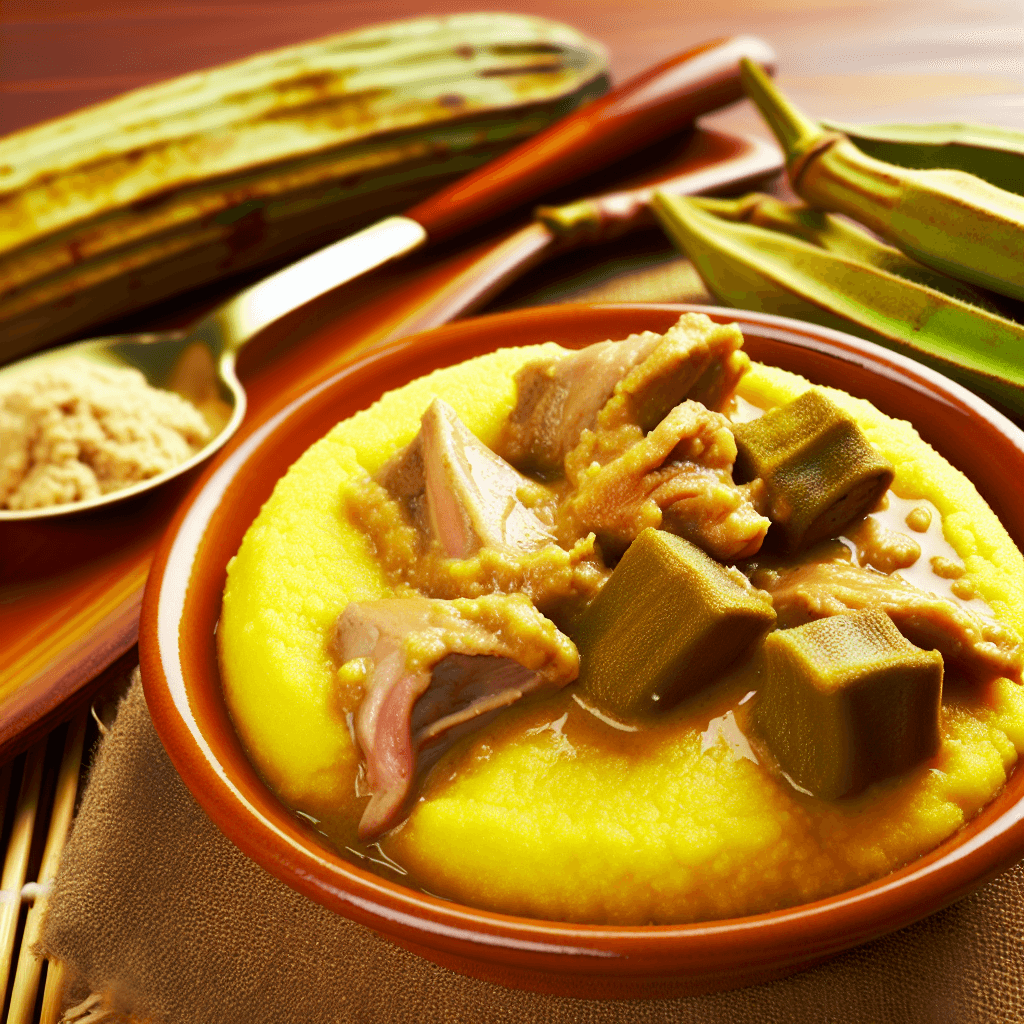
Montserratian Fungi
Smooth cornmeal porridge cooked with okra — a beloved comfort food served as a side or main.
About This Recipe
Despite its English name, Montserratian Fungi — pronounced 'foon-ji' — has nothing to do with mushrooms. It is the island's version of a dish that spans the entire African diaspora: a smooth, thick cornmeal porridge enriched with okra that gives it a characteristic silky texture. The okra is cooked first in salted water, releasing its natural mucilage into the liquid before the fine cornmeal is whisked in, creating a mass that sets firmer than Italian polenta but softer than tamale dough. The result is pulled from the heat, finished with butter, and spooned into a mound on the plate. Fungi traces its lineage directly to West African fufu and ugali traditions, carried across the Atlantic by enslaved Africans who recreated their dietary staples using New World ingredients. Cornmeal substituted for the yam, cassava, or plantain flour of West Africa, while okra — also brought from Africa — provided the viscous, cohesive quality that distinguishes fungi from plain polenta or porridge. In the Leeward Islands it became so central to daily nutrition that it appears in colonial-era records from the 18th century as a plantation ration food. Today fungi is served as the traditional partner to Montserratian stewed fish — particularly kingfish or snapper — and appears alongside goatwater at community festivals. Forming it correctly requires confidence: the cornmeal must be poured in a steady stream while stirring constantly to prevent lumping, and the finished mass should be cohesive enough to pull away from the sides of the pan cleanly. The combination of its earthy corn flavour, the clean vegetal note of okra, and the richness of butter is quietly magnificent.
Ingredients
Serves 4
- 2 cupsfine cornmeal
- 8 smallokra pods(sliced into rounds)
- 4 cupswater
- 1 tspsalt
- 1 tbspbutter
Instructions
- 1
Cook okra in salted water
Bring 3 cups of water to a boil in a heavy-bottomed medium saucepan and add 1 tsp of salt. Add the sliced okra rounds and cook at a rolling boil for 5–6 minutes until the okra is very soft and the water has become slightly thickened and viscous from the released mucilage. Do not drain — this okra water is the cooking liquid for the cornmeal.
The slimier the water looks, the better — that mucilage is what gives fungi its characteristic silky texture.
- 2
Slake the cornmeal
While the okra cooks, whisk the fine cornmeal together with 1 cup of cold water in a separate bowl or jug until completely smooth with no dry clumps. This step — called slaking — is critical; adding dry cornmeal directly to hot water produces stubborn lumps that are nearly impossible to remove.
- 3
Pour in cornmeal in a steady stream
Reduce the heat under the okra water to medium. Pour the cornmeal slurry into the hot okra liquid in a slow, steady stream while stirring constantly and vigorously with a wooden spoon or a long-handled whisk. Move around the entire base of the pan as you stir to ensure nothing catches on the bottom. The mixture will thicken rapidly within 2–3 minutes.
- 4
Cook low and slow
Reduce heat to the lowest setting your stove allows. Continue stirring every 1–2 minutes, pressing the spoon against the sides and base of the pan to check for sticking. Cook for 8–10 minutes total until the mixture is very thick, cohesive, and begins to pull away cleanly from the sides of the pan when stirred.
If you hear crackling or see the mixture sticking and darkening at the bottom, add a small splash of water and stir vigorously to release it.
- 5
Finish with butter and serve
Stir in the butter until fully melted and incorporated. Taste and adjust salt. Using a large spoon wetted with water, scoop the fungi into a smooth mound on each plate — the water prevents sticking. Serve immediately alongside stewed fish or saltfish buljol.
Did you make this?
Rate it and help other cooks find the recipes that actually work.
One tap to sign in, and we'll save the rating you just picked.
Everything you need to plan your week — free
- Meal calendar
- Grocery list
- AI recipe ideas
Track what you eat
Snap your meal to log calories and macros, run fasting timers and track water in the free SnapCal app.
Pro Tips
- →
Always slake (pre-mix) the cornmeal into cold water before adding it to the hot liquid — this is the single most important step to preventing a lumpy fungi.
- →
Use fine cornmeal rather than coarse polenta meal. The finer grind cooks more evenly and produces the smooth, dense texture characteristic of authentic fungi.
- →
For a richer flavour, replace 1 cup of the water with coconut milk. The sweetness of coconut complements the earthiness of cornmeal beautifully and is not uncommon in island kitchens.
- →
Wetting the serving spoon with water before scooping the fungi onto plates prevents it from sticking and helps you form a clean, traditional mound presentation.
- →
Fungi waits for no one — it sets firm as it cools, so have your accompanying stew ready before you start cooking the cornmeal.
Variations
- •
Saltfish fungi: the classic island combination — top the fungi mound with warm saltfish buljol or stewed saltfish and onions for a complete, traditional Montserratian plate.
- •
Cheese fungi: stir 60 g of grated sharp cheddar into the finished fungi before serving for a richer, more indulgent version that works particularly well as a side to grilled meats.
- •
Coconut fungi: substitute 250 ml of the water with full-fat coconut milk for a subtly sweet, creamier version with added tropical fragrance.
- •
Peppery fungi: add half a teaspoon of freshly cracked black pepper and a pinch of cayenne to the cooking liquid for a mildly spiced version that pairs especially well with simply grilled fish.
Storage
Refrigerate leftover fungi in a sealed container for up to 2 days. It will firm into a solid mass as it cools. To reheat, slice or break into chunks and warm gently in a saucepan with 2–3 tbsp of water over low heat, stirring constantly until the mixture returns to a soft, pliable consistency.
History & Origin
Fungi's lineage runs directly to the starchy porridges of West Africa — fufu in Ghana, ugali in East Africa, and sadza in Zimbabwe — all members of a family of dishes in which starchy flour is worked into hot water until it coheres into a smooth, dense mass. Enslaved Africans brought this technique to the Caribbean, adapting it to cornmeal when maize became the dominant grain in New World agriculture. Okra, itself an African crop transplanted to the Caribbean, provided the characteristic viscosity that distinguishes fungi from plain cornmeal mush. The dish appears in historical plantation records from across the Leeward Islands and remains culturally significant as a living connection to African culinary heritage.
Frequently Asked Questions
What does Montserratian fungi taste like?
It tastes of earthy corn with a clean, slightly vegetal note from the okra and a rich finish from the butter. The texture is firm and smooth — comparable to soft set polenta but denser, with a slight silkiness from the okra that polenta doesn't have. It is a background dish designed to support the flavour of whatever stew it accompanies.
Why does my fungi have lumps?
Lumps form when dry cornmeal hits hot liquid without being pre-mixed first. The key is slaking: whisk the cornmeal into cold water until completely smooth before adding it to the pot. If lumps do form despite slaking, switch from a wooden spoon to a balloon whisk and beat vigorously while still on the heat.
Can I make fungi without okra?
You can make plain cornmeal porridge without okra, but technically it would no longer be fungi — the okra is essential both for traditional authenticity and for the distinctive smooth texture. If you cannot find fresh okra, frozen okra works perfectly well; it is even slightly slimier, which is ideal for this recipe.
What do you eat with fungi in Montserrat?
The classic pairing is stewed saltfish or stewed fish in a rich tomato-based sauce. Goatwater, the national stew, is also served with fungi at festivals. The combination of the dense, neutral cornmeal base with a savoury, well-seasoned stew poured over it is the heart of traditional Montserratian home cooking.
Nutrition Facts
Per serving · 4 servings total
Time Summary
Have Questions?
Ask our AI cooking assistant anything about this recipe — substitutions, techniques, scaling.
Chat with AI Chef →Featured in Guides
This recipe is featured in the following curated guides:
More Montserratian Recipes
You Might Also Like
Similar dishes from other cuisines around the world.
Free Kitchen Tools
Calculators and converters that pair with this page — no signup needed.
Put This Into a Plan
Schedule it, shop for it, and track what you already have.
Read Next
Longer reads that go deeper on the ideas behind this dish.
Community
Join the conversation
Sign in to leave a comment and save your favourite recipes