
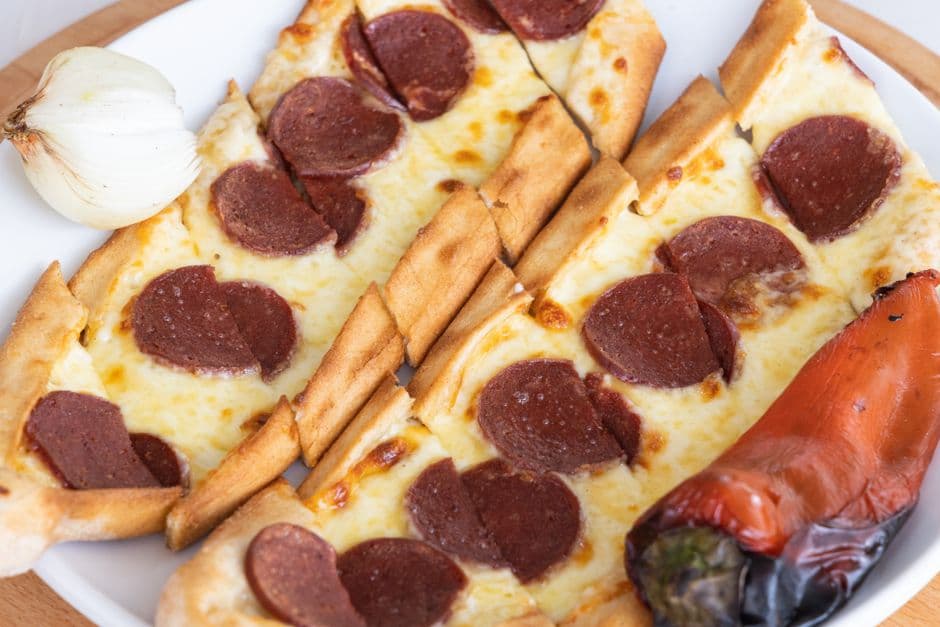
Sarımsaklı Ekmek (Turkish Herb Garlic Bread)
Crusty Turkish pide or sourdough slathered with compound butter of roasted garlic, herbs, and olive oil — irresistible alongside mezes and grilled meats.
About This Recipe
Sarımsaklı ekmek (garlic bread) is a universal pleasure elevated in the Turkish table by the quality of the bread itself and the complexity of the garlic compound butter spread. Rather than raw minced garlic (which can be harsh and pungent), the Turkish approach often roasts a whole head of garlic in the oven until the cloves become sweet, golden, and spreadable — then blends this roasted garlic with softened butter, olive oil, fresh parsley, dried thyme, and Aleppo pepper for a compound butter that is simultaneously more nuanced and more forgiving than raw-garlic versions. The bread of choice in Turkey would be a thick-crusted somun (round white bread), a freshly baked ekmek, or ideally a hand-made pide loaf split lengthwise. The compound butter is spread generously over the cut sides, the bread is wrapped loosely in foil, and baked at 200°C for 10-12 minutes until the butter has melted and the cut surfaces are toasted and golden. The final 3 minutes with the foil open gives the top a slight caramelization and crunch. This garlic bread is perfect alongside a Turkish mezze spread, next to a bowl of mercimek çorbası (lentil soup), or accompanying grilled meats where the bread doubles as sauce-mopper.
Ingredients
Serves 6
- 1 large loafTurkish pide, sourdough, or French baguette
- 1 whole headgarlic(for roasting)
- 100 gunsalted butter(softened to room temperature)
- 2 tbspextra-virgin olive oil
- 1/4 cupfresh flat-leaf parsley(finely chopped)
- 1/2 tspdried thyme
- 1/2 tspAleppo pepper (pul biber)
- 1/2 tspsalt
Instructions
- 1
Roast the Garlic
Cut the top 5mm off the whole head of garlic to expose the cloves. Drizzle with olive oil, wrap in foil, and roast at 200°C for 35-40 minutes until the cloves are completely soft, golden, and caramelized. Squeeze out the roasted cloves into a bowl and mash to a smooth paste.
Roasted garlic is sweet, mellow, and spreadable — completely different from raw garlic's harshness. Don't skip this step for the best result.
- 2
Make the Compound Butter
In a bowl, beat the softened butter until smooth. Add the roasted garlic paste, olive oil, chopped parsley, dried thyme, Aleppo pepper, and salt. Mix vigorously until completely combined and uniform. Taste and adjust seasoning — the butter should be well-seasoned, garlicky, and herby.
- 3
Prepare the Bread
Slice the bread loaf in half lengthwise. Using a spatula or the back of a spoon, spread the compound butter generously and evenly over both cut surfaces — don't be shy, this is garlic bread.
- 4
Bake Wrapped
Reassemble the loaf and wrap tightly in foil. Bake at 200°C for 12-15 minutes until the interior is hot and the butter is completely melted and soaked into the bread.
- 5
Open and Toast
Open the foil and separate the halves. Return to the oven for 3-5 minutes with the cut sides up until the surfaces are golden and slightly crispy. Slice into portions and serve immediately.
Did you make this?
Rate it and help other cooks find the recipes that actually work.
One tap to sign in, and we'll save the rating you just picked.
Everything you need to plan your week — free
- Meal calendar
- Grocery list
- AI recipe ideas
Track what you eat
Snap your meal to log calories and macros, run fasting timers and track water in the free SnapCal app.
Pro Tips
- →
Roasting the garlic is what separates good garlic bread from great garlic bread — the sweetness and complexity of roasted garlic is incomparable.
- →
Compound butter can be made 3 days ahead and refrigerated, or frozen for 2 months — have a log in the freezer for instant garlic bread anytime.
- →
For extra richness, brush the open-face bread with additional olive oil before the final browning step.
Variations
- •
Cheese garlic bread: top the buttered bread with grated kaşar or mozzarella before the final open-faced browning.
- •
Za'atar garlic bread: mix 1 tbsp za'atar into the butter for an aromatic herbal variation.
- •
Quick weeknight version: if you don't have time to roast garlic, use 3-4 minced raw garlic cloves — still delicious but sharper in flavor.
Storage
Assembled unbaked garlic bread (wrapped in foil) can be refrigerated for 1 day before baking, or frozen for up to 2 months and baked from frozen at 200°C for 20-25 minutes. Baked garlic bread is best eaten immediately.
History & Origin
Garlic bread in various forms has been part of Mediterranean and Middle Eastern cooking for millennia — garlic-rubbed flatbread is documented in ancient Greek and Roman sources. The modern concept of butter-enriched garlic bread spread became popular in Turkey through Italian influence in the 20th century and is now served universally alongside pasta dishes, grills, and soups in Turkish homes and restaurants.
Frequently Asked Questions
Can I use garlic powder instead of roasted garlic?
Garlic powder produces a very different result — it gives a somewhat flat, processed garlic flavor rather than the sweet, caramelized complexity of roasted garlic. If you're short on time, use 2-3 minced fresh garlic cloves rather than powder. The raw garlic will be sharper but more authentic than garlic powder.
What bread works best for garlic bread?
A crusty, substantial bread works best — sourdough, Turkish pide, or a thick French baguette. Soft sandwich bread doesn't provide enough structure and becomes soggy. The bread should have a firm crust that will stay somewhat crispy after the butter soaks in.
Nutrition Facts
Per serving (120g / 4.2 oz) · 6 servings total
Time Summary
Have Questions?
Ask our AI cooking assistant anything about this recipe — substitutions, techniques, scaling.
Chat with AI Chef →Featured in Guides
This recipe is featured in the following curated guides:
More Turkish Recipes
You Might Also Like
Similar dishes from other cuisines around the world.
Browse by Ingredient
More recipes built around the same core ingredients.
Free Kitchen Tools
Calculators and converters that pair with this page — no signup needed.
Put This Into a Plan
Schedule it, shop for it, and track what you already have.
Read Next
Longer reads that go deeper on the ideas behind this dish.
Community
Join the conversation
Sign in to leave a comment and save your favourite recipes