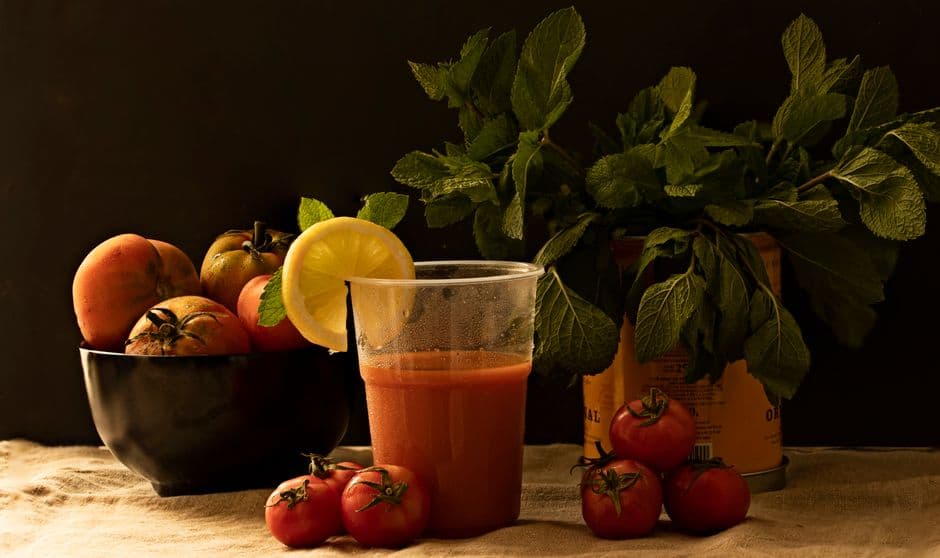
The real Andalusian gazpacho — ripe tomato, cucumber, green pepper, garlic, sherry vinegar, stale bread and extra virgin olive oil blended into a silky, emulsified cold soup.
Done properly, Andalusian gazpacho is not a chunky tomato salsa nor a thin tomato juice — it is a silky, pale-orange emulsion the color of a sunset, with the consistency of double cream and the bright savoury bite of summer in a glass. The classical formula is fixed by centuries of Andalusian peasant cookery: ripe in-season tomatoes (the sweetest you can find), Spanish cucumber, green Italian pepper, a single small clove of garlic, the inside of stale rustic bread, top-quality sherry vinegar from Jerez, ice-cold water, and a generous slug of green Andalusian extra virgin olive oil that is drizzled in last to form the emulsion. There is no onion in proper gazpacho — that is salmorejo or the lazy modern version. The blender does the heavy lifting, but the trick is to blend in two stages: first the vegetables to a pulp, then add the oil very slowly while the blender runs at full speed to emulsify the soup into its trademark velvety texture. It is served frozen-cold from a jug with a few pieces of finely diced vegetable and a tiny spoonful of fruity olive oil floating on top. In Andalusia in August it is drunk in glasses with a meal, before a meal, after a meal, in the late afternoon, and from the fridge straight from a plastic carton at three in the morning.
Serves 6
Tear the bread interior into rough chunks into a small bowl. Spoon over 4 tbsp of the sherry vinegar mixed with 4 tbsp of cold water and leave to soak 10 minutes — the bread should be sodden and breaking apart.
Roughly chop the tomatoes, cucumber, and green pepper and tip into a high-powered blender with the garlic, soaked bread, and salt. Blend on high for 1 minute until the mixture is a uniform thick pulp.
With the blender running on its highest setting, pour the olive oil in a slow steady stream through the lid hole. After 60 seconds of running the soup should turn noticeably paler, glossier, and silkier — this is the emulsion forming.
Pass the soup through a fine-mesh sieve or chinois into a jug, pressing with a ladle to extract everything but the tomato skins and seeds. This step is what separates restaurant gazpacho from tomato slush; do not skip it.
Taste cold (chill a spoonful in the freezer for 30 seconds if needed). The soup should be aggressively seasoned — add more salt, more sherry vinegar, and a few tablespoons of ice water until it lands at a bright, bracing balance. Underseasoned gazpacho is the most common home cook error.
Cover and chill at least 4 hours, ideally overnight. The flavour deepens dramatically as it sits and the soup needs to be frozen-cold for proper effect (around 4°C/39°F).
Stir well before serving — gazpacho separates on standing. Pour into small glasses or shallow bowls. Finish each portion with a drizzle of fruity olive oil, a tiny pinch of salt, and a few cubes of fresh tomato, cucumber, and green pepper. Serve immediately while still ice-cold.
Tomatoes must be fully ripe and in season. Out-of-season supermarket tomatoes will give a thin, sour gazpacho no matter what you do — wait for August or use jarred passata of San Marzano in a pinch.
Use only fruity Spanish or Italian extra virgin olive oil; aggressive bitter Tuscan oils overwhelm the soup. Aim for around 80 ml per kg of tomato.
Sherry vinegar (vinagre de Jerez DOP) is essential — its sweet-sharp depth defines the dish. Red wine vinegar is a tolerable substitute; balsamic is wrong.
If the soup will not emulsify properly, your blender is too weak — pour the strained soup back in and blend a further 90 seconds at full speed.
Salmorejo cordobés — thicker version with much more bread and no cucumber or pepper, garnished with jamón and chopped egg.
Gazpacho de sandía — replace 300 g of tomato with seeded watermelon for a sweeter summer party version.
Ajoblanco — the white Andalusian gazpacho made with almonds, garlic, and bread, garnished with green grapes.
Gazpacho verde — herb-forward version with basil, mint, and avocado for an Andalusian-Californian crossover.
Refrigerate in a sealed jug 3 days; flavour peaks at day 2. Always stir or re-blend briefly before serving as the emulsion will separate slightly. Do not freeze — freezing destroys the emulsion and the texture becomes unpleasantly grainy on thawing.
Gazpacho descends from the bread-and-water 'sopa' eaten by Andalusian farm labourers since Moorish times, with tomato and pepper added only after the Columbian exchange of the 16th century. The modern emulsified blender-version was popularised in the mid-20th century and exported worldwide when Eugenia of Montijo, the Spanish empress of Napoleon III, served it at the French court.
No — the sieve at the end removes the skins and seeds, so peeling is unnecessary work. Just core them and chop roughly before blending.
Yes, but the texture will be thinner and less silky. The bread is essential to the emulsion. If avoiding gluten, use a piece of stale gluten-free white loaf or a small soaked potato.
Underseasoning. Cold mutes flavours — gazpacho needs more salt and vinegar than seems sensible at room temperature. Taste cold, then add a pinch more salt and another splash of sherry vinegar until it tastes vivid.
Both, depending on context. At lunch it is a soup, eaten with a spoon and served with garnishes; in the late afternoon or at a tapas bar it is poured into a small glass and drunk straight from the fridge as a refreshment.
Per serving (280g / 9.9 oz) · 6 servings total
Ask our AI cooking assistant anything about this recipe — substitutions, techniques, scaling.
Chat with AI Chef →Join the conversation
Sign in to leave a comment and save your favourite recipes