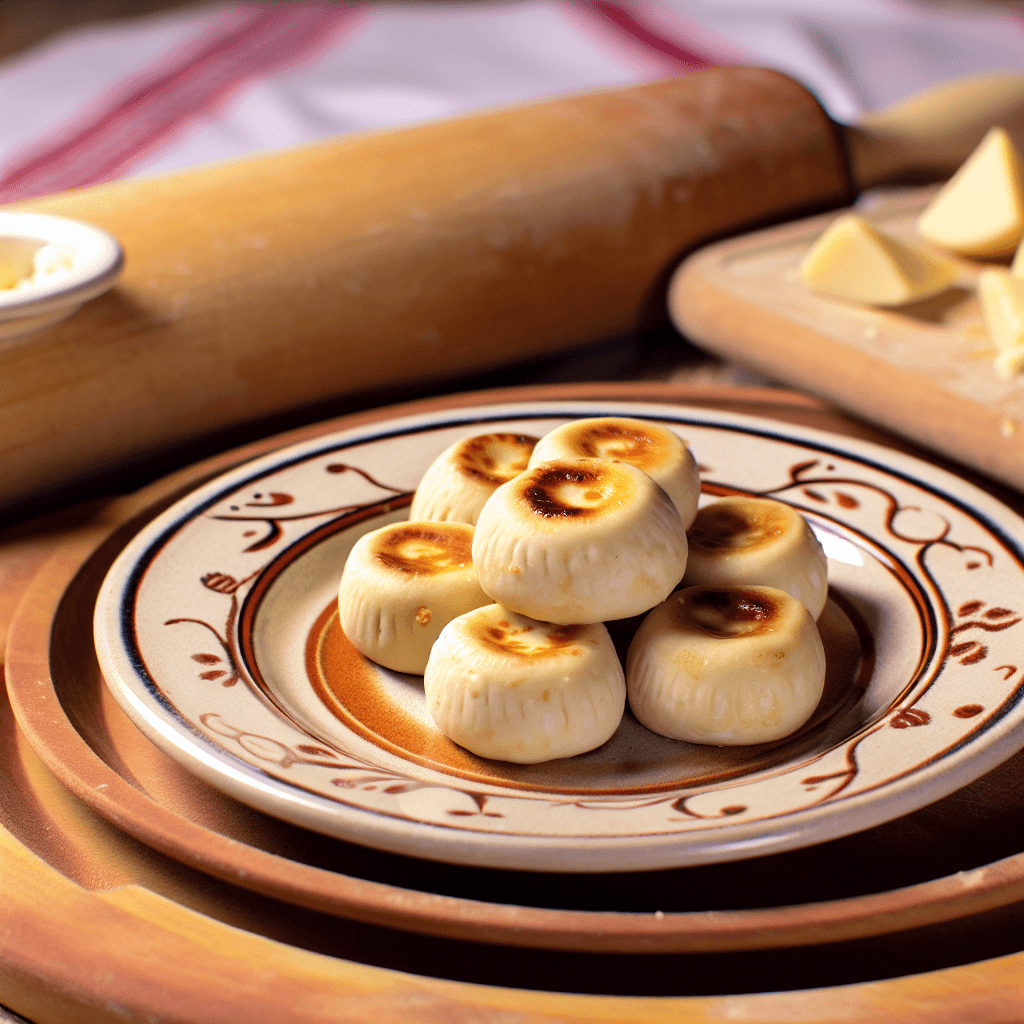
Ġbejna (pronounced 'jbeyna', plural: ġbejniet) is Gozo's most celebrated food product — a small, round sheep's milk cheese made on the island in three stages: fresh (friski), dried and hard (maqtura), or cured in black pepper or chilli (tal-bżar). The fresh version is delicate, lactic, and slightly salty, while the dried and peppered varieties develop intense, assertive flavours that have made them a Maltese breakfast and charcuterie staple. The cheese is made from milk produced by Gozo's indigenous sheep, whose diet of wild Gozitan herbs gives the milk a distinct aromatic quality that cannot be replicated with imported milk. Ġbejna received a European Geographical Indication (GI) designation, recognising that authentic Gozitan ġbejna can only be made with milk from Gozo's own flocks. Baking ġbejna takes the fresh version to a different dimension: the heat coaxes the outer surface to a light golden crust while the interior stays soft, creamy, and almost spoonable. The classic Gozitan treatment is simply olive oil, thyme or marjoram, and cracked black pepper — echoing the flavours of the island's rocky hillsides. A drizzle of Gozitan honey at the table adds the sweet counterpoint that elevates this from simple to spectacular. The dish is served as an antipasto or mezze with slices of ftira bread to scoop up the molten cheese.
Serves 4
Preheat the oven to 200°C (fan 180°C). Select a small baking dish or gratin dish that fits the cheese rounds snugly without too much empty space — a dish that is too large will cause the olive oil to spread thin and burn.
Individual small ramekins are ideal for a dinner-party presentation.
Place the ġbejna rounds in the baking dish in a single layer. Drizzle each round generously with olive oil, making sure the oil pools slightly around the base — this basting liquid will keep the cheese moist during baking and form a light sauce. Scatter the dried thyme over each and finish with a generous crack of black pepper.
Place the dish on the middle rack and bake for 12–15 minutes. Watch carefully from the 10-minute mark — the cheese should develop a light golden crust on the top and sides, but the interior should remain soft and yielding. It should not bubble aggressively or collapse into a puddle.
If your oven has a grill element, switch to grill for the final 90 seconds for extra colour on top.
Gently prod the centre of one cheese with the tip of a knife — it should feel soft and give, with the outer shell holding its shape. The cheese should be hot throughout but not melted flat. If it still feels cool and firm in the centre, return to the oven for 2–3 minutes.
Remove from the oven and allow to rest in the dish for 1 minute so the cheese firms slightly. Drizzle each round with honey directly over the hot cheese so it runs down the sides and mixes with the olive oil at the base. Serve immediately in the baking dish with warm ftira or sourdough bread alongside for scooping.
If you can find ġbejna at a Maltese deli or specialty grocer, use the fresh (friski) variety for baking. The dried peppered variety is too hard and will not soften properly in the oven.
The olive oil serves as a basting medium, not just flavouring — use enough so each cheese sits in a small pool of oil in the dish.
Fresh thyme (a few sprigs laid across the cheese) gives a more vivid herbal flavour than dried; use it if available in the same quantity by weight.
Serve the dish straight from the oven to the table — baked cheese waits for no one and will firm and harden within a few minutes of leaving the heat.
A few grains of flaky sea salt (Maldon or similar) scattered over the honey just before serving adds a pleasant salinity that contrasts with the sweetness.
Fig jam and ġbejna: substitute the honey with good-quality fig jam (Jam tal-berquq is traditional in Malta) for a richer, more autumnal sweetness.
Chilli ġbejna: replace the thyme with ½ tsp of dried chilli flakes for heat, and omit the honey — excellent as an aperitivo with a glass of chilled Gozitan Gellewza wine.
Herb-marinated version: marinate the cheese rounds for 1 hour in olive oil, garlic, and mixed dried herbs before baking for a more intensely flavoured result.
Grilled (rather than baked): place the seasoned ġbejna rounds on a preheated griddle pan over medium-high heat and cook for 2–3 minutes per side for a different char-marked presentation.
Baked ġbejna must be eaten immediately and does not store well — it hardens as it cools and cannot be successfully reheated. If you have unused raw ġbejna, store refrigerated in a little olive oil or lightly salted water for up to 3 days.
Ġbejna has been produced in Gozo since at least the medieval period, with records of sheep farming and cheesemaking on the island from the Arab and Norman periods. The cheese tradition is intimately tied to Gozo's indigenous sheep, which were selectively bred over centuries for rich milk production in the island's arid conditions. Until the mid-20th century, ġbejna was made by virtually every Gozitan farming family from their own flock's milk; today commercial production is regulated and the cheese holds a Protected Designation of Origin (PDO) under EU and Maltese law. The baked presentation became popular as a restaurant starter in the 1990s and is now considered a quintessential Gozitan aperitivo.
The closest widely available substitutes are fresh goat cheese rounds (chèvre) or individual fresh ricotta portions shaped into small discs. Both have a similar fresh lactic flavour and bake in a comparable way, though neither has quite the same dense, slightly firmer texture of authentic ġbejna. Small rounds of halloumi also bake well but are saltier and do not soften the same way.
This happens if the oven is too hot or the cheese bakes too long. Fresh ġbejna has a high moisture content and will melt quickly above 210°C. Keep the oven at 200°C and check from 10 minutes. Using slightly older, firmer cheese also helps it hold shape better during baking.
Season and arrange the cheese in the baking dish up to an hour ahead, cover with cling film, and refrigerate. Take out 15 minutes before cooking to bring to room temperature, then bake as directed. Do not actually bake in advance — it must be served straight from the oven.
A crisp, dry white wine suits the delicate sheep milk cheese — try a Maltese Chardonnay or Vermentino, an Italian Pinot Grigio, or a Chablis. If serving with the honey version, a light dessert wine or even a dry Amontillado sherry makes an elegant pairing.
Per serving · 4 servings total
Ask our AI cooking assistant anything about this recipe — substitutions, techniques, scaling.
Chat with AI Chef →Join the conversation
Sign in to leave a comment and save your favourite recipes
Have feedback or need help?
We read every email and reply within 1–2 business days.
© 2026 MyCookingCalendar. All rights reserved.