
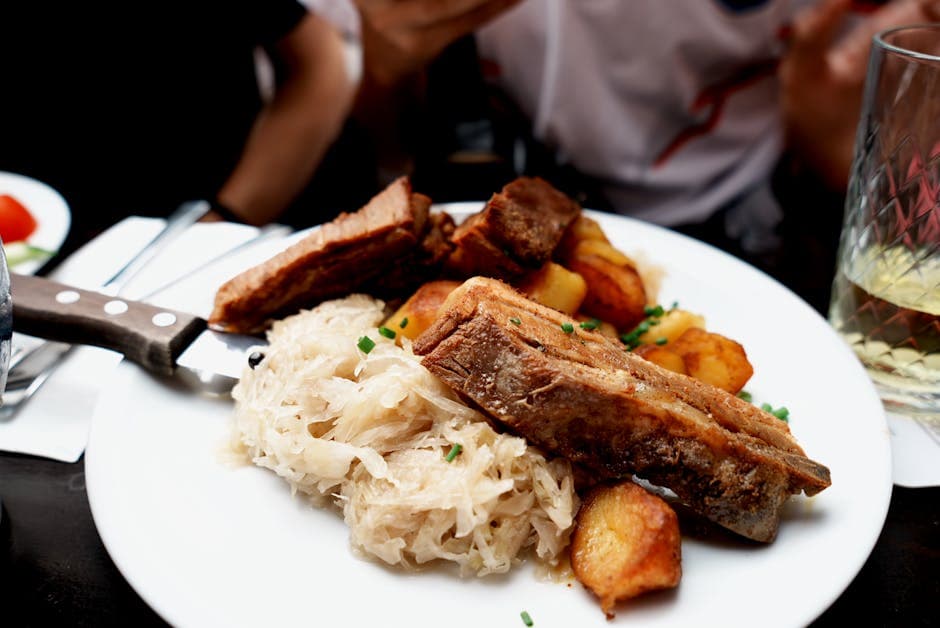
German Sauerbraten (Rhineland Marinated Pot Roast)
Germany's national pot roast — beef marinated for 4 days in red wine, vinegar and spices, then braised slowly with a sweet-sour gingerbread gravy.
About This Recipe
Sauerbraten is Germany's most iconic Sunday roast, a beef pot roast that begins life as a 3–7 day marinade of red wine, red wine vinegar, juniper, cloves, allspice, bay and onion — the long acid bath is what gives the dish its name (sauer = sour) and what tenderises tougher cuts of beef into yielding, full-flavoured slices. After marinating, the beef is patted dry, seared deeply brown, then braised low and slow in the strained marinade until fork-tender. The classic Rhineland finishing move is the gravy: enriched with crumbled Lebkuchen (German spiced gingerbread) or Pumpernickel breadcrumbs and a tablespoon of raisins, which dissolve into a glossy, complex, sweet-sour sauce that defines the dish. There are regional variations — the Franconian version uses no wine, only vinegar and water; the Westphalian version uses Apfelkraut (apple syrup); the Berliner version often includes pickled cucumber juice — but the Rhineland version with Lebkuchen-thickened gravy is the most internationally famous. Sauerbraten is traditionally served with potato dumplings (Kartoffelklöße) and red cabbage, and is the unrivalled centrepiece of Sunday lunch across Germany.
Ingredients
Serves 8
- 2 kgbeef rump roast or chuck eye roast (a single piece, well-marbled)
- 500 mldry red wine (Spätburgunder/Pinot Noir, or Côtes du Rhône)
- 375 mlred wine vinegar
- 500 mlwater
- 2 largeonions, sliced; 2 carrots, sliced; 2 celery stalks, sliced
- 10juniper berries; 6 whole cloves; 8 allspice berries; 3 bay leaves; 1 tsp peppercorns; 1 tsp mustard seed
- 3 tbspneutral oil or lard, for searing
- 80 gGerman Lebkuchen (or substitute: 60 g pumpernickel + 1 tbsp honey), crumbled
- 60 graisins; 2 tbsp dark brown sugar
- 3 tbspplain flour, for dusting the meat
Instructions
- 1
Make the marinade
In a large non-reactive pot, combine the red wine, vinegar, water, sliced onion, carrot, celery and all the whole spices. Bring to a boil and simmer 10 minutes to bloom the spices. Cool completely to room temperature (60 minutes — this is essential; pouring hot marinade on raw meat begins to cook it).
- 2
Marinate the beef
Place the beef in a deep glass or ceramic dish that fits it snugly. Pour the cooled marinade over so the meat is fully submerged (weigh down with a plate if needed). Cover and refrigerate 3–7 days. Turn the meat once daily so it marinates evenly.
4 days is the sweet spot — enough for deep flavour and tenderising, not so long the meat goes mushy. 7 days is for traditionalists who want the deepest sour profile.
- 3
Sear the beef
Remove the beef from the marinade and pat very dry with paper towels (wet meat won't brown). Strain and reserve the marinade and the vegetables separately. Dust the beef in flour. Heat oil in a heavy Dutch oven over medium-high and brown the beef 4 minutes per side, all over, until deeply mahogany.
- 4
Build the braise
Lift out the meat. In the same pot, sweat the strained marinade vegetables 8 minutes until softened and lightly caramelised. Pour in the strained marinade and scrape up all the browned bits from the bottom of the pot. Return the beef and add enough water to come halfway up the meat.
- 5
Slow braise
Bring to a bare simmer, cover tightly, and transfer to a 150°C (300°F) oven. Braise 2.5–3 hours until the beef is fork-tender, turning the meat once at the halfway point. Test with a fork — when it slides in and twists with no resistance, it's done.
- 6
Rest the meat
Lift the beef onto a board, tent loosely with foil and rest 20 minutes. While it rests, strain the braising liquid through a fine sieve into a clean saucepan, pressing the vegetables firmly to extract all flavour. Discard the spent vegetables.
- 7
Make the gravy
Bring the strained braising liquid to a vigorous simmer. Add the crumbled Lebkuchen, raisins and brown sugar. Whisk constantly until the Lebkuchen dissolves into a glossy, dark, slightly thick gravy (about 8 minutes). Taste — balance with a touch more sugar if too sour, or a splash more vinegar if too sweet.
The gravy should taste sweet-sour-spiced, almost like a savoury mulled wine reduction. Adjust to your palate.
- 8
Slice and serve
Slice the rested beef across the grain 1 cm thick. Arrange on a warm platter, blanket with hot gravy, and serve immediately with potato dumplings (Kartoffelklöße) and braised red cabbage (Rotkohl) alongside.
Did you make this?
Rate it and help other cooks find the recipes that actually work.
One tap to sign in, and we'll save the rating you just picked.
Everything you need to plan your week — free
- Meal calendar
- Grocery list
- AI recipe ideas
Track what you eat
Snap your meal to log calories and macros, run fasting timers and track water in the free SnapCal app.
Pro Tips
- →
Marinate at least 3 full days — under that, the sour flavour hasn't penetrated and the meat won't tenderise. 4–5 days is ideal for home cooks.
- →
Use a tougher cut like chuck or rump — tender cuts (tenderloin, sirloin) collapse in the long marinade. The dish was invented to make tough cuts wonderful.
- →
Real German Lebkuchen makes the gravy — order online or substitute with crumbled pumpernickel plus a tablespoon of honey and an extra pinch of cinnamon, clove, ginger.
- →
Sauerbraten is even better made one day ahead — refrigerate beef in its strained gravy overnight, then reheat sliced beef in gravy on the stovetop for 20 minutes at low heat.
Variations
- •
Franconian sauerbraten — skip the wine, use only vinegar and water; sharper, more austere, the older version.
- •
Westphalian — replace 100 ml of the wine with Apfelkraut (apple syrup) and add a sliced apple to the marinade for a fruitier profile.
- •
Berliner — add 60 ml of pickled cucumber juice to the marinade; a tangier version popular in northern Germany.
- •
Wild game version — use venison or wild boar instead of beef and reduce marinade time to 48 hours; the result is leaner and more autumnal.
Storage
Sauerbraten improves overnight. Keeps 4 days refrigerated in the gravy, and is arguably better on day 2. Freezes well 3 months in single portions submerged in gravy; thaw overnight in fridge and reheat in a covered pan.
History & Origin
Sauerbraten dates to at least the 9th century and is reputedly traced to Charlemagne, who is said to have ordered horse meat to be tenderised in wine vinegar to make it palatable for his soldiers (modern sauerbraten uses beef, but the technique persisted). It became the German Sunday roast par excellence in the 19th century when beef became affordable.
Frequently Asked Questions
Is it OK to use less vinegar?
If you want a milder sour profile, reduce vinegar to 250 ml and increase wine to 600 ml. But the dish is supposed to be assertively sour — that's the whole point. Trust the recipe the first time, then adjust to taste.
Can I marinate at room temperature?
Absolutely not — always refrigerate. Room-temp marinating with raw meat over multiple days is a food-safety disaster. Use a glass or ceramic vessel in the coldest part of the fridge.
What if I can't find Lebkuchen?
Substitute pumpernickel breadcrumbs plus 1 tbsp honey, 0.5 tsp cinnamon, pinch of clove and ginger. Some recipes use crushed gingersnaps as a quick fix — it works but tastes more American than German.
What's the traditional side dish?
Potato dumplings (Kartoffelklöße or Knödel) and sweet-sour braised red cabbage (Rotkohl). Spätzle or buttered egg noodles are acceptable modern alternatives, and Pfannkuchen (German potato pancakes) work too.
Nutrition Facts
Per serving (360g / 12.7 oz) · 8 servings total
Time Summary
Have Questions?
Ask our AI cooking assistant anything about this recipe — substitutions, techniques, scaling.
Chat with AI Chef →Featured in Guides
This recipe is featured in the following curated guides:
More German Recipes
You Might Also Like
Similar dishes from other cuisines around the world.
Browse by Ingredient
More recipes built around the same core ingredients.
Free Kitchen Tools
Calculators and converters that pair with this page — no signup needed.
Put This Into a Plan
Schedule it, shop for it, and track what you already have.
Read Next
Longer reads that go deeper on the ideas behind this dish.
Community
Join the conversation
Sign in to leave a comment and save your favourite recipes