
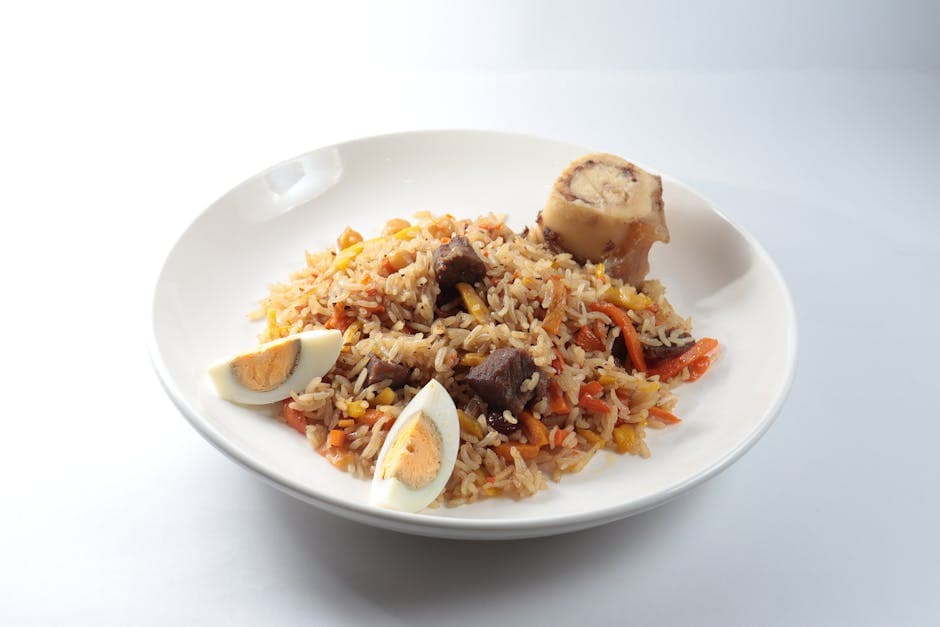
Ghanaian Omo Tuo (Rice Balls)
Soft, sticky Ghanaian rice balls served with palm nut soup or groundnut soup — a Northern Ghanaian staple.
About This Recipe
Omo tuo are Ghana's version of a dumpling — short-grain rice cooked until very soft, then stirred vigorously until it becomes a thick, sticky mass that can be molded into smooth balls. They replace fufu in many regions of Ghana, particularly in the North, and are served with the same soups: groundnut soup, palm nut soup, or light soup. Less labor-intensive than pounded fufu, they're equally nourishing.
Ingredients
Serves 4
- 3 cupsshort-grain white rice
- 6 cupswater
- 1 tspsalt
- 2 cupsgroundnut (peanut) soup to serve
Instructions
- 1
Cook the rice
Cook rice with water and salt in a heavy pot over medium heat. Once water is absorbed, add a little more water. Continue cooking and stirring until rice is completely soft and overcooked — it should be very thick and sticky.
- 2
Stir vigorously
Using a wooden spoon or heavy paddle, stir the rice vigorously in the pot over low heat for 5 minutes until it becomes a thick, cohesive paste.
- 3
Shape into balls
Wet your hands and a small bowl. Scoop portions of the hot rice paste and roll into smooth balls about the size of a tennis ball. Place in a bowl.
- 4
Serve with soup
Serve omo tuo in individual bowls with generous groundnut soup or palm nut soup poured around them.
Did you make this?
Rate it and help other cooks find the recipes that actually work.
One tap to sign in, and we'll save the rating you just picked.
Everything you need to plan your week — free
- Meal calendar
- Grocery list
- AI recipe ideas
Track what you eat
Snap your meal to log calories and macros, run fasting timers and track water in the free SnapCal app.
Pro Tips
- →
Short-grain or medium-grain rice works best — long-grain rice doesn't get sticky enough.
- →
Don't under-cook — the rice needs to be fully soft and almost mushy.
- →
Wet hands prevent sticking when shaping.
- →
Taste and adjust salt at the very end — flavors concentrate as liquids reduce, and a final pinch of flaky salt sharpens the whole dish.
Variations
- •
Serve with egusi soup
- •
Make smaller balls for a party version
- •
Add a little cassava flour for extra stickiness
- •
Vegetarian: swap the protein for roasted king oyster mushrooms, smoked tofu or cooked chickpeas — adjust seasoning slightly upward to compensate.
Storage
Shape fresh each time. Cooked rice paste keeps refrigerated for 2 days; reshape when warm.
History & Origin
Omo tuo is particularly associated with the Northern, Upper East, and Upper West regions of Ghana, as well as the broader Hausa-speaking communities of West Africa. It's also made on Sunday mornings in Southern Ghana to serve with palm nut soup.
Frequently Asked Questions
What makes it sticky?
Overcooking the short-grain rice releases its starch, creating the sticky, pliable texture. Don't use par-cooked or parboiled rice.
Can I make it in a slow cooker?
Not effectively — the vigorous stirring is what develops the sticky texture and can't be replicated by slow cooker.
Can I make this ahead of time?
Yes — most of the components can be prepared up to a day in advance and refrigerated separately. Reheat gently and assemble just before serving so textures stay distinct.
What can I substitute if I don't have all the ingredients?
Stay close to the role each ingredient plays: swap aromatics for similar ones (shallot for onion, lime for lemon), and keep the fat-acid-salt balance intact. Spice blends can usually be approximated with what's in the cupboard.
Nutrition Facts
Per serving · 4 servings total
Time Summary
Have Questions?
Ask our AI cooking assistant anything about this recipe — substitutions, techniques, scaling.
Chat with AI Chef →Featured in Guides
This recipe is featured in the following curated guides:
More Ghanaian Recipes
You Might Also Like
Similar dishes from other cuisines around the world.
Browse by Ingredient
More recipes built around the same core ingredients.
Free Kitchen Tools
Calculators and converters that pair with this page — no signup needed.
Put This Into a Plan
Schedule it, shop for it, and track what you already have.
Read Next
Longer reads that go deeper on the ideas behind this dish.
Community
Join the conversation
Sign in to leave a comment and save your favourite recipes