
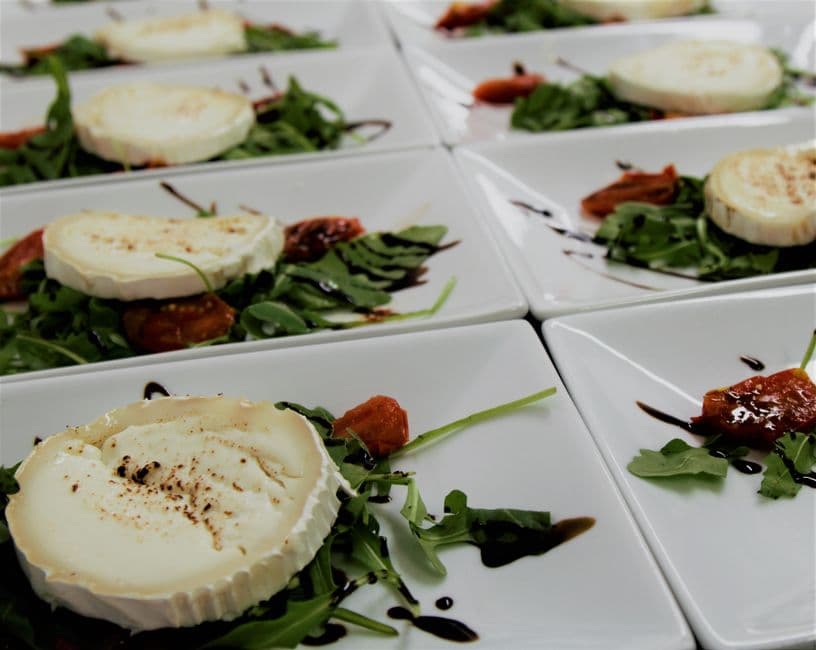
Keçi Peyniri Salatası (Warm Goat Cheese Salad)
Warm herb-crusted goat cheese medallions on crisp rocket with walnuts, dried figs, and a pomegranate-walnut oil dressing — a jewel of modern Turkish restaurant salad culture.
About This Recipe
Warm goat cheese salad is a staple of Turkey's modern bistro and meyhane scene, particularly in the Aegean and Mediterranean coastal cities where artisan cheesemaking has seen a renaissance. Turkey's goat cheese (keçi peyniri) tradition is ancient — goat milk cheese has been made in the Aegean and Toros mountain regions for millennia, and artisan producers around towns like Bodrum, Çeşme, and Antalya now produce aged and fresh soft goat cheeses comparable to French chèvre. This salad builds on the classic French warm chèvre salad concept but infuses it with distinctly Turkish flavors and textures. The cheese medallions are rolled in a mixture of dried herbs (thyme, oregano, nigella seeds) before being briefly pan-fried or broiled until warm and slightly golden on the outside, just melting within. They rest on a base of bitter roka (wild arugula), which is more peppery and intense than baby arugula. The supporting cast is unmistakably Turkish: candied or dried figs from Aydın, walnuts from the Aegean region (some of the finest in the world), and a dressing of pomegranate molasses whisked with walnut oil and lemon. The combination of warm, creamy, slightly tangy cheese against bitter greens, sweet-sour dressing, earthy walnuts, and jammy figs achieves a complete flavor spectrum in a single plate.
Ingredients
Serves 4
- 300 gsoft log-style goat cheese (chèvre or keçi peyniri)
- 2 tbspmixed dried herbs(thyme, oregano, nigella seeds (çörek otu))
- 100 grocket (roka/arugula)(wild if available)
- 6 dried or fresh figsquartered
- 50 gwalnuts(roughly chopped)
- 2 tbsppomegranate molasses
- 3 tbspwalnut oil or extra-virgin olive oil
- 1 tbsplemon juice
- 1 tsphoney
- salt and black pepper(to taste)
Instructions
- 1
Prepare the Cheese Medallions
Slice the goat cheese log into 8 rounds, about 1.5cm thick. Spread the dried herb mixture on a small plate. Press each cheese round gently into the herbs on both sides until coated. Refrigerate for 15 minutes to firm up before cooking.
- 2
Make the Dressing
Whisk together pomegranate molasses, walnut oil, lemon juice, and honey until emulsified. Season with salt and pepper. Taste — it should be sweet-sour, slightly rich, and balanced. Adjust with more pomegranate molasses for sourness or honey for sweetness.
- 3
Cook the Cheese
Heat a non-stick skillet over medium heat with a thin film of oil. Place the herbed cheese medallions in the pan and cook for 1-1.5 minutes per side until golden on the outside but still holding their shape. Work quickly — they will start to melt if the heat is too high. Alternatively, broil on foil at high heat for 3-4 minutes.
The goal is warm and slightly melted inside, golden outside — not collapsed and runny. Medium heat, not high.
- 4
Assemble and Serve
Toss the rocket leaves lightly with half the dressing and arrange on four plates. Place 2 warm cheese medallions on each salad. Scatter the fig quarters and walnut pieces over the top. Drizzle with the remaining dressing and serve immediately.
Did you make this?
Rate it and help other cooks find the recipes that actually work.
One tap to sign in, and we'll save the rating you just picked.
Everything you need to plan your week — free
- Meal calendar
- Grocery list
- AI recipe ideas
Track what you eat
Snap your meal to log calories and macros, run fasting timers and track water in the free SnapCal app.
Pro Tips
- →
Refrigerate the herb-coated cheese for at least 15 minutes before cooking — this helps the coating adhere and the cheese hold its shape in the pan.
- →
Walnut oil has a beautiful nutty flavor perfect for this salad but can turn bitter if heated — use it only in the dressing, never for frying.
- →
Wild rocket (roka) has a sharper, more peppery bite than regular arugula — it stands up better to the richness of the warm cheese.
Variations
- •
Baked version: place herb-coated cheese rounds on parchment and bake at 200°C for 6-8 minutes instead of pan-frying.
- •
With honey and walnuts only: a simpler version — skip the figs and dress only with honey and toasted walnuts.
- •
Add crispy prosciutto: add 4 slices of crisped prosciutto or pastırma for a meat version.
Storage
This salad must be assembled and eaten immediately. The cheese medallions can be herb-coated and refrigerated up to 4 hours before cooking. The dressing can be made a day ahead.
History & Origin
Goat cheese production in Turkey, particularly in the Aegean region, dates back to ancient Greece when Anatolian goat cheese was traded throughout the Mediterranean. The modern warm goat cheese salad concept was popularized in France in the 1980s but has been adapted in Turkish contemporary cuisine since the 1990s, with Turkish artisan cheesemakers in the Aegean producing high-quality cheeses that rival French chèvre. Turkish walnuts, figs from Aydın, and pomegranate molasses from Gaziantep make this a genuinely Turkish expression of the concept.
Frequently Asked Questions
Can I use feta instead of goat cheese?
Yes, but the flavor profile changes significantly — feta is saltier, denser, and doesn't melt in the same way. For pan-frying, use a firm feta block and pan-fry without the herb coating until golden. The salad will be more savory and less creamy.
What is pomegranate molasses and where can I find it?
Pomegranate molasses (nar ekşisi) is the thick syrup made from cooked-down pomegranate juice — tart, deeply fruity, and slightly sweet. It is available at Turkish, Middle Eastern, and many mainstream grocery stores. Balsamic glaze or a mix of lemon juice and honey can substitute in a pinch.
Nutrition Facts
Per serving (220g / 7.8 oz) · 4 servings total
Time Summary
Have Questions?
Ask our AI cooking assistant anything about this recipe — substitutions, techniques, scaling.
Chat with AI Chef →Featured in Guides
This recipe is featured in the following curated guides:
More Turkish Recipes
You Might Also Like
Similar dishes from other cuisines around the world.
Browse by Ingredient
More recipes built around the same core ingredients.
Free Kitchen Tools
Calculators and converters that pair with this page — no signup needed.
Put This Into a Plan
Schedule it, shop for it, and track what you already have.
Read Next
Longer reads that go deeper on the ideas behind this dish.
Community
Join the conversation
Sign in to leave a comment and save your favourite recipes