
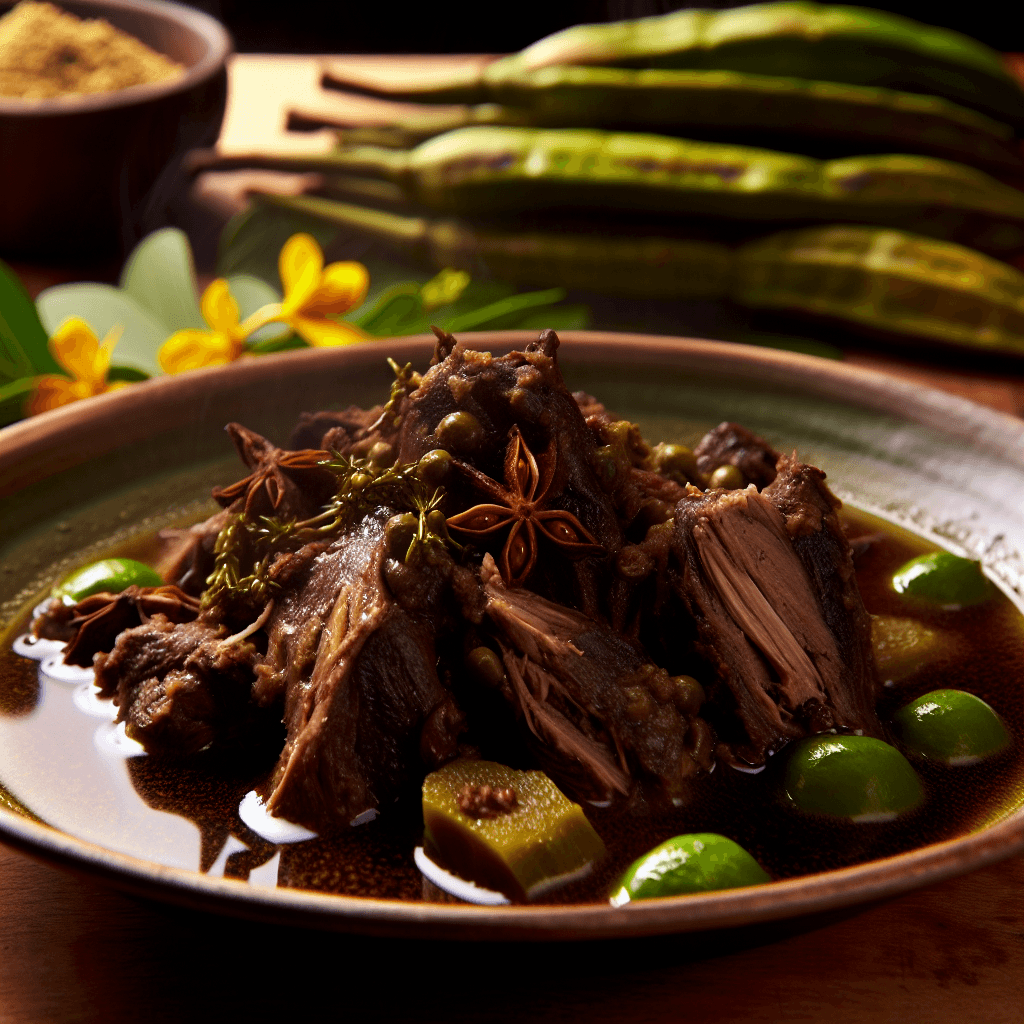
Goatwater
Montserrat's national dish — a rich, spiced goat stew simmered with papaya and aromatic herbs.
About This Recipe
Goatwater is the undisputed national dish of Montserrat, a small volcanic island in the Leeward Islands whose Afro-Irish cultural heritage is unlike anywhere else in the Caribbean. The stew takes its name simply from its two core components — goat and water — but what emerges from the pot after nearly two hours of low, patient simmering is anything but simple. Bone-in goat pieces release their collagen into the broth, building a velvety, deeply savoury base that absorbs whole cloves, dried marjoram, and the gentle sweetness of green papaya added in the final stretch of cooking. The dish is inseparable from Montserratian celebration culture. At St. Patrick's Day festivals — which the island observes with particular pride given its Irish colonial history — enormous pots of goatwater are set bubbling over open fires as early as dawn. The cooking is communal, the seasoning fiercely personal, and recipes are passed down with the kind of specificity reserved for family secrets. Cloves are the defining aromtic: used whole and in ground form simultaneously to create layers of warmth without bitterness. At the table, goatwater arrives a dark, mahogany-hued broth fragrant with herb and spice, the meat so tender it slides from the bone with the gentlest pressure. Torn crusty bread is the only appropriate accompaniment — first to soak the broth from the bowl, then to wipe the bowl clean. It is a dish that rewards patience and punishes shortcuts.
Ingredients
Serves 4
- 1 kggoat meat(bone-in, cut into pieces)
- 1 cupgreen papaya(peeled and diced)
- 1 tspground cloves
- 1 tbspdried marjoram
- 1 mediumonion(chopped)
- 2 tbsptomato paste
Instructions
- 1
Season meat
Combine ground cloves, dried marjoram, and 1 tsp salt in a small bowl. Rub the mixture thoroughly into every surface of the goat pieces, working it into the crevices around the bone. Cover and let marinate at room temperature for at least 30 minutes, or refrigerate overnight for deeper flavour penetration.
Overnight marination makes a noticeable difference — the spices penetrate the meat rather than just coating the surface.
- 2
Brown in batches
Heat 2 tbsp of neutral oil in a heavy-bottomed pot or Dutch oven over high heat until shimmering. Brown the goat pieces in batches — do not crowd the pot — turning each piece until deeply caramelised on all sides, about 4–5 minutes per batch. Transfer browned pieces to a plate and set aside. Crowding causes steaming rather than searing, which loses the fond critical to flavour.
- 3
Build the base
Reduce heat to medium and add the chopped onion to the pot. Cook in the residual fat, scraping up the browned bits from the bottom, for about 5 minutes until the onion is translucent and beginning to colour at the edges. Stir in the tomato paste and cook for a further 2 minutes until it deepens in colour and smells slightly nutty.
- 4
Add liquids and return meat
Return the browned goat to the pot and pour in 1.5 litres of water, enough to submerge the meat by at least 3 cm. Bring to a vigorous boil over high heat, then use a large spoon to skim away any grey foam that rises to the surface — this produces a clearer, cleaner-tasting broth.
- 5
Long simmer
Reduce heat to low, partially cover the pot, and simmer for 60 minutes. The liquid should produce gentle, lazy bubbles rather than a rolling boil. Check every 20 minutes and add water if the level drops below the meat.
Keep the heat genuinely low — aggressive boiling toughens goat muscle fibre before the collagen has time to dissolve.
- 6
Add papaya
Add the diced green papaya and continue simmering for a further 30 minutes. The papaya will soften but should retain a slight bite rather than melting entirely. Its natural enzymes also help tenderise the meat during this final phase.
Add papaya in the last 30 minutes so it stays slightly firm rather than dissolving into the broth.
- 7
Season and serve
Taste the broth and adjust salt. The stew is ready when the meat offers no resistance to a fork and the broth tastes richly of cloves and marjoram with a subtle sweetness from the papaya. Ladle into deep bowls and serve immediately with thick slices of crusty bread for dipping.
Did you make this?
Rate it and help other cooks find the recipes that actually work.
One tap to sign in, and we'll save the rating you just picked.
Everything you need to plan your week — free
- Meal calendar
- Grocery list
- AI recipe ideas
Track what you eat
Snap your meal to log calories and macros, run fasting timers and track water in the free SnapCal app.
Pro Tips
- →
Bone-in pieces — neck, shoulder, and shank — give the richest, most gelatinous broth. Boneless leg meat cooks faster but produces a thinner result.
- →
A small splash of dark rum (about 2 tbsp) added with the water deepens the broth's colour and adds a subtle molasses note that suits the cloves perfectly.
- →
Skim the broth diligently in the first 15 minutes of simmering. Grey foam contains impurities that cloud the broth and dull the flavour if left in.
- →
Let the finished stew rest off heat for 10 minutes before serving — the residual heat redistributes the juices and the seasoning mellows and rounds out.
- →
If the broth tastes flat near the end, add a small pinch of ground cloves (not more whole ones) and simmer uncovered for 10 more minutes to concentrate flavour.
Variations
- •
Scotch bonnet version: add one whole, unpierced scotch bonnet with the water. It perfumes the broth with fruity heat without making it aggressively spicy — remove before serving.
- •
Lamb substitute: shoulder or neck of lamb works beautifully and is more widely available; reduce total simmering time by about 20 minutes as lamb tenderises faster than goat.
- •
Hearty root vegetable version: add diced yellow yam and breadfruit with the papaya for a more substantial, filling stew served without bread.
- •
Festival version: some Montserratian cooks add a piece of smoked pork along with the goat for a deeper, smokier broth that feeds large crowds at outdoor events.
Storage
Refrigerate in a sealed container for up to 3 days. The stew improves significantly by day two as the spices continue to permeate the meat. Freeze flat in zipper bags for up to 1 month; thaw overnight in the refrigerator and reheat gently over low heat, adding a splash of water if the sauce has thickened.
History & Origin
Goatwater has been prepared in Montserrat for at least three centuries, its recipe reflecting the island's uniquely blended Afro-Irish heritage. African enslaved people brought traditions of slow-cooked goat, while Irish indentured labourers contributed the use of marjoram and cloves — spices more common in European cooking than in the wider Caribbean. The dish features prominently at Montserrat's St. Patrick's Day celebrations, one of the only places in the world where this holiday carries deep dual cultural meaning rooted in both West African resistance and Irish colonial history.
Frequently Asked Questions
Can I use a slow cooker for goatwater?
Yes — after browning the meat and sautéing the aromatics on the stovetop, transfer everything to a slow cooker and cook on low for 8–9 hours. The result is deeply tender, though you won't get quite the same level of broth concentration. Remove the lid for the last 30 minutes to reduce the liquid slightly.
Is goatwater very spicy?
Traditional goatwater is warmly spiced from cloves rather than hot. It has a deep, aromatic quality rather than chilli heat. If you want heat, add a whole scotch bonnet pepper to the pot — leave it unpierced so it releases fruity warmth without turning the broth fiery.
Why is my broth cloudy?
Cloudiness comes from not skimming the foam in the early stages of boiling, or from boiling too vigorously. Use a low, steady simmer throughout and skim the surface thoroughly for the first 15 minutes. Starting with a brief blanch of the meat (boil for 5 minutes, discard water) also produces a crystal-clear broth.
What cut of goat works best?
Neck and shoulder on the bone are the best cuts for goatwater — they contain enough collagen to build a rich, slightly sticky broth. Avoid lean leg cuts cooked boneless as they dry out quickly and produce a thin, watery result.
Can I make goatwater a day ahead?
Absolutely — goatwater is one of those stews that genuinely tastes better the next day. Cool it completely, refrigerate overnight, and skim any solidified fat from the surface before reheating. Warm gently over low heat, adding a little water if needed.
Nutrition Facts
Per serving · 4 servings total
Time Summary
Have Questions?
Ask our AI cooking assistant anything about this recipe — substitutions, techniques, scaling.
Chat with AI Chef →Featured in Guides
This recipe is featured in the following curated guides:
More Montserratian Recipes
You Might Also Like
Similar dishes from other cuisines around the world.
Free Kitchen Tools
Calculators and converters that pair with this page — no signup needed.
Put This Into a Plan
Schedule it, shop for it, and track what you already have.
Read Next
Longer reads that go deeper on the ideas behind this dish.
Community
Join the conversation
Sign in to leave a comment and save your favourite recipes