
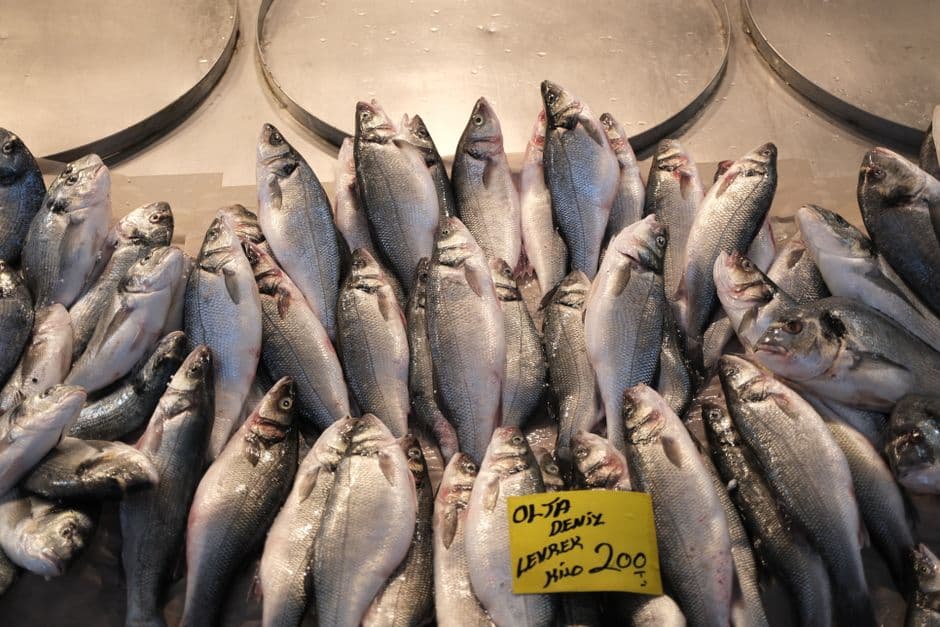
Levrek Izgara (Grilled Sea Bass Turkish-Style)
Whole sea bass stuffed with fennel, lemon, and herbs, grilled over charcoal until the skin crisps and the flesh steams in its own juices — the crown jewel of Turkish seafood cooking.
About This Recipe
Levrek (European sea bass, Dicentrarchus labrax) is one of the most prized fish in Turkish coastal cuisine — found in the Aegean, Marmara, and Mediterranean waters, it is a versatile white fish with firm, mildly sweet flesh that holds up beautifully on the grill. Whole grilled levrek, served simply with lemon and a drizzle of olive oil, represents the Turkish philosophy that exceptional ingredients require minimal interference. The fish is scored to ensure even cooking and allow the aromatics stuffed in the cavity to perfume the flesh from within. The classic preparation involves stuffing the whole cleaned fish with fennel fronds, lemon slices, fresh thyme or rosemary, and garlic. The outside is brushed with olive oil, seasoned generously with salt and black pepper, and grilled over medium-high charcoal heat. The scoring on the sides of the fish (3-4 diagonal cuts to the bone) serves multiple purposes: it prevents the skin from tightening and curling during cooking, allows the heat to penetrate to the thickest part of the flesh faster, and lets the salt and oil season the flesh deeper than the surface. The fish is finished with a squeeze of lemon and served with çoban salatası, grilled vegetables, and white wine. In Turkish restaurants, whole grilled fish is carved tableside — the backbone is removed with a fork and spoon in one practiced motion, leaving two perfect fillets.
Ingredients
Serves 4
- 2 wholesea bass(about 500-600g each, cleaned and scaled)
- 4 tbspextra-virgin olive oil
- 1 lemonthinly sliced, plus extra wedges to serve
- 1 small bunchfresh fennel fronds or dill
- 4 sprigsfresh thyme
- 3 clovesgarlic(thinly sliced)
- 1.5 tspcoarse sea salt
- 1/2 tspblack pepper
Instructions
- 1
Prepare the Fish
Score each fish with 3-4 diagonal cuts on each side, slicing down to the bone. This ensures even cooking and allows seasoning to penetrate. Pat the fish completely dry inside and out with paper towels.
Ask your fishmonger to clean and scale the fish if possible — it saves significant time.
- 2
Season and Stuff
Brush the outside of each fish generously with olive oil. Season inside the cavity and on the scored skin with coarse salt and black pepper. Stuff each cavity with lemon slices, fennel fronds, thyme sprigs, and sliced garlic — pack them in firmly so they stay in place during grilling.
- 3
Grill Over Medium-High Heat
Place fish on a preheated grill over medium-high heat (not maximum — you want even cooking, not charred exterior with raw center). Grill without moving for 8-10 minutes on the first side, until the skin is crispy and releases from the grate naturally. Carefully flip using two wide spatulas.
- 4
Finish and Serve
Grill the second side for another 6-8 minutes until the flesh in the thickest part near the backbone is white and opaque (check by inserting a skewer — if it slides through without resistance, the fish is done). Transfer to a warm plate. Drizzle with additional olive oil and a squeeze of fresh lemon before serving.
Did you make this?
Rate it and help other cooks find the recipes that actually work.
One tap to sign in, and we'll save the rating you just picked.
Everything you need to plan your week — free
- Meal calendar
- Grocery list
- AI recipe ideas
Track what you eat
Snap your meal to log calories and macros, run fasting timers and track water in the free SnapCal app.
Pro Tips
- →
Completely dry fish skin before grilling — moisture causes sticking and prevents crispy skin.
- →
Don't try to move the fish too early — wait until the skin releases from the grate naturally (it will take 8-10 full minutes).
- →
Use a fish basket or large hinged grill basket for easier flipping if grilling over charcoal.
- →
The fish is done when a skewer or knife tip inserted at the thickest point near the backbone slides through without resistance.
Variations
- •
Oven-roasted levrek: stuff and season as above, place in a hot oven (220°C) for 20-25 minutes for a no-grill version.
- •
With herb crust: brush the outside with a paste of herbs, garlic, and breadcrumbs before grilling.
Storage
Grilled fish should be eaten immediately. Leftovers can be refrigerated for 1 day and eaten cold on a salad or with bread — reheating grilled fish in a microwave or oven makes it rubbery and smells unpleasant.
History & Origin
Sea bass has been fished from Turkey's coastal waters since antiquity — ancient Byzantine Istanbul (Constantinople) was renowned for its fish markets on the Bosphorus. Turkish fishing communities along the Aegean, Marmara, and Mediterranean coasts have developed sophisticated seafood cooking traditions over millennia, and whole grilled fish is documented in Ottoman court records as a staple of imperial banquets. The meyhane culture of Istanbul's Beyoğlu and Bosphorus neighborhoods built entire culinary identities around fresh-grilled fish and meze.
Frequently Asked Questions
How do I know when the fish is cooked all the way through?
Insert a thin metal skewer or knife tip into the thickest part of the fish near the backbone. If it slides in and comes out warm (not cold) and without resistance, the fish is done. Alternatively, check that the flesh near the backbone has turned from translucent to white and opaque.
Can I use another fish instead of sea bass?
Yes — gilt-head bream (çipura, another Turkish favorite), snapper, or small whole trout all work excellently using this technique. Cooking time varies slightly with the thickness of the fish.
Nutrition Facts
Per serving (280g / 9.9 oz) · 4 servings total
Time Summary
Have Questions?
Ask our AI cooking assistant anything about this recipe — substitutions, techniques, scaling.
Chat with AI Chef →Featured in Guides
This recipe is featured in the following curated guides:
More Turkish Recipes
You Might Also Like
Similar dishes from other cuisines around the world.
Browse by Ingredient
More recipes built around the same core ingredients.
Free Kitchen Tools
Calculators and converters that pair with this page — no signup needed.
Put This Into a Plan
Schedule it, shop for it, and track what you already have.
Read Next
Longer reads that go deeper on the ideas behind this dish.
Community
Join the conversation
Sign in to leave a comment and save your favourite recipes