
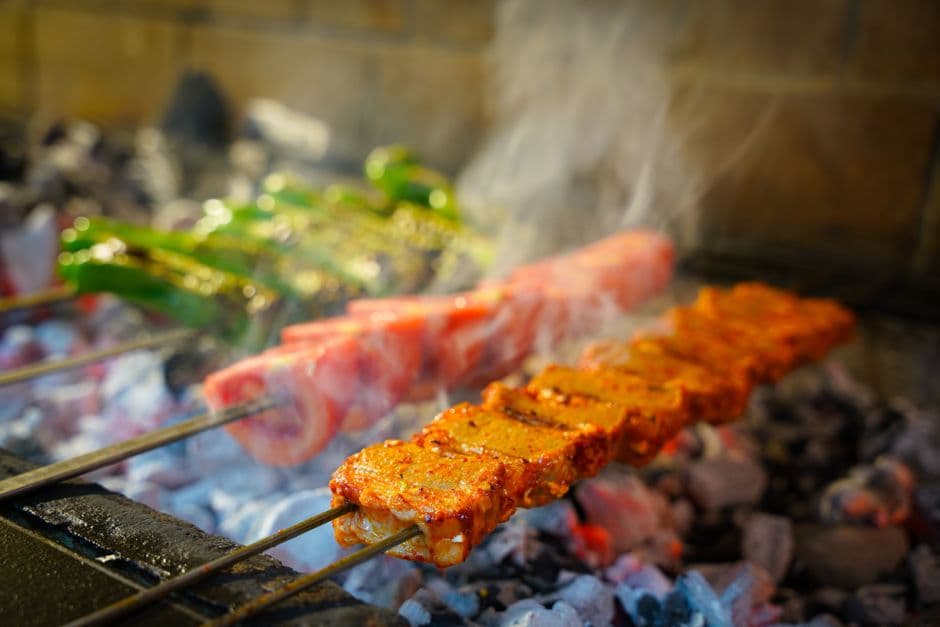
Mangal Sebzeleri (Turkish Grilled Vegetables)
Charred, smoky mixed vegetables brushed with olive oil and herbs — the essential Turkish mangal (BBQ) side, delicious as a standalone vegetarian dish too.
About This Recipe
In Turkish mangal (BBQ) culture, grilled vegetables are not an afterthought — they are essential companions to kebabs and grilled meats, and in their own right they represent some of the most flavor-efficient cooking possible. The charcoal heat transforms raw vegetables into something caramelized, slightly smoky, and concentrated in flavor. The Turkish vegetable selection for grilling centers on a classic quartet: long mild green peppers (sivri biber), whole tomatoes, small eggplants or zucchini, and corn on the cob. These are placed directly on the grill alongside the meats, rotating as they char, absorbing the wood smoke from the dripping meat fat. The technique is minimal: wash the vegetables, brush generously with good olive oil, season with salt, and place directly on the grill. The whole tomatoes are left intact until they begin to collapse, developing a jammy, concentrated interior beneath the charred skin. The peppers go directly on the grill and are turned frequently until completely soft and blistered. Eggplant or zucchini are sliced, brushed with oil, and grilled until deeply marked. After grilling, a simple finishing dressing of lemon juice, extra olive oil, and chopped parsley transforms the char-marked vegetables into a complete dish. Sumac adds a fruity tartness that brightens everything. This is one of the most effortlessly impressive preparations in Turkish cooking — the fire does all the work.
Ingredients
Serves 4
- 4 largeripe tomatoes
- 4 longmild green peppers (sivri biber or banana pepper)
- 2 mediumzucchini or small eggplants(sliced 1.5cm thick lengthwise)
- 2 earscorn on the cob(optional)
- 4 tbspolive oil
- 1 tspsalt
- 1/2 tspblack pepper
- 1 tbsplemon juice
- 1 tspsumac
- fresh parsleychopped, to serve
Instructions
- 1
Prep and Oil the Vegetables
Wash all vegetables. Leave tomatoes and peppers whole. Slice zucchini or eggplant diagonally 1.5cm thick. Brush all surfaces generously with olive oil and season with salt and pepper.
- 2
Grill the Peppers and Tomatoes
Place whole peppers and tomatoes directly on the hottest part of the grill. Turn the peppers every 3-4 minutes until completely soft, charred on all sides, and slightly collapsed — about 12-15 minutes total. The tomatoes should char on the outside while staying intact — grill without turning for 5 minutes then turn gently once.
Whole tomatoes and peppers can also be placed directly on a gas burner at home and turned with tongs until charred.
- 3
Grill the Sliced Vegetables
Place zucchini or eggplant slices and corn on the grill. Grill for 4-5 minutes per side until deeply charred grill marks appear and the vegetables are tender through.
- 4
Dress and Serve
Arrange all grilled vegetables on a serving platter. Drizzle with the remaining olive oil and lemon juice. Scatter sumac and chopped parsley. Serve immediately while still warm — the vegetables should be steaming and fragrant.
Did you make this?
Rate it and help other cooks find the recipes that actually work.
One tap to sign in, and we'll save the rating you just picked.
Everything you need to plan your week — free
- Meal calendar
- Grocery list
- AI recipe ideas
Track what you eat
Snap your meal to log calories and macros, run fasting timers and track water in the free SnapCal app.
Pro Tips
- →
High heat is key — vegetables on a medium grill steam rather than char, losing the signature Turkish BBQ character.
- →
Charred skin on peppers is intentional and desired — the blistered skin adds flavor and is part of the dish's identity.
- →
Ripe, in-season tomatoes are significantly better here than unripe ones — the sweetness concentrates beautifully on the grill.
Variations
- •
Add halloumi or chicken pieces between the vegetables for a complete mixed grill.
- •
Za'atar dressing: replace sumac and lemon with a za'atar-olive oil dressing for a Levantine variation.
- •
Oven-roasted version: roast at 220°C on a preheated tray for 20-25 minutes for winter cooking.
Storage
Grilled vegetables keep in an airtight container in the refrigerator for 2 days and are excellent eaten cold as part of a mezze spread or in sandwiches.
History & Origin
Grilling vegetables on the same fire as meat has been part of Anatolian cooking traditions for millennia. Archaeological evidence from Bronze Age Anatolian cooking sites shows both meat and vegetables cooked together over fire. The Turkish mangal culture that developed over centuries treats vegetables as essential accompaniments to all grilled meats — the fat dripping from the meat onto the fire creates aromatic smoke that the vegetables absorb, creating a flavor synergy between the meat and vegetable courses.
Frequently Asked Questions
Do I need a charcoal grill or will gas work?
Gas grills work well for a quick, convenient result. However, charcoal produces noticeably more smoky flavor and better char because the fat dripping from foods ignites the coals, creating bursts of flavor smoke. For the most authentic Turkish mangal experience, charcoal over lump wood charcoal is worth the extra effort.
Can I make these vegetables without a grill?
Yes — the oven-roasted version in the variations works well for indoor cooking: roast at 220°C on a preheated tray for 20-25 minutes. Whole tomatoes and peppers can also be charred directly on a gas stovetop burner, turned with tongs, for a close approximation of grill char.
How do I store and reheat leftover grilled vegetables?
Refrigerate in an airtight container up to 2 days. They're excellent served cold in a mezze spread or sandwich, or reheated briefly in a hot dry pan — avoid the microwave, which makes them soggy.
Nutrition Facts
Per serving (220g / 7.8 oz) · 4 servings total
Time Summary
Have Questions?
Ask our AI cooking assistant anything about this recipe — substitutions, techniques, scaling.
Chat with AI Chef →Featured in Guides
This recipe is featured in the following curated guides:
More Turkish Recipes
You Might Also Like
Similar dishes from other cuisines around the world.
Browse by Ingredient
More recipes built around the same core ingredients.
Free Kitchen Tools
Calculators and converters that pair with this page — no signup needed.
Put This Into a Plan
Schedule it, shop for it, and track what you already have.
Read Next
Longer reads that go deeper on the ideas behind this dish.
Community
Join the conversation
Sign in to leave a comment and save your favourite recipes