
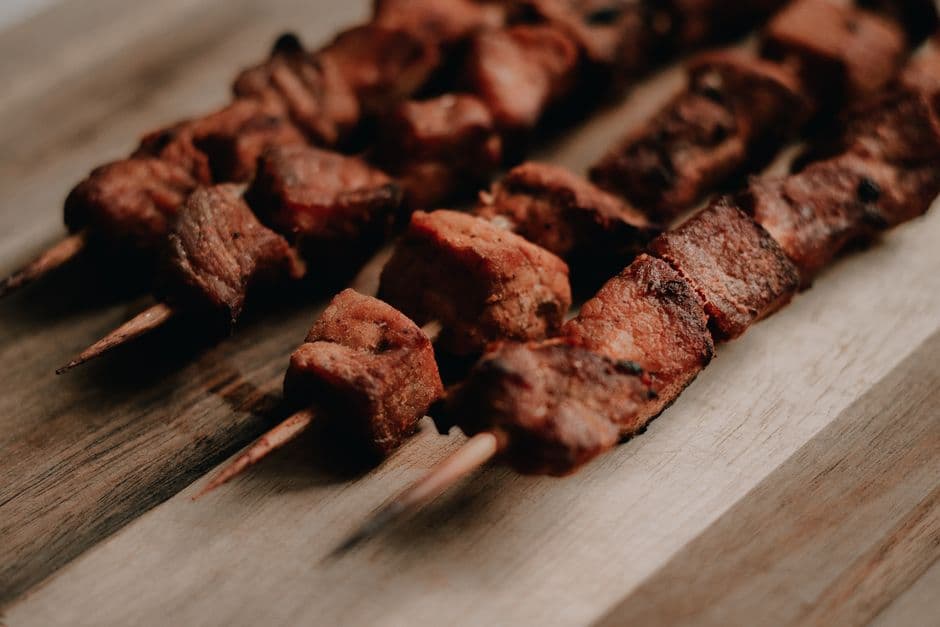
Haitian Griot Pork
Haiti's signature dish — chunks of pork shoulder marinated in epis, braised in citrus, then deep-fried until shatter-crisp on the outside and meltingly tender inside.
About This Recipe
Griot (or 'griyo' in Haitian Kreyòl) is Haiti's most iconic dish — chunks of pork shoulder marinated overnight in epis (the Haitian green seasoning blend of parsley, garlic, scallion, thyme, Scotch bonnet and citrus), slowly braised in their own marinade with sour orange juice until tender, then drained and deep-fried in their own fat until the outsides shatter into crispy lacquered crusts. The interior stays succulent and saturated with the epis flavor; the exterior is crackling, salty-sweet, intensely aromatic. Griot is served with pikliz — a fierce Haitian pickled slaw of cabbage, carrot, Scotch bonnet, garlic, lime and vinegar that cuts the richness — and bannann peze (twice-fried green plantains, smashed flat). The combination is one of the great trios of the African diaspora. Griot is the centerpiece dish of every Haitian celebration: weddings, baptisms, Christmas, the December 5th Discovery of Haiti holiday, New Year's Day. Street vendors in Port-au-Prince sell paper cones of griot for lunch; expat Haitian restaurants in Brooklyn, Miami and Montreal build their reputations on griot. The dish requires patience — overnight marinade, hour of braising, hot fry — but the technique is straightforward and the reward is enormous. The fundamental rule is non-negotiable: epis is the Haitian foundation; without it you have fried pork, not griot.
Ingredients
Serves 6
- 1.5 kgbone-in or boneless pork shoulder, cut into 4 cm cubes with fat
- 2 limesfor washing meat
- 250 mlsour orange juice (or 175 ml regular orange + 75 ml lime juice)
- 60 mlwhite vinegar
- 1 bunchflat-leaf parsley (about 60 g)
- 6scallions, roughly chopped
- 1 headgarlic, peeled
- 2 tbspfresh thyme leaves (or 2 tsp dried)
- 1green bell pepper, chopped
- 1Scotch bonnet pepper, seeded (use whole for serious heat)
- 1 tbspground cloves
- 60 mlolive oil
- 2 tbspkosher salt
- 1 tbspfreshly ground black pepper
- 750 mlneutral oil for deep-frying
- 1/2 smallhead green cabbage, very finely shredded
- 2carrots, julienned
- 1 smallyellow onion, sliced thin
- 2Scotch bonnet peppers, sliced thin
- 4 clovesgarlic, sliced
- 6whole cloves
- 2 tbspsalt
- 375 mlwhite vinegar
- 3 tbspfresh lime juice
Instructions
- 1
Wash the pork (Haitian tradition)
Place the pork cubes in a large bowl, squeeze the limes over the meat, then add cold water to cover. Rub the lime-water into the meat 60 seconds, drain and rinse thoroughly. This Haitian practice removes any surface impurities and improves the marinade penetration.
- 2
Make epis (Haitian green seasoning)
In a food processor or blender, combine all epis ingredients (parsley, scallions, garlic, thyme, green pepper, Scotch bonnet, cloves, olive oil, salt, pepper). Pulse until you have a coarse, vivid green paste with visible bits — not a smooth puree. Should smell intensely fresh and slightly fiery.
- 3
Marinate the pork
Place the pork in a large bowl or doubled zip bag. Add the epis, sour orange juice and vinegar. Massage well so every cube is coated. Refrigerate 12–24 hours, turning once or twice. The pork should look stained green and smell powerfully herbal.
- 4
Make the pikliz (also the day before)
Combine the shredded cabbage, carrots, onion, Scotch bonnet, garlic, cloves and salt in a large jar or non-reactive bowl. Pack down. Pour vinegar and lime juice over to cover. Stir, cover, and refrigerate at least 12 hours — pikliz needs time to ferment slightly. Keeps 3+ weeks.
- 5
Braise the pork in its marinade
Transfer the pork and all marinade to a heavy Dutch oven. Add water to barely cover. Bring to a boil, then reduce to a steady simmer. Cook covered 60–75 minutes, stirring occasionally, until the pork is fork-tender and the liquid has reduced to a thick, glaze-like consistency clinging to the meat.
- 6
Drain and dry the pork
Lift the pork pieces out of the pot with a slotted spoon, letting excess liquid drain. Spread on a parchment-lined sheet pan in a single layer. The pork must be relatively dry on the surface for proper frying — pat with paper towels if needed. (Save the reduced braising liquid as a sauce on the side.)
- 7
Deep-fry hot and hard
Heat the frying oil in a heavy Dutch oven to 190°C / 375°F. Fry the pork chunks in batches (don't crowd) for 4–6 minutes per batch, turning occasionally, until the outsides are deeply mahogany-brown and the edges have a glassy, shattering crust. Drain on a wire rack — never paper towels (steams the crust).
- 8
Plate and serve
Pile the griot on a warm platter. Serve immediately with a generous mound of pikliz, twice-fried bannann peze on the side, and a small bowl of the reduced braising liquid as a dipping sauce. The pikliz is supposed to make you sweat slightly — that's the point. Cold Prestige beer mandatory.
Did you make this?
Rate it and help other cooks find the recipes that actually work.
One tap to sign in, and we'll save the rating you just picked.
Everything you need to plan your week — free
- Meal calendar
- Grocery list
- AI recipe ideas
Track what you eat
Snap your meal to log calories and macros, run fasting timers and track water in the free SnapCal app.
Pro Tips
- →
Epis is the foundation of all Haitian cooking — make a double batch and refrigerate the rest for 2 weeks (or freeze 3 months). Use it in everything: beans, rice, fish, eggs.
- →
The braise-then-fry technique is non-negotiable; just frying raw pork gives you hard, dry meat. The braise tenderizes; the fry crisps.
- →
Scotch bonnet peppers are essential for authentic flavor — habaneros are the closest substitute. Don't substitute jalapeño; the flavor is completely different.
- →
Make pikliz at least 24 hours ahead; it gets dramatically better as the cabbage softens and the heat blooms. Real Haitian pikliz can sit for weeks.
Variations
- •
Griyo poul: substitute chicken thighs (bone-in skin-on) and reduce braise time to 30 minutes. A lighter weeknight version.
- •
Oven-finished version: instead of deep-frying, roast the drained pork at 240°C / 465°F for 15 minutes — less authentic but produces good crackling without a fryer.
- •
Add a tablespoon of dark rum to the marinade — non-traditional but adds depth.
- •
Vegetarian: make epis-marinated tofu cubes braised in vegetable stock then fried; the technique works surprisingly well.
Storage
Refrigerate fried griot up to 3 days; re-crisp in a 220°C / 425°F oven 8 minutes. Do not microwave (turns rubbery). Braised undrained pork freezes well 2 months; thaw and fry fresh. Pikliz keeps refrigerated 3+ weeks and gets better with age. Epis paste refrigerates 2 weeks, freezes 3 months.
History & Origin
Griot evolved on Haitian plantations from West African pork-frying traditions fused with French braising techniques and Caribbean citrus. The name 'griot' may relate to West African griots (storytellers), or to the French 'gariot' meaning small pork chunk. The dish became the centerpiece of the Haitian Sunday meal in the 19th century and a symbol of Haitian Independence after 1804.
Frequently Asked Questions
Can I skip the braise and just fry?
Not really — raw pork shoulder needs slow cooking to become tender. Frying alone leaves you with chewy, undercooked meat outside and dry inside. The braise-then-fry sequence is what makes griot, griot.
How hot is pikliz supposed to be?
Quite hot — Haitians don't fear chiles. 2 Scotch bonnets for a jar is moderate; serious eaters use 4–6. The vinegar tames the heat slightly, but pikliz should make you sweat.
What does sour orange (zoranj si) taste like?
Tart and slightly bitter, with floral notes — it's the same naranja agria used in Cuban mojo. The substitute (orange + lime) is acceptable. Sweet orange juice alone is wrong.
Can I make this without deep-frying?
Yes — pan-fry the drained pork in 5 cm of oil over high heat in batches, turning frequently. You'll get good color and crisp edges, though not the all-over shattering crust of deep-frying. Better than baking.
Nutrition Facts
Per serving (320g / 11.3 oz) · 6 servings total
Time Summary
Have Questions?
Ask our AI cooking assistant anything about this recipe — substitutions, techniques, scaling.
Chat with AI Chef →More Haitian Recipes
You Might Also Like
Similar dishes from other cuisines around the world.
Free Kitchen Tools
Calculators and converters that pair with this page — no signup needed.
Put This Into a Plan
Schedule it, shop for it, and track what you already have.
Read Next
Longer reads that go deeper on the ideas behind this dish.
Community
Join the conversation
Sign in to leave a comment and save your favourite recipes