venezuelandinner✨ New
Hallacas — Venezuelan Christmas Tamales
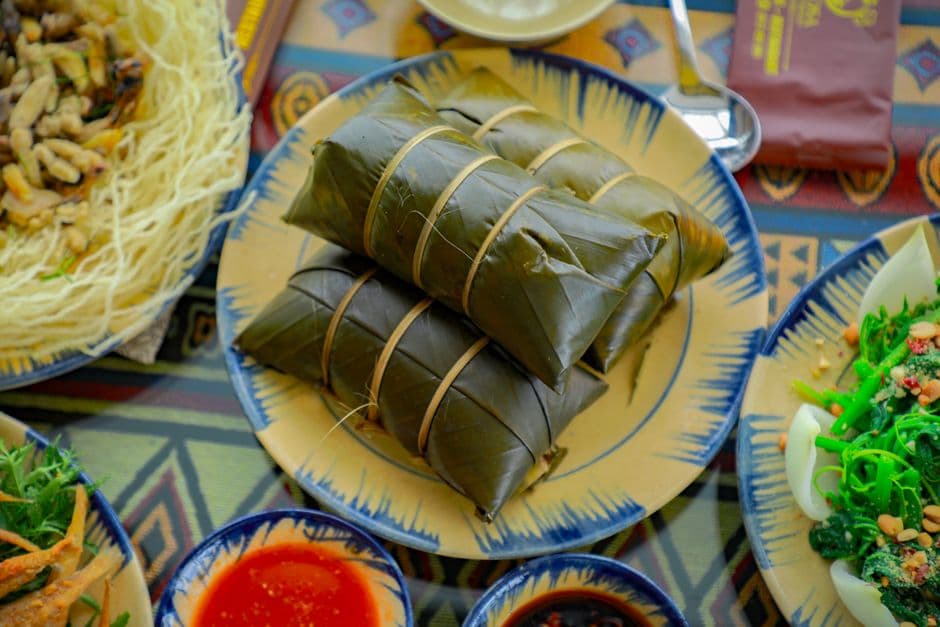
Cornmeal packages filled with a fragrant slow-cooked stew of beef, pork and chicken with olives, raisins and peppers, wrapped in banana leaves and steamed — Venezuela's most cherished Christmas tradition.
Prep
180 min
Cook
60 min
Servings
10
Difficulty
Hard
★★★★★
4.9(2,143 ratings)#hallacas#venezuelan#tamales#christmas#banana leaf#slow cook
About This Recipe
Hallacas are Venezuela's most important food: a complex, deeply flavoured tamale-like dish prepared as a family ritual in the weeks before Christmas. A dark annatto-coloured cornmeal dough is spread on softened banana leaves, filled with a rich guiso (stew) of beef, pork and chicken cooked with peppers, onions, capers, olives and raisins, then wrapped into a neat rectangular package and boiled. The preparation takes an entire day and involves the whole family working in assembly-line fashion — grandmothers, parents and children each with a specific task. The result is extraordinary: the banana leaf imparts a green, herbal quality to the corn dough, while the filling is a perfectly balanced sweet-savoury harmony. Hallacas are made once a year and define Venezuelan Christmas.
Ingredients
Serves 10
- 500 gmasarepa (pre-cooked cornmeal)
- 100 mlannatto (onoto) oil(oil infused with annatto seeds)
- 500 mlchicken stock(warm)
- 200 gpork shoulder(diced small)
- 200 gchicken thigh(diced small)
- 200 gbeef(diced small)
- 1 largeonion(finely diced)
- 1 largered bell pepper(finely diced)
- 4 clovesgarlic(minced)
- 2 tablespoonscapers
- 50 ggreen olives
- 50 graisins
- 1 teaspoonWorcestershire sauce
- 8 largebanana leaves(softened over a flame)
- 1 teaspoonsalt
Instructions
- 1
Make the guiso (filling)
Fry onion, pepper and garlic in annatto oil for 5 minutes. Add all the meats and brown. Add Worcestershire sauce, salt and enough water to cover. Simmer for 30 minutes until tender. Add capers, olives and raisins. Cool completely.
- 2
Make the dough
Mix masarepa with annatto oil, warm chicken stock and salt to form a smooth, pliable dough the colour of deep orange. Rest 10 minutes.
The annatto oil gives the dough its signature golden-orange colour — it is essential to authentic hallacas.
- 3
Assemble
Wipe banana leaf squares with a damp cloth. Rub lightly with annatto oil. Press a ball of dough into a thin oval in the centre. Spoon filling onto one half. Garnish with an olive, a raisin and a strip of red pepper. Fold the leaf over and tuck to form a neat rectangle. Tie firmly with string.
- 4
Boil and serve
Boil hallacas in a large pot of salted water for 45 minutes. Remove, rest for 10 minutes, untie and unwrap the leaf at the table.
Pro Tips
- →
Banana leaves must be softened by passing them over a flame or dipping in boiling water — otherwise they crack when folded.
- →
The guiso (filling) can be made 2 days ahead and refrigerated.
- →
Tie the hallacas very firmly — loose ones can come apart during boiling.
- →
Taste and adjust salt at the very end — flavors concentrate as liquids reduce, and a final pinch of flaky salt sharpens the whole dish.
Variations
- •
Each Venezuelan region has its own hallaca style — some use different filling ratios or add potatoes.
- •
Hallacas can be frozen after boiling for up to 1 month — reheat by boiling for 15 minutes.
- •
Vegetarian: swap the protein for roasted king oyster mushrooms, smoked tofu or cooked chickpeas — adjust seasoning slightly upward to compensate.
- •
Spicier: add a finely chopped fresh chile or a teaspoon of crushed Aleppo/Urfa pepper to the aromatics for warm, layered heat instead of a single sharp hit.
Storage
Refrigerate for up to 5 days. Reheat by boiling for 15 minutes or microwaving.
History & Origin
Hallacas reflect Venezuela's multicultural history: the corn dough is indigenous, the complex stew filling reflects Spanish colonial influence, and the olives, capers and raisins recall the Moorish and Mediterranean flavours brought by Spanish settlers. Making hallacas at Christmas is a family ritual that has been maintained for generations, with each family guarding their own recipe. Hallacas are so central to Venezuelan identity that Venezuelan diaspora communities worldwide make them together at Christmas as a way of maintaining connection to home.
Frequently Asked Questions
Where can I find banana leaves?
Fresh or frozen banana leaves are available in Latin American, Asian and African grocery stores. Frozen leaves work perfectly well — thaw and wipe dry before using.
Can I make this ahead of time?
Yes — most of the components can be prepared up to a day in advance and refrigerated separately. Reheat gently and assemble just before serving so textures stay distinct.
What can I substitute if I don't have all the ingredients?
Stay close to the role each ingredient plays: swap aromatics for similar ones (shallot for onion, lime for lemon), and keep the fat-acid-salt balance intact. Spice blends can usually be approximated with what's in the cupboard.
How do I know it's authentic?
Authenticity sits on a spectrum — what matters more is honoring the technique and balance of flavors. If the dish tastes harmonious and respects how cooks in its home region would build it, you're on solid ground.
Nutrition Facts
Per serving (320g / 11.3 oz) · 10 servings total
Calories480kcal
Protein24g
Carbohydrates52g
Fat20g
Fiber3g
Protein24g
Carbs52g
Fat20g
Time Summary
Prep time180 min
Cook time60 min
Total time240 min
Have Questions?
Ask our AI cooking assistant anything about this recipe — substitutions, techniques, scaling.
Chat with AI Chef →More Venezuelan Recipes
Community
Join the conversation
Sign in to leave a comment and save your favourite recipes