
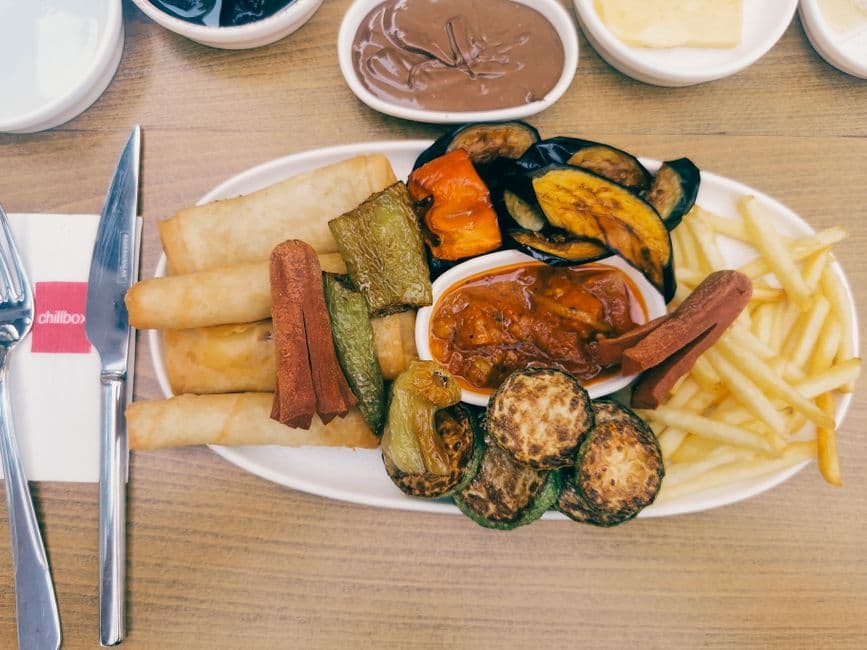
Hellim Kızartması (Halloumi Fries)
Golden-crusted batons of halloumi cheese pan-fried until crisp outside and molten-soft inside — a popular meze and street snack across Turkey and Cyprus.
About This Recipe
Hellim kızartması — fried halloumi batons — occupies a perfect niche in Turkish and Cypriot cuisine: it's a snack that delivers the salty punch of cheese with the satisfying crunch of a fried coating. Halloumi (hellim in Turkish) is a semi-hard, brined cheese made from sheep's milk, goat's milk, or a blend, distinguished by its unusually high melting point. This is what makes it uniquely suited to pan-frying: at high heat, the exterior crisps and browns through the Maillard reaction while the interior softens into a squeaky, barely yielding core without melting away into the pan. The best technique avoids a heavy batter, which would overwhelm the cheese's delicate flavor. Instead, a light coating of seasoned flour or fine semolina gives the surface just enough texture to crisp beautifully in hot olive oil. The fries should be served immediately — halloumi hardens as it cools and loses its appealing give. In Turkish meyhanes (taverns) and Cypriot restaurants alike, these are served alongside fresh lemon wedges, a drizzle of honey and dried mint, or a spoonful of pomegranate molasses — the contrast of sweet-acid against salty cheese is deeply satisfying.
Ingredients
Serves 4
- 400 ghalloumi (hellim) cheese(sliced into 1cm-thick batons)
- 3 tbspplain flour or fine semolina
- 1/2 tspdried mint
- 1/4 tspblack pepper
- 3 tbspolive oil for frying
- 1 wholelemon(cut into wedges for serving)
- 1 tbsphoney or pomegranate molasses(optional, for serving)
Instructions
- 1
Dry and Slice the Halloumi
Pat the halloumi dry with kitchen paper — surface moisture causes spitting in hot oil. Slice into batons roughly 7-8cm long and 1cm thick. If the halloumi is very salty, soak in cold water for 10 minutes and pat dry.
- 2
Coat in Seasoned Flour
Mix the flour with dried mint and black pepper in a shallow bowl. Toss each halloumi baton in the flour mixture, shaking off any excess. The coating should be very thin and even.
- 3
Pan-Fry Until Golden
Heat the olive oil in a non-stick frying pan over medium-high heat until shimmering. Add the halloumi batons in a single layer without crowding. Fry for 1.5-2 minutes per side until deep golden brown. Don't move them for the first 90 seconds so the crust sets properly.
Work in batches if needed — crowding creates steam and prevents crisping.
- 4
Serve Immediately
Transfer to a plate lined with kitchen paper for 30 seconds, then plate immediately. Serve with lemon wedges and optional drizzle of honey or pomegranate molasses. Halloumi must be served hot — it becomes rubbery and tough when it cools.
Did you make this?
Rate it and help other cooks find the recipes that actually work.
One tap to sign in, and we'll save the rating you just picked.
Everything you need to plan your week — free
- Meal calendar
- Grocery list
- AI recipe ideas
Track what you eat
Snap your meal to log calories and macros, run fasting timers and track water in the free SnapCal app.
Pro Tips
- →
Dry the halloumi thoroughly before coating — wet cheese spatters dangerously and prevents browning.
- →
Use medium-high heat, not high — too hot burns the coating before the cheese warms through; too low and the cheese releases liquid.
- →
The honey-and-mint drizzle is not just garnish — the sweet contrast is a classic pairing for salty halloumi.
Variations
- •
Sesame coating: replace flour with sesame seeds for a nuttier crust.
- •
Air-fryer version: brush batons with oil and air-fry at 200°C for 6-8 minutes for a lighter result.
- •
Herbed version: add dried thyme and lemon zest to the flour coating.
Storage
Fried halloumi does not store well — it hardens and loses appeal within 30 minutes. Make only what will be eaten immediately.
History & Origin
Halloumi (hellim) has been produced in Cyprus for centuries, with documented records from at least the medieval Venetian period in the 16th century. The cheese's unique heat-stable properties made it ideal for the charcoal grilling and frying traditions of both Cyprus and the eastern Mediterranean. In Turkey, it became popular particularly in coastal regions and major cities through the influence of Cypriot Greek and Cypriot Turkish communities.
Frequently Asked Questions
Why does my halloumi stick to the pan?
The most common cause is insufficient heat or moving the cheese too soon. The protein needs to set and release naturally before flipping. Use a non-stick pan, ensure the oil is hot and shimmering before adding cheese, and don't touch it for at least 90 seconds.
Can I make halloumi fries in advance?
No — halloumi hardens rapidly as it cools and cannot be successfully reheated to its original texture. Prepare and serve immediately. You can have the halloumi sliced and coated in flour in advance, then fry at the last minute.
Nutrition Facts
Per serving (130g / 4.6 oz) · 4 servings total
Time Summary
Have Questions?
Ask our AI cooking assistant anything about this recipe — substitutions, techniques, scaling.
Chat with AI Chef →Featured in Guides
This recipe is featured in the following curated guides:
More Turkish Recipes
You Might Also Like
Similar dishes from other cuisines around the world.
Browse by Ingredient
More recipes built around the same core ingredients.
Free Kitchen Tools
Calculators and converters that pair with this page — no signup needed.
Put This Into a Plan
Schedule it, shop for it, and track what you already have.
Read Next
Longer reads that go deeper on the ideas behind this dish.
Community
Join the conversation
Sign in to leave a comment and save your favourite recipes