
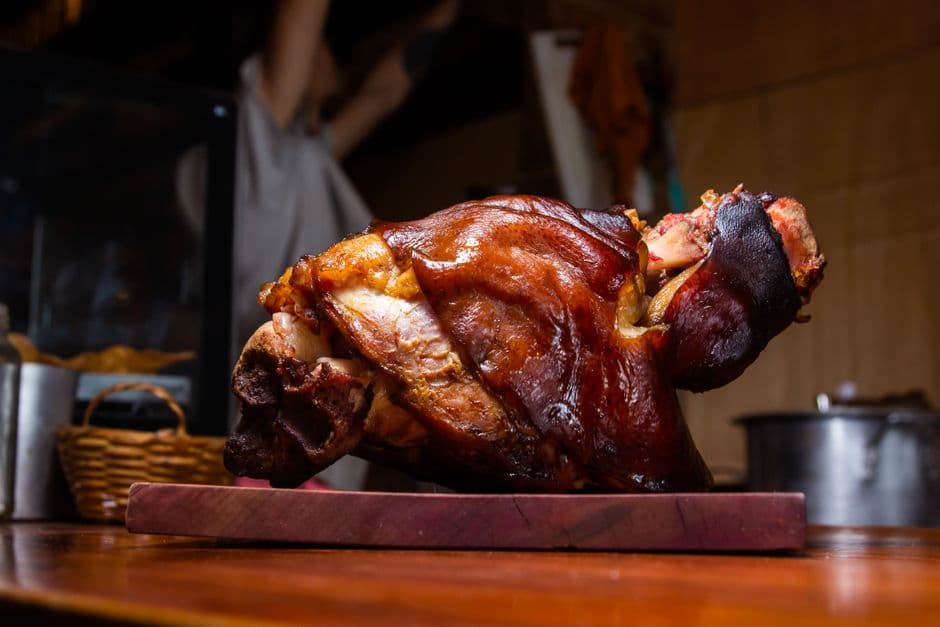
Ham Hock and Beans
Slow-simmered navy beans with a smoky ham hock, aromatics, and herbs for a deeply satisfying Southern comfort pot.
About This Recipe
Ham hock and beans is one of the great slow-food classics of American rural cooking — a pot of dried navy beans simmered for hours with a smoked ham hock until the beans are creamy and the broth is rich, porky, and deeply savory. The ham hock is the essential element: its collagen-rich skin and connective tissue dissolve slowly into the cooking liquid, building a silky, naturally full-bodied broth that no amount of store-bought stock can replicate. The leftover meat clinging to the bone — pulled off at the end and stirred back in — is smoky, tender, and intensely flavored. Aromatics like onion, garlic, celery, and a bay leaf round out the pot, and a long, unhurried simmer over low heat allows every ingredient to give its best. The finished dish is humble in its ingredients but extraordinary in its depth, tasting of smoke, pork fat, and the starchy sweetness of slow-cooked legumes. This dish is a staple across the American South, Appalachia, and the rural Midwest, where it has fed families through hard winters for generations. It is economical by design — a single inexpensive ham hock seasons an entire pot of beans — and deeply satisfying in the way that only long-cooked dishes can be. Serve it with a thick wedge of cornbread to soak up the pot likker (the cooking liquid, prized in its own right for its salty, smoky richness), a side of collard greens, and a splash of cider vinegar or hot sauce to cut through the richness. The pot improves dramatically overnight as the flavors marry, making it an ideal make-ahead dish for feeding a crowd.
Ingredients
Serves 6
- 450 gdried navy beans(or great northern beans, soaked overnight)
- 1 largesmoked ham hock(about 600g)
- 1 largeyellow onion(diced)
- 3 ribscelery(diced)
- 4 clovesgarlic(smashed)
- 2bay leaves
- 1 tspdried thyme
- 0.5 tspblack pepper(plus more to taste)
- 0.25 tspcayenne pepper
- 6 cupswater or low-sodium chicken broth
- 1 tbspapple cider vinegar(added at the end)
- 1 tspkosher salt(added only after beans are tender)
Instructions
- 1
Soak the beans
Cover the dried beans with at least 3 inches of cold water and soak overnight or for a minimum of 8 hours. Drain and rinse thoroughly before cooking. Soaked beans cook more evenly, have a creamier texture, and are easier to digest than beans cooked from dry.
For a quick soak, cover beans with boiling water for 1 hour, then drain and proceed.
- 2
Combine and bring to a simmer
Place the drained beans, ham hock, onion, celery, garlic, bay leaves, thyme, black pepper, and cayenne in a large heavy pot or Dutch oven. Pour in 6 cups of water or broth — enough to cover everything by 2 inches. Bring to a boil over medium-high heat, skimming off any foam that rises in the first 10 minutes.
Skimming the foam produces a cleaner, clearer broth — skip it and the pot can turn cloudy and slightly bitter.
- 3
Simmer low and slow
Reduce the heat to low, cover the pot leaving a crack for steam to escape, and simmer gently for 1.5 to 2 hours until the beans are completely tender and beginning to fall apart at the edges. Check every 30 minutes and add hot water if the beans are becoming exposed at the top.
- 4
Salt after tender
Once the beans are fully tender, season with 1 teaspoon of kosher salt. Salting the water at the start can toughen beans and extend the cooking time significantly, so always wait until they are soft to season. Taste and add more salt as needed.
The ham hock is already salty; taste first and add salt conservatively.
- 5
Remove and shred the hock
Lift the ham hock out of the pot and onto a cutting board. Allow it to cool 5 to 10 minutes, then pull all the meat from the bone — it will fall away easily. Discard the skin, cartilage, and bone. Chop or shred the meat roughly and return it to the pot.
- 6
Mash for creaminess
Use the back of a wooden spoon or a potato masher to crush roughly one-quarter of the beans against the side of the pot. This releases their starch and naturally thickens the pot likker into a creamy, gravy-like consistency without adding any flour or cornstarch.
- 7
Finish and serve
Stir in the apple cider vinegar and simmer 5 more minutes. Remove the bay leaves, taste for salt and pepper, and ladle into bowls. Serve with cornbread, a side of collard greens, and hot sauce on the table.
Did you make this?
Rate it and help other cooks find the recipes that actually work.
One tap to sign in, and we'll save the rating you just picked.
Everything you need to plan your week — free
- Meal calendar
- Grocery list
- AI recipe ideas
Track what you eat
Snap your meal to log calories and macros, run fasting timers and track water in the free SnapCal app.
Pro Tips
- →
Never add salt to beans before they are fully tender — salt strengthens the bean's outer skin and can prevent it from softening no matter how long you cook.
- →
Mash one-quarter of the beans against the side of the pot near the end of cooking to thicken the broth naturally into a silky, gravy-like consistency.
- →
A smoked ham hock is irreplaceable here; its collagen-rich skin dissolves into the liquid and creates body that smoked sausage alone cannot achieve.
- →
The pot likker — the dark, smoky cooking liquid — is considered a delicacy in Southern cooking. Serve extra in a cup alongside for dunking cornbread.
- →
This dish tastes significantly better the next day, making it ideal for meal prepping; reheat gently over low heat with a splash of water.
Variations
- •
Substitute smoked turkey wings or necks for the ham hock for a lighter but equally smoky pot suitable for those avoiding pork.
- •
Add a can of diced tomatoes and a tablespoon of brown sugar in the last 30 minutes for a sweet-savory New England baked-bean style variation.
- •
Use pinto beans in place of navy beans for a Tex-Mex-adjacent version often served alongside rice in the American Southwest.
- •
Add a diced jalapeño and a teaspoon of cumin when sautéing the aromatics for a spicier, Southwestern take on the classic.
Storage
Refrigerate in an airtight container for up to 5 days — the flavor deepens considerably after the first day. Reheat gently over low heat with a splash of water or broth to loosen the thickened pot. Ham hock beans freeze exceptionally well for up to 3 months; thaw overnight in the refrigerator before reheating.
History & Origin
Beans slow-cooked with smoked pork have been a fixture of American Southern and Appalachian cooking since at least the 18th century, when salted and smoked pork was the primary preserved meat in rural households. Ham hocks — the lower leg of the pig — were economical cuts that flavored a large pot of beans for a fraction of the cost of expensive cuts. The tradition is deeply connected to African American foodways in the South, where beans and pork became central elements of both survival cooking and celebratory Sunday meals.
Frequently Asked Questions
Do I have to soak beans overnight?
Soaking overnight is recommended but not strictly required. Soaked beans cook in roughly half the time, have a more even, creamy texture, and are generally easier to digest. If you skipped soaking, you can use the quick-soak method: cover the dry beans with boiling water, let sit 1 hour, drain, and proceed. Expect to add an extra 30 to 60 minutes of cooking time for unsoaked beans.
Where can I find smoked ham hocks?
Most grocery stores carry smoked ham hocks in the meat department, often near the sausage or cured meats section. Butcher shops and meat markets are a reliable source if your supermarket does not stock them. They are very inexpensive and sometimes pre-packaged in pairs. Smoked turkey wings or necks can substitute if pork is unavailable or not preferred.
Why are my beans still hard after 2 hours of cooking?
Hard beans after long cooking usually mean they were salted too early, or the water used was very hard (high mineral content). Salt toughens bean skins and prevents softening — always add salt only after the beans are fully tender. Hard water can also slow cooking; try using filtered water or adding a small pinch of baking soda (no more than 1/8 teaspoon) to the pot, which neutralizes minerals and helps beans soften.
Can I make ham hock and beans in a slow cooker or Instant Pot?
Both work well. In a slow cooker, combine all ingredients and cook on low for 8 to 9 hours or high for 5 to 6 hours until the beans are tender. In an Instant Pot, use the Bean/Chili setting or cook at high pressure for 40 minutes with a natural pressure release, starting with soaked beans. Add salt and vinegar after cooking, mash some beans for body, and shred the hock meat before serving.
What do you serve with ham hock and beans?
Cornbread is the essential Southern accompaniment, either crumbled directly into the bowl or served on the side for dunking into the pot likker. Collard greens, turnip greens, or fried okra round out the plate. Pickled jalapeños, sliced raw onion, cider vinegar, and hot sauce are traditional table condiments that cut through the richness of the beans and pork.
Nutrition Facts
Per serving (380g / 13.4 oz) · 6 servings total
Time Summary
Have Questions?
Ask our AI cooking assistant anything about this recipe — substitutions, techniques, scaling.
Chat with AI Chef →Featured in Guides
This recipe is featured in the following curated guides:
More American Recipes
You Might Also Like
Similar dishes from other cuisines around the world.
Browse by Ingredient
More recipes built around the same core ingredients.
Free Kitchen Tools
Calculators and converters that pair with this page — no signup needed.
Put This Into a Plan
Schedule it, shop for it, and track what you already have.
Read Next
Longer reads that go deeper on the ideas behind this dish.
Community
Join the conversation
Sign in to leave a comment and save your favourite recipes