
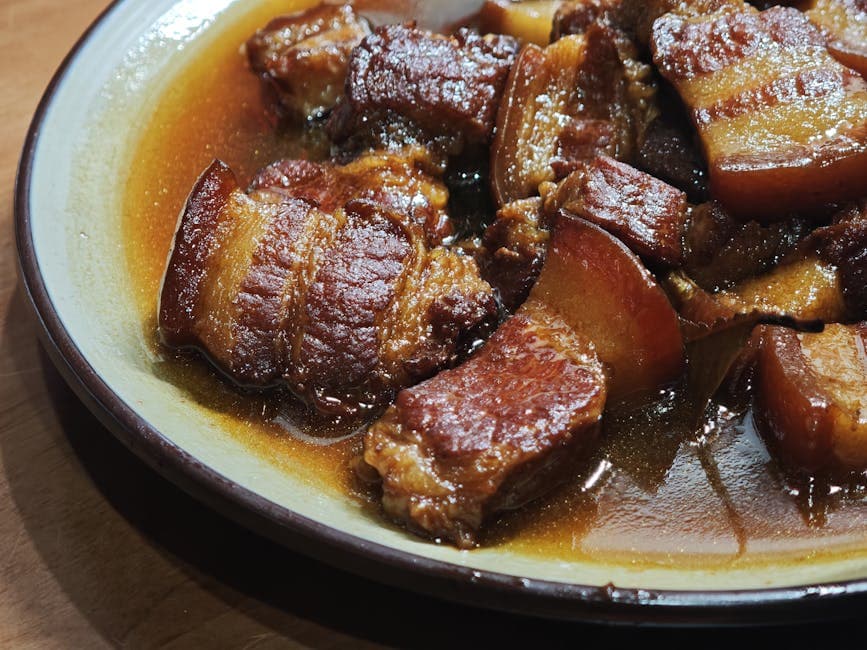
Hong Shao Rou (Red-Braised Pork Belly)
China's most celebrated braised pork — meltingly tender pork belly lacquered in a deep, sweet-savoury sauce of soy, sugar, Shaoxing wine and star anise.
About This Recipe
Hong Shao Rou (红烧肉) — literally 'red-braised pork' — is arguably China's most universally beloved dish. Every province has a version; Mao Zedong's Hunan-style is the most famous. The technique is simple: caramelise sugar to a deep amber, add soy sauce and Shaoxing wine, then braise pork belly for two hours until the collagen melts into gelatin and the sauce reduces to a shiny, lacquer-like glaze. The result is meat that trembles on the chopsticks and melts on the tongue.
Ingredients
Serves 4
- 1 kgpork belly(skin on, cut into 5cm cubes)
- 3 tbspsugar
- 3 tbspsoy sauce
- 2 tbspdark soy sauce
- 80 mlShaoxing rice wine
- 500 mlwater or stock
- 3star anise
- 1cinnamon stick
- 4 slicesfresh ginger
- 3 clovesgarlic(smashed)
- 2spring onions
- 2 tbspoil
Instructions
- 1
Blanch pork
Place pork belly in cold water. Bring to a boil. Simmer 5 min. Drain, rinse, and pat dry. This removes impurities for a clean sauce.
Starting in cold water draws out more blood and impurities than boiling water.
- 2
Caramelise sugar
Heat oil in a wok or heavy pot over medium. Add sugar and cook without stirring until it melts and turns deep amber, about 3–4 min. Watch carefully — it goes from perfect to burnt in seconds.
- 3
Coat pork
Add pork belly to the caramel. Toss quickly to coat all sides. The caramel will seize — that is normal; it will dissolve into the braising liquid.
- 4
Add liquids and aromatics
Add Shaoxing wine, soy sauces, water, star anise, cinnamon, ginger, garlic, and spring onions. The liquid should come about halfway up the pork.
- 5
Braise
Bring to a boil. Cover and simmer on very low heat for 90 min, turning pork every 30 min.
- 6
Reduce and glaze
Remove lid. Increase heat to medium. Simmer 20–30 min until sauce reduces to a thick, glossy glaze, turning pork frequently. Serve over steamed rice with braising sauce spooned generously over.
Did you make this?
Rate it and help other cooks find the recipes that actually work.
One tap to sign in, and we'll save the rating you just picked.
Everything you need to plan your week — free
- Meal calendar
- Grocery list
- AI recipe ideas
Track what you eat
Snap your meal to log calories and macros, run fasting timers and track water in the free SnapCal app.
Pro Tips
- →
High-quality pork belly with equal fat-to-lean ratio gives the best texture after braising.
- →
The dish improves dramatically the next day — refrigerate overnight and reheat gently.
- →
Taste and adjust salt at the very end — flavors concentrate as liquids reduce, and a final pinch of flaky salt sharpens the whole dish.
- →
Mise en place pays for itself: chop, measure and pre-mix everything before the heat goes on, especially for any step that moves fast.
Variations
- •
Hunan-style: add dried chillies for heat
- •
Shanghai-style: use more sugar for a sweeter glaze
- •
Add hard-boiled eggs to the braise in the last 30 min for a classic accompaniment
- •
Vegetarian: swap the protein for roasted king oyster mushrooms, smoked tofu or cooked chickpeas — adjust seasoning slightly upward to compensate.
Storage
Refrigerates up to 4 days and freezes well. The fat solidifies when cold — skim before reheating if desired.
History & Origin
Red-braised pork is documented in Chinese culinary texts dating back at least to the Song dynasty. Chairman Mao Zedong's fondness for the Hunanese version is one of China's most famous culinary facts — he reportedly ate it regularly and believed it improved brain function.
Frequently Asked Questions
What cut is best for Hong Shao Rou?
Pork belly with skin on and an approximately equal ratio of fat to lean layers gives the best result. The skin becomes gelatinous and silky, the fat melts into the sauce, and the lean layers remain tender.
Can I make this ahead of time?
Yes — most of the components can be prepared up to a day in advance and refrigerated separately. Reheat gently and assemble just before serving so textures stay distinct.
What can I substitute if I don't have all the ingredients?
Stay close to the role each ingredient plays: swap aromatics for similar ones (shallot for onion, lime for lemon), and keep the fat-acid-salt balance intact. Spice blends can usually be approximated with what's in the cupboard.
How do I know it's authentic?
Authenticity sits on a spectrum — what matters more is honoring the technique and balance of flavors. If the dish tastes harmonious and respects how cooks in its home region would build it, you're on solid ground.
Nutrition Facts
Per serving · 4 servings total
Time Summary
Have Questions?
Ask our AI cooking assistant anything about this recipe — substitutions, techniques, scaling.
Chat with AI Chef →Featured in Guides
This recipe is featured in the following curated guides:
More Chinese Recipes
You Might Also Like
Similar dishes from other cuisines around the world.
Browse by Ingredient
More recipes built around the same core ingredients.
Free Kitchen Tools
Calculators and converters that pair with this page — no signup needed.
Put This Into a Plan
Schedule it, shop for it, and track what you already have.
Read Next
Longer reads that go deeper on the ideas behind this dish.
Community
Join the conversation
Sign in to leave a comment and save your favourite recipes