
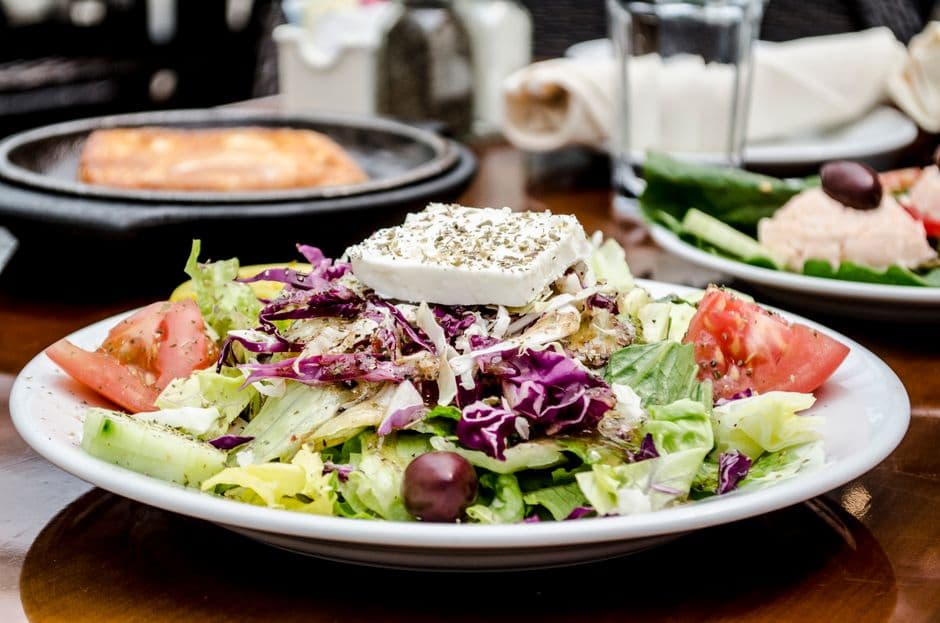
Horiatiki (Greek Village Salad)
The classic Greek village salad of chunky tomatoes, cucumber, red onion, Kalamata olives, and a thick slab of feta — dressed with olive oil and dried oregano, nothing else.
About This Recipe
Horiatiki (χωριάτικη) — literally 'village-style' — is perhaps the most iconic salad of the eastern Mediterranean and is closely related to Turkish çoban salatası (shepherd's salad). Both traditions reflect the same climatic context: the summer vegetables of the Aegean and Mediterranean regions are so good that minimal intervention is required. The genius of horiatiki is what it doesn't do: there is no lettuce, no lemon juice in the traditional recipe, no vinegar in the dressing, and the feta is not crumbled but placed as a thick slab on top, allowing each person to break pieces into their portion. The salad's authenticity rests on ingredient quality above all else. Peak-season tomatoes — cut into chunky wedges rather than thin slices — are the non-negotiable foundation. The cucumber should be firm, the onion mild enough to eat raw (soak in cold water briefly if too sharp), and the olives must be Kalamata or another cured Greek variety. The only dressing is good extra-virgin olive oil (generously applied) and dried Greek oregano, rubbed between the palms as it's added to release its essential oils. Salt, optional caper berries, and a scattering of green pepper round the dish out. This salad is inseparable from Turkish and Greek meze culture.
Ingredients
Serves 4
- 4 largeripe tomatoes(cut into chunky wedges)
- 1 largecucumber(halved and sliced thickly)
- 1 mediumred onion(thinly sliced)
- 150 gKalamata olives(pitted or whole)
- 200 gfeta cheese(as a whole thick slab, not crumbled)
- 1/2 smallgreen bell pepper(sliced into rings)
- 4 tbspextra-virgin olive oil
- 1 tspdried Greek oregano
- flaky sea salt(to taste)
Instructions
- 1
Prep the Vegetables
Cut tomatoes into chunky wedges — not thin slices. Halve the cucumber and cut into thick half-moons. Slice the red onion thinly; if it's very sharp, soak in cold water for 10 minutes, then drain and pat dry. Slice the green pepper into rings.
- 2
Combine the Salad
Arrange the tomatoes, cucumber, onion rings, olives, and green pepper rings in a large, wide bowl or on a platter — this is meant to be a rustic, generous presentation, not a composed arrangement.
- 3
Add Feta and Dress
Place the feta as a whole slab on top of the vegetables. Drizzle generously with extra-virgin olive oil all over. Sprinkle with dried oregano, rubbing it between your palms first to release its oils. Season with flaky sea salt to taste.
The feta is salty — taste before adding salt to the rest of the salad.
- 4
Serve Immediately
Serve right away with crusty bread to mop up the olive oil and tomato juices. Don't let the salad sit for more than 15 minutes before serving — the tomatoes release water and dilute the dressing.
Did you make this?
Rate it and help other cooks find the recipes that actually work.
One tap to sign in, and we'll save the rating you just picked.
Everything you need to plan your week — free
- Meal calendar
- Grocery list
- AI recipe ideas
Track what you eat
Snap your meal to log calories and macros, run fasting timers and track water in the free SnapCal app.
Pro Tips
- →
Peak-season tomatoes are non-negotiable — out-of-season tomatoes produce a watery, tasteless salad. Wait for summer.
- →
Use real Greek Kalamata olives — stuffed green olives or canned black olives do not belong here.
- →
Rub the dried oregano between your palms before adding it — this releases the essential oils and makes a significant difference.
Variations
- •
Kapari (caper): add 1 tbsp caper berries for a brinier, more complex dressing.
- •
Çoban salatası style: dice all vegetables finely (no chunky wedges) for the Turkish shepherd's salad approach, and add finely chopped parsley.
- •
Baklava biber ile: add a few sliced mild Florina (roasted red) peppers for a sweeter dimension.
Storage
This salad is not suitable for advance preparation or storage — tomatoes and cucumber release water rapidly. Make just before serving.
History & Origin
Horiatiki is a dish of 20th-century modern Greece, popularized throughout the country and internationally in the post-WWII period as tourism to Greece expanded. Its roots, however, lie in the ancient Mediterranean tradition of eating seasonal vegetables dressed with olive oil — a culinary culture shared between Greece, Turkey, Lebanon, and the broader region for millennia. The specific combination became iconic with Greek cuisine internationally in the 1970s-80s.
Frequently Asked Questions
Why is the feta placed as a slab and not crumbled in horiatiki?
Serving the feta as a whole slab is the traditional village presentation — it allows each person to break off as much as they like and keeps the cheese from dissolving into the dressing before the salad is eaten. Crumbled feta makes the whole dish saltier and muddier in appearance.
Should horiatiki have a vinegar or lemon dressing?
Traditional horiatiki is dressed only with extra-virgin olive oil and dried oregano — no vinegar, no lemon. The acidity comes entirely from the tomatoes. Some home cooks add a small squeeze of lemon but purists would argue this is not traditional. Use your preference, but try it without first.
Nutrition Facts
Per serving (280g / 9.9 oz) · 4 servings total
Time Summary
Have Questions?
Ask our AI cooking assistant anything about this recipe — substitutions, techniques, scaling.
Chat with AI Chef →More Turkish Recipes
You Might Also Like
Similar dishes from other cuisines around the world.
Browse by Ingredient
More recipes built around the same core ingredients.
Free Kitchen Tools
Calculators and converters that pair with this page — no signup needed.
Put This Into a Plan
Schedule it, shop for it, and track what you already have.
Read Next
Longer reads that go deeper on the ideas behind this dish.
Community
Join the conversation
Sign in to leave a comment and save your favourite recipes